

Archive · 15 Jan 2026
Indian Cities Face Urban Heat Crisis
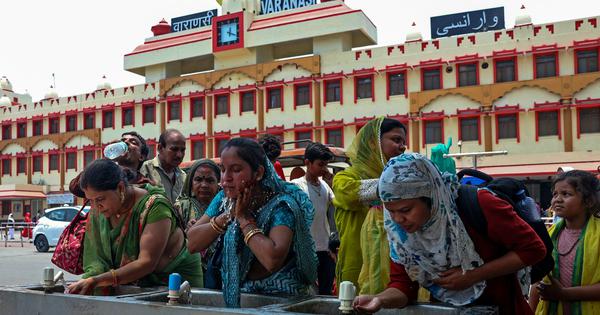
Indian cities are getting much hotter because of a problem called the Urban Heat Island effect.
This happens when cities grow really fast and replace trees and lakes with buildings made of concrete and glass.
These materials make the cities warmer, especially in the summer.
People like nurses, delivery workers, and tailors are finding it harder to work because of the heat.
The heat is also making people sick and causing workers to lose money.
Experts say that if cities don't start planting more trees and protecting water bodies, it will be very hard to live in them.
Some cities are trying to fix the problem by painting roofs white and creating urban forests, but it's a big challenge.

Indian cities are experiencing the Urban Heat Island effect, where concrete and glass structures replace green cover, leading to higher temperatures.
The heat is causing health issues, productivity loss, and economic impacts, with outdoor workers and vulnerable communities being affected the most.
Rapid urbanisation and lack of environmental safeguards are contributing to the crisis, with cities like Jaipur seeing a significant increase in land surface temperature.
Cooling strategies such as urban greening, reflective surfaces, and water body restoration are being implemented, but many heat action plans are underfunded and not well-executed.
Tier 2 cities like Sriperumbudur are also facing challenges due to the disappearance of traditional water bodies and the expansion of built-up areas.
- Who
- Residents, outdoor workers, and vulnerable communities in Indian cities.
- What
- Urban Heat Island effect causing increased temperatures and health impacts.
- When
- The crisis has been escalating over the past few decades, with significant impacts observed in recent years.
- Where
- Nine Indian cities, including Delhi, Bengaluru, Jaipur, and Tamil Nadu's Sriperumbudur.
- Why
- Rapid urbanisation, replacement of green cover with concrete structures, and lack of environmental safeguards.
- Urban Heat Island Effect
- Cities experience warmer days and nights due to concrete and heat-radiating structures replacing green cover and water bodies.
- Temperature Increase
- Jaipur's land surface temperature has risen by 1.8 degrees celsius since 2000 due to the drying up of Ramgarh lake.
- Productivity Loss
- India is expected to lose around 5.8% daily working hours by 2030 due to rising temperatures.
- Heatwave Exposure
- Indians were exposed to an average of 19.8 heatwave days each, with a third of these attributed to climate change.
- Urban Population Exposure
- Urban population exposed to high temperatures (above 35 degrees celsius) is expected to increase 800% to reach 1.6 billion by mid-century.
- Cooling Strategies
- Urban greening, changing surface material, improving water bodies, and urban form optimisation are key cooling strategies.
- Heat Action Plans
- Most heat action plans are underfunded, not built for local context, and insufficiently transparent.
- Tier 2 Cities
- Tier 2 cities like Sriperumbudur and Oragadam have expanded rapidly, leading to a disappearance of traditional irrigation tanks and surface water bodies.