

Archive · 12 Dec 2025
NASA Uses X-arithmetic to Study Black Holes
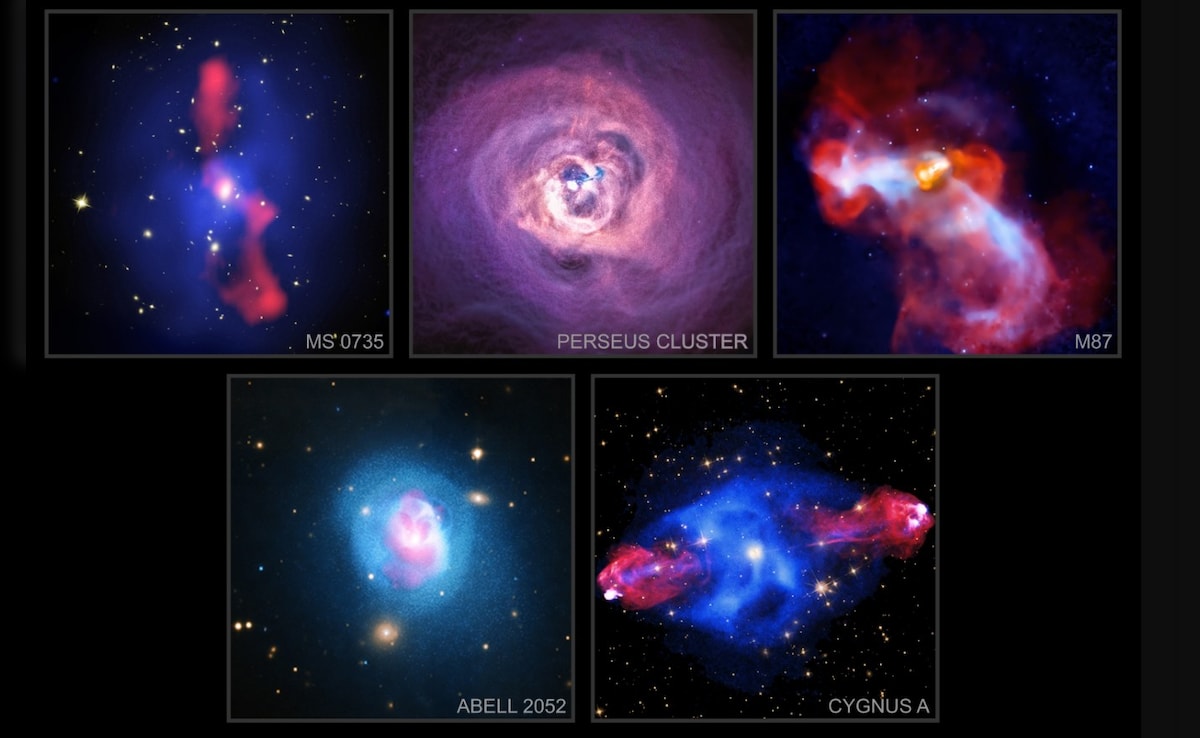
NASA's Chandra X-ray Observatory has discovered a new way to study black holes and galaxy clusters.
They use a method called X-arithmetic, which helps them see different parts of the hot gas in these clusters.
This gas is affected by the powerful bursts from supermassive black holes.
The new images show things like bubbles and shock waves, which help scientists understand how black holes shape these huge cosmic structures.
This method is better than old ones because it shows the real processes happening, not just what's on the surface.
It's like having a special tool to see inside a very big, complicated puzzle.

NASA's Chandra X-ray Observatory uses X-arithmetic to study black holes and galaxy clusters.
X-arithmetic distinguishes different physical features in the hot gas of galaxy clusters.
Supermassive black holes in galaxy clusters unleash powerful outbursts that shape cosmic structures.
New images highlight central regions in clusters like MS 0735+7421 and the Perseus Cluster.
X-arithmetic improves understanding of the interplay between black hole activity and cluster evolution.
- Who
- NASA's Chandra X-ray Observatory
- What
- Used X-arithmetic to study black holes and galaxy clusters
- When
- Recently (exact date not specified)
- Where
- In galaxy clusters such as MS 0735+7421, Perseus Cluster, M87, Abell 2052, and Cygnus A
- Why
- To understand how supermassive black holes influence the largest structures in the universe
- Method
- X-arithmetic
- Observatory
- Chandra X-ray Observatory
- Galaxy Clusters
- MS 0735+7421, Perseus Cluster, M87, Abell 2052, Cygnus A
- Features Identified
- Jet-blown bubbles, cooling gas, shock fronts
- Black Hole Activity
- Energetic jets and bubbles