Archive · 6 Oct 2026
Trump Blames Ukraine Refinery Strikes for Rising Fuel Prices

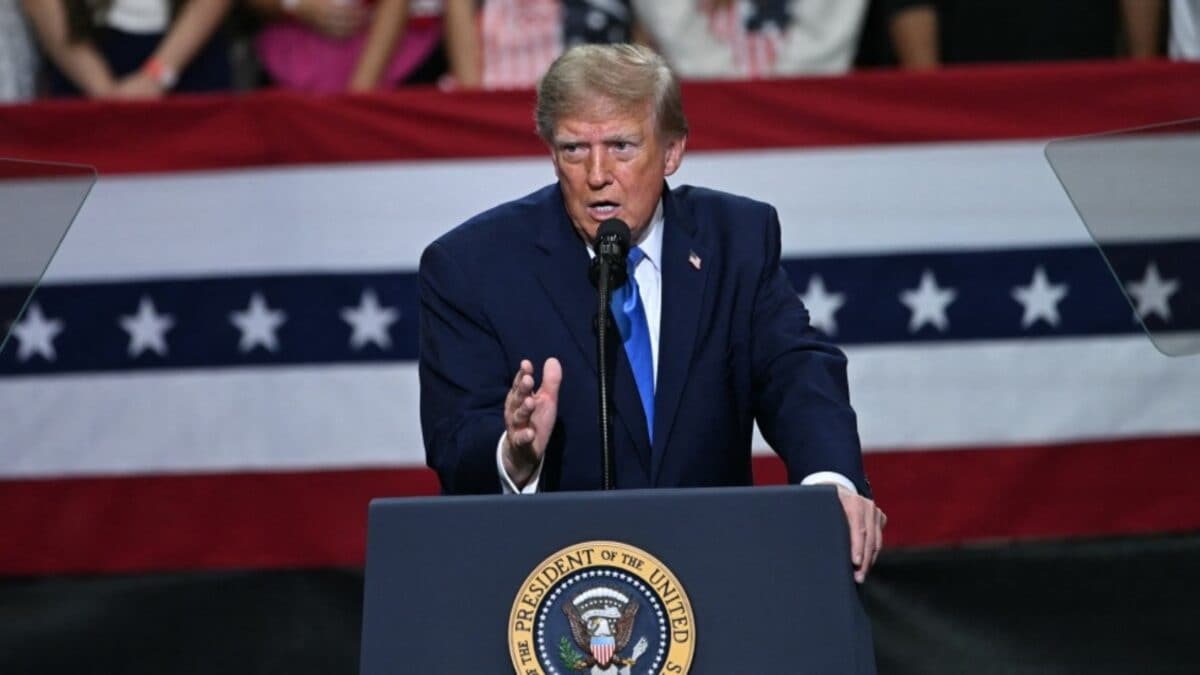
Donald Trump said attacks by Ukraine on Russian oil refineries are helping raise gasoline prices.
He also blamed refinery closures in some US states, including California.
Trump said oil shipments through the Strait of Hormuz had recovered, so he argued the Iran war was no longer the main reason for higher prices.
Ukraine said its strikes had disabled 51% of Russia's oil refining capacity.
Russian President Vladimir Putin said the attacks had cost Russia about 1% of its economy and had only partly met their goal.
Amin Nasser, who leads Saudi Aramco, warned that little oil was readily available in global reserves.
G7 countries and the International Energy Agency agreed to release 100 million barrels of crude oil and diesel.
Nasser said emergency supplies could help temporarily but would not solve longer-term supply problems.

Donald Trump said Ukrainian strikes on Russian refineries and closures in Democratic-led states, including California, were driving up gasoline prices.
Trump argued that oil supplies through the Strait of Hormuz had recovered and the Iran war was no longer the main cause of higher prices.
Ukraine's Defence Ministry said strikes on facilities in six Russian locations had disabled 51% of Russia's oil refining capacity.
Vladimir Putin said the attacks had cost Russia about 1% of gross domestic product and had achieved their goal only partially.
Saudi Aramco chief Amin Nasser warned that readily available oil inventories were very low; G7 countries and the International Energy Agency agreed to release 100 million barrels of crude and diesel.
- Who
- US President Donald Trump, Ukraine's Defence Ministry, Russian President Vladimir Putin, and Saudi Aramco chief executive Amin Nasser.
- What
- Trump blamed Ukrainian strikes on Russian refineries and US refinery closures for rising gasoline prices, while Nasser warned of very low readily available oil inventories.
- When
- Trump made his comments on October 5, 2026; Putin discussed the impact on October 1.
- Where
- The United States and Russia, amid concerns about global oil supplies and the Strait of Hormuz.
- Why
- Trump said refinery damage and closures were driving gasoline prices after oil supplies through the Strait of Hormuz recovered; Nasser cited the US-Iran war and thin available inventories as continuing supply concerns.
Trump's Explanation
Broader Supply Concerns
What is driving higher fuel prices
Trump's Explanation
Trump said oil supplies through the Strait of Hormuz had recovered and pointed instead to Ukrainian strikes on Russian refineries and closures in Democratic-led US states.
Broader Supply Concerns
Amin Nasser warned that the US-Iran war continued to pressure global energy supplies and that readily available oil inventories were very low.
How much relief emergency reserves offer
Trump's Explanation
G7 countries and the International Energy Agency agreed to release 100 million barrels of crude and diesel to ease supply concerns.
Broader Supply Concerns
Nasser said emergency reserves could provide only temporary relief and could not resolve long-term supply problems.
- Ukraine's reported impact
- Ukraine's Defence Ministry said strikes had disabled 51% of Russia's oil refining capacity.
- Locations named
- The reported strikes targeted facilities in Moscow, Yaroslavl, Ust-Luga, Perm, Saratov, and Syzran.
- Putin's estimate
- Putin said the refinery attacks had cost Russia about 1% of gross domestic product.
- Available reserves
- Amin Nasser said less than 10% of reported oil reserves were readily available.
- Agreed release
- G7 countries, working with the International Energy Agency, agreed to release 100 million barrels of crude and diesel.
- Nasser's warning
- He said emergency reserves might provide temporary relief but could not fix long-term supply.
- Hormuz exports
- The article says Middle East oil exports excluding Iran had recently risen above pre-war levels.