

Archive · 1 Oct 2025
Saturn Moon's Ocean May Contain More Ingredients For Life
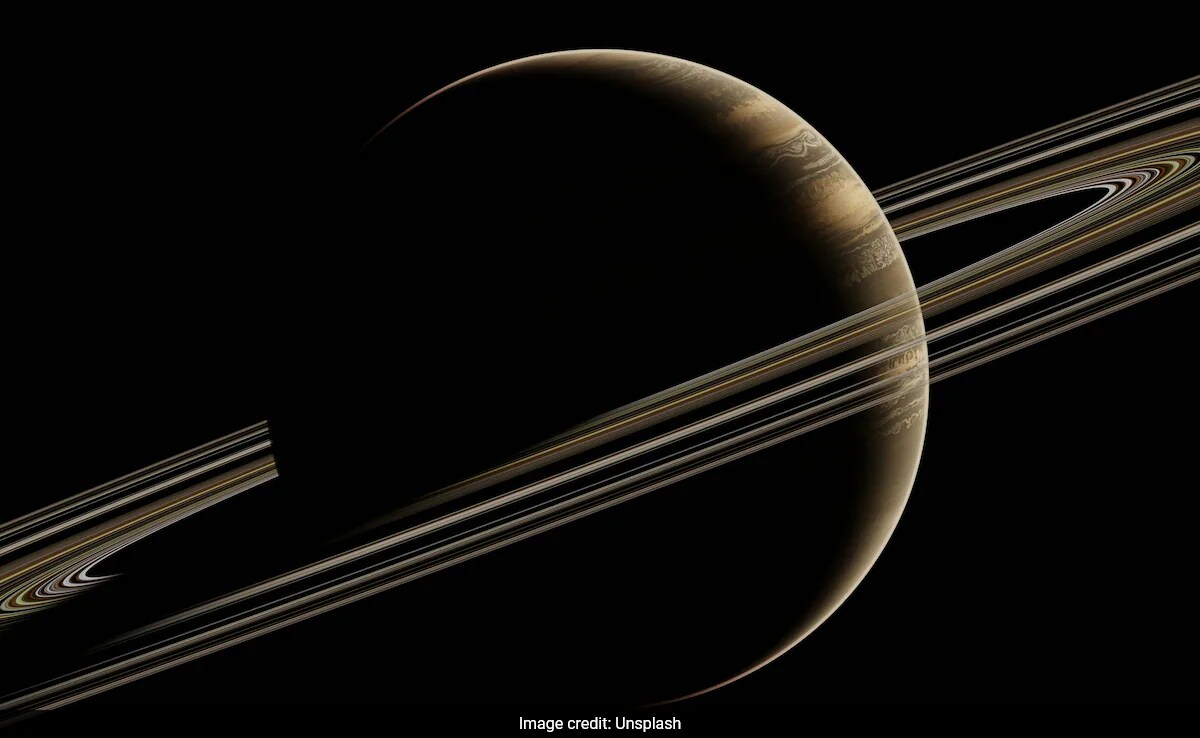
Imagine a tiny moon, Enceladus, orbiting Saturn, covered in ice.
Scientists have found a hidden ocean under this ice!
This ocean has stuff like salt and other molecules that life might need.
They sent a space probe called Cassini to study the moon and it found jets of water shooting out from cracks in the ice.
These jets have tiny bits of ice in them that scientists studied.
They discovered that this ice contains complex organic molecules, which is like the building blocks for life.
This means that Enceladus might be a place where life could exist.
It is an exciting discovery for those looking for life beyond Earth!

Scientists found evidence of complex organic molecules in the ocean of Saturn's moon Enceladus.
Enceladus, about 500 kilometers wide, has a saltwater ocean beneath its icy surface.
The Cassini probe discovered jets of water spewing from the moon's south pole.
Ice grains from the jets contained various organic molecules, including precursors to amino acids.
The findings suggest Enceladus may have the ingredients needed to support extraterrestrial life.
- Who
- Scientists
- What
- Discovered complex organic molecules in the ocean of Saturn's moon Enceladus, suggesting it could host extraterrestrial life.
- When
- Cassini collected data from 2004-2017; study published recently.
- Where
- Ocean under the icy shell of Saturn's moon Enceladus.
- Why
- To find out if the ocean could support extraterrestrial life.
- Moon
- Enceladus
- Moon Width
- 500 kilometers
- Ocean Discovery
- Under ice shell
- Key Molecules
- Organic molecules
- Probe
- Cassini
- Key Elements in Ocean
- Salt, methane, carbon dioxide, phosphorus