

Archive · 2 Sep 2026
Xi Urges New Middle East Security Framework During Egypt Visit
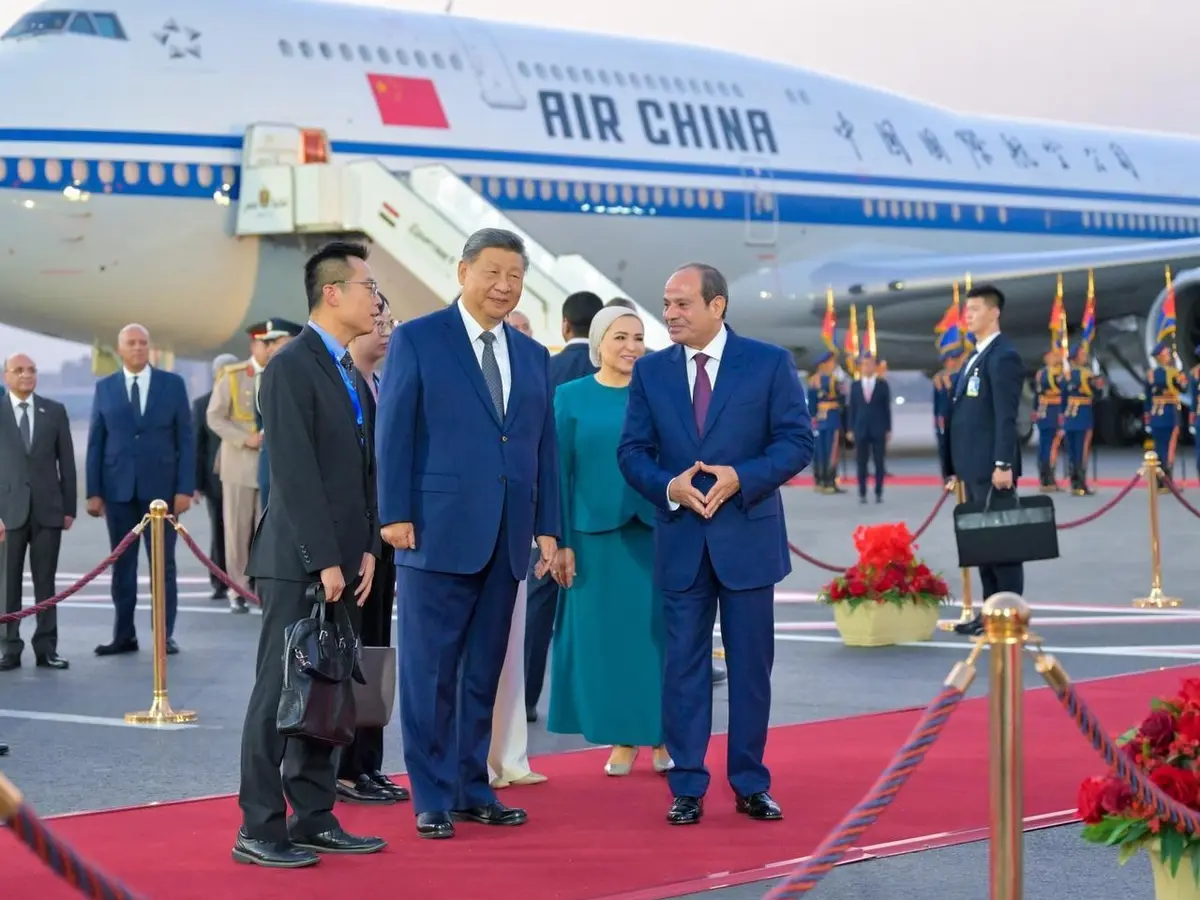
China’s leader Xi Jinping visited Egypt and met President Abdel Fattah al-Sisi.
Xi said Middle Eastern countries should make their own security decisions and resist outside interference.
He also suggested creating a new way for countries in the region to work together on security.
China offered to help protect important shipping routes.
Egypt and China agreed to cooperate more on security and fighting terrorism.
They also want to work together on data centers, computer chips and important metals.
Egypt still works closely with the United States but is building stronger ties with China.
The visit showed Egypt’s effort to maintain relationships with several powerful countries while China seeks a larger role in the Middle East.

Xi Jinping urged Middle Eastern countries to oppose external interference and consider a new regional security architecture.
Egypt welcomed Xi in Cairo as it deepens economic and military cooperation with China while remaining a major U.S. defense partner.
China and Egypt agreed to expand security, counterterrorism, technology, critical-minerals and currency cooperation.
China offered to work with regional countries to safeguard shipping routes disrupted around the Strait of Hormuz and Bab al-Mandeb.
Egypt imported more than $10 billion in Chinese goods during the first half of the year, while Chinese investment expanded across several sectors.
- Who
- Chinese President Xi Jinping and Egyptian President Abdel Fattah al-Sisi, alongside Chinese and Egyptian officials.
- What
- Xi made a visit to Egypt and called for a new Middle Eastern security architecture while the two countries announced expanded cooperation.
- When
- Wednesday, September 2; the articles do not specify the year. The reports describe Xi’s first Egypt visit in a decade and first Middle East trip in four years.
- Where
- Cairo, Egypt, including the Ittihadiya presidential palace.
- Why
- Egypt is diversifying its international partnerships, while China is seeking greater diplomatic, economic and security influence in the Middle East.
Regional Autonomy
Strategic Balance
Who should shape Middle Eastern security?
Regional Autonomy
Xi called on Middle Eastern countries to be “masters of their own destiny,” reject external interference and consider a new regional security architecture.
Strategic Balance
Egypt is maintaining its longstanding relationship with the United States while expanding ties with China as part of President al-Sisi’s stated policy of “strategic balance” and broader alliance diversification.
China’s expanding regional role
Regional Autonomy
Beijing presented deeper security, economic and shipping cooperation as a way to support regional stability and increase cooperation among local countries.
Strategic Balance
The articles describe China’s outreach as an effort to expand its diplomatic and economic influence and reduce the relative role of the United States in the region.
- U.S. defense support
- Egypt receives around $1.3 billion annually in military aid from the United States.
- Security proposal
- Xi urged regional countries to oppose external interference and explore a new security architecture.
- Shipping routes
- China offered to work with regional countries to safeguard shipping routes affected by conflict near the Strait of Hormuz and Bab al-Mandeb.
- Bilateral agreements
- China and Egypt agreed to deepen security and counterterrorism cooperation and expand work in data centers, semiconductors and critical-metals supply chains.
- Military exercises
- The countries held Eagles of Civilization exercises featuring Chinese J-16 jets and French-made Rafale aircraft in an air-combat drill.
- Trade
- Egypt imported more than $10 billion in Chinese goods during the first half of the year, with imports rising more than 14% from a year earlier.
- Chinese investment
- Chinese companies have invested in Egyptian container ports, green hydrogen, industrial facilities, satellites and the new administrative capital.
