

Archive · 15 Jan 2026
India's Piggery Waste Poses Public Health Risks, Study Warns
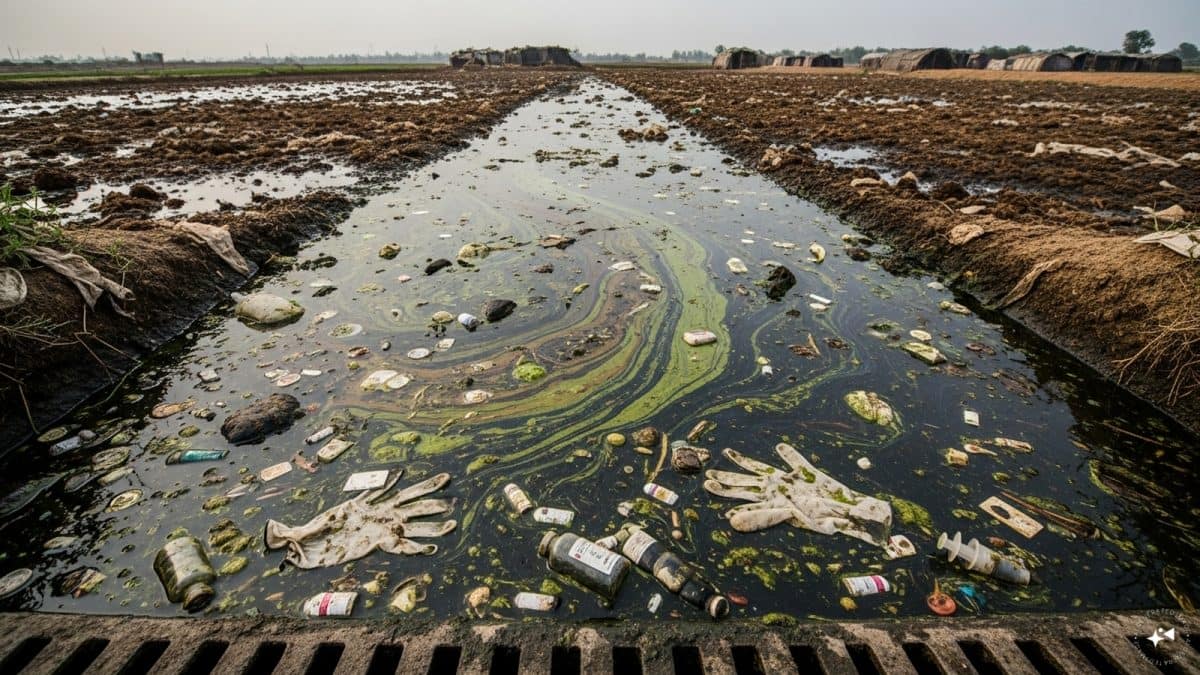
A new study in India found that many pig farms are not properly handling their waste.
They are dumping untreated waste, including dung, effluents, and even biomedical waste, into drains and fields.
This can cause serious health problems like breathing difficulties, diseases that spread from animals to humans, and resistance to antibiotics.
The study says that these pig farms lack proper systems to treat waste and protect the environment.
Experts are calling for the government to take action to make these farms safer and cleaner for everyone, especially children, the elderly, and farm workers.

India's unregulated piggery clusters are dumping untreated waste, posing serious public health risks including respiratory illnesses, zoonotic diseases, and antimicrobial resistance.
The study, conducted by PFA-PPF and PAN, documents systemic disposal of piggery waste into drains, agricultural lands, and water bodies, allowing pathogens and toxic contaminants to leach into water sources.
Gases such as ammonia and hydrogen sulphide from untreated manure and slurry can trigger respiratory irritation, neurological distress, and chronic lung disease, particularly affecting vulnerable groups.
Improper disposal of carcasses and biomedical residues heightens the risk of zoonotic diseases, antimicrobial resistance, and vector-borne outbreaks.
The report calls for urgent action from governments and regulators to implement licensing frameworks, prohibit swill-feeding, establish carcass processing systems, and mandate environmental monitoring around pig clusters.
- Who
- People for Animals – Public Policy Foundation (PFA-PPF) and Physicians Association for Nutrition (PAN)
- What
- A study highlighting public health risks due to unregulated piggery waste in India
- When
- The study was released, but the exact date is not specified
- Where
- Across multiple states in India
- Why
- To raise awareness about the public health hazards posed by India’s unregulated piggery industry and to call for urgent action from governments and regulators
- Organizations Involved
- People for Animals – Public Policy Foundation (PFA-PPF) and Physicians Association for Nutrition (PAN)
- Health Risks Identified
- Respiratory illnesses, zoonotic diseases, antimicrobial resistance, diarrhoeal outbreaks, vector-borne diseases
- Key Findings
- Untreated waste dumped into drains, fields, and water bodies; lack of effluent treatment systems, ventilation, drainage, and biosecurity barriers
- Vulnerable Groups
- Children, the elderly, and farm workers
- Gases Emitted
- Ammonia and hydrogen sulphide
- Recommendations
- Licensing frameworks, prohibition of swill-feeding, carcass processing systems, environmental monitoring