

Archive · 7 Oct 2026
Nayar Says Human Rights Cannot Be Separated From Environmental Justice
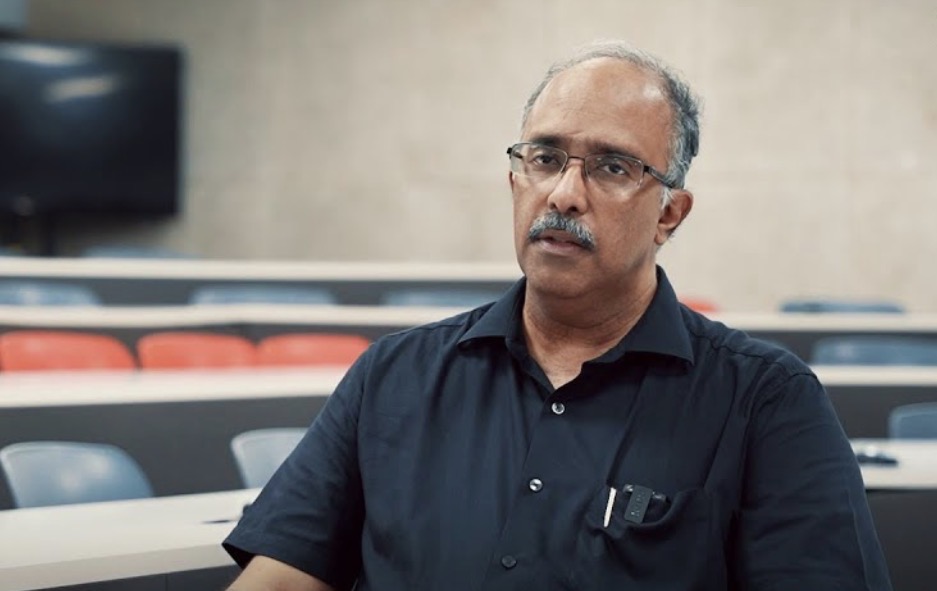
Professor Pramod K. Nayar spoke about his new book on environmental graphic novels.
He said people’s rights and care for the environment are connected.
Pictures and words together can help readers understand the climate crisis.
He discussed how local waste can become part of a much bigger planetary problem.
He also said pollution and old industrial sites can continue harming soil, water and air.
Many groups and people share responsibility, so it can be hard to know who can fix a problem.
Nayar said individuals have limits, but they should keep trying to resist harm.
He believes stories can help people think more carefully about the world.

Professor Pramod K. Nayar said human rights and environmental justice are inseparable during an online discussion of his latest book.
The Environmental Graphic Novel: How Green Is the Panel examines how graphic narratives can make the climate crisis easier to understand.
Nayar argued that graphic works can communicate environmental urgency more directly than lengthy prose.
The book considers scientific figures including Charles Darwin, Alexander von Humboldt, Jane Goodall and Rachel Carson.
Nayar said environmental responsibility is distributed across governments, corporations, systems and individuals, while daily resistance still matters.
- Who
- Professor Pramod K. Nayar, in conversation with Dr Meenakshi Srihari.
- What
- Nayar discussed his book The Environmental Graphic Novel: How Green Is the Panel and the links between human rights and environmental justice.
- When
- Wednesday; the article does not provide a date.
- Where
- An online discussion for the Decolonial Reading Circle.
- Why
- The discussion explored how graphic narratives can make environmental crises and questions of rights more understandable.
Limits and constraints
Resistance and communication
Individual agency
Limits and constraints
Nayar said individual agency is limited, constrained, distributed and partial.
Resistance and communication
He argued that these limits do not mean people should stop resisting, even when they may not win.
Communicating environmental crises
Limits and constraints
Nayar contrasted graphic works with prose books that can run to more than 400 pages, suggesting lengthy prose may not communicate urgency as directly.
Resistance and communication
He said graphic narratives can use words and images to make crises legible and cultivate critical literacy.
- Book
- The Environmental Graphic Novel: How Green Is the Panel
- Publisher
- Routledge
- Author
- Professor Pramod K. Nayar
- Discussion host
- Decolonial Reading Circle
- Conversation lead
- Dr Meenakshi Srihari of Sai University, Chennai
- Book focus
- Environmental graphic novels and the ways they represent the climate crisis
- Nayar's stated view
- Human rights cannot be separated from environmental justice.