

Archive · 18 Jul 2026
BJP's Ordinance Bypass Raises Democracy Concerns
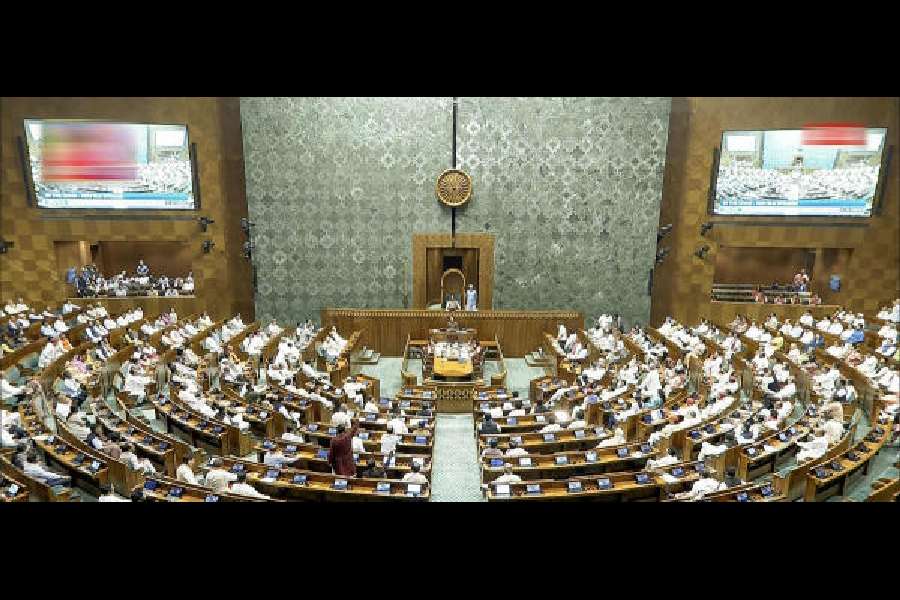
The Indian government has been using a special power called an ordinance to make changes quickly without full debate in Parliament.
This has happened with a recent rule about adding more judges to the Supreme Court.
Some people think this is a problem because it skips important discussions that should happen in Parliament.
They say this weakens democracy.
The government believes it's a way to get things done faster.
Experts are worried because Parliament is supposed to be where big decisions are discussed and made.
If this doesn't happen, it could mean that important decisions are being made without enough input from different people, which isn't good for democracy.
They suggest making changes to how Parliament works to ensure better discussions and fairness.

The Narendra Modi government promulgated the Supreme Court (Number of Judges) Amendment Ordinance 2026, bypassing parliamentary deliberation.
Critics argue that the frequent use of ordinances undermines the democratic process and the role of Parliament.
The government justifies the use of ordinances for swift action when Parliament is not in session.
The decline of legislative deliberation in India is part of a global trend where executive dominance has intensified.
Experts suggest structural reforms to Parliament to support civility in debate and equality of voice.
- Who
- The Narendra Modi government and critics of its use of ordinances.
- What
- The promulgation of the Supreme Court (Number of Judges) Amendment Ordinance 2026 and the debate over its implications for democracy.
- When
- The ordinance was promulgated in 2026, following the approval of the Bill on May 5, 2026.
- Where
- India, focusing on the role of Parliament and the executive branch.
- Why
- The government argues for efficiency, while critics highlight the erosion of parliamentary deliberation and democratic principles.
Government's Perspective
Critics' Perspective
Use of Ordinances
Government's Perspective
The government argues that ordinances are necessary for swift action when Parliament is not in session.
Critics' Perspective
Critics argue that the frequent use of ordinances bypasses parliamentary deliberation and undermines democracy.
Parliamentary Deliberation
Government's Perspective
The government believes that parliamentary procedures can be streamlined for efficiency.
Critics' Perspective
Critics emphasize the importance of parliamentary deliberation as the core of democratic governance.
- Ordinance Promulgated
- Supreme Court (Number of Judges) Amendment Ordinance 2026
- Pending Supreme Court Cases
- 93,000
- Date of Bill Approval
- May 5, 2026
- Constitutional Provision
- Article 123
- Key Issue
- Bypassing of parliamentary deliberation
- Author
- Anmol Jain
- Author's Affiliation
- Honorary Senior Fellow at Melbourne Law School