8 months ago
North Dakota's Honeybee Paradise Threatened by Biofuel Expansion
North Dakota has been a big place for making honey, with lots of wild grasses and flowers that bees love.
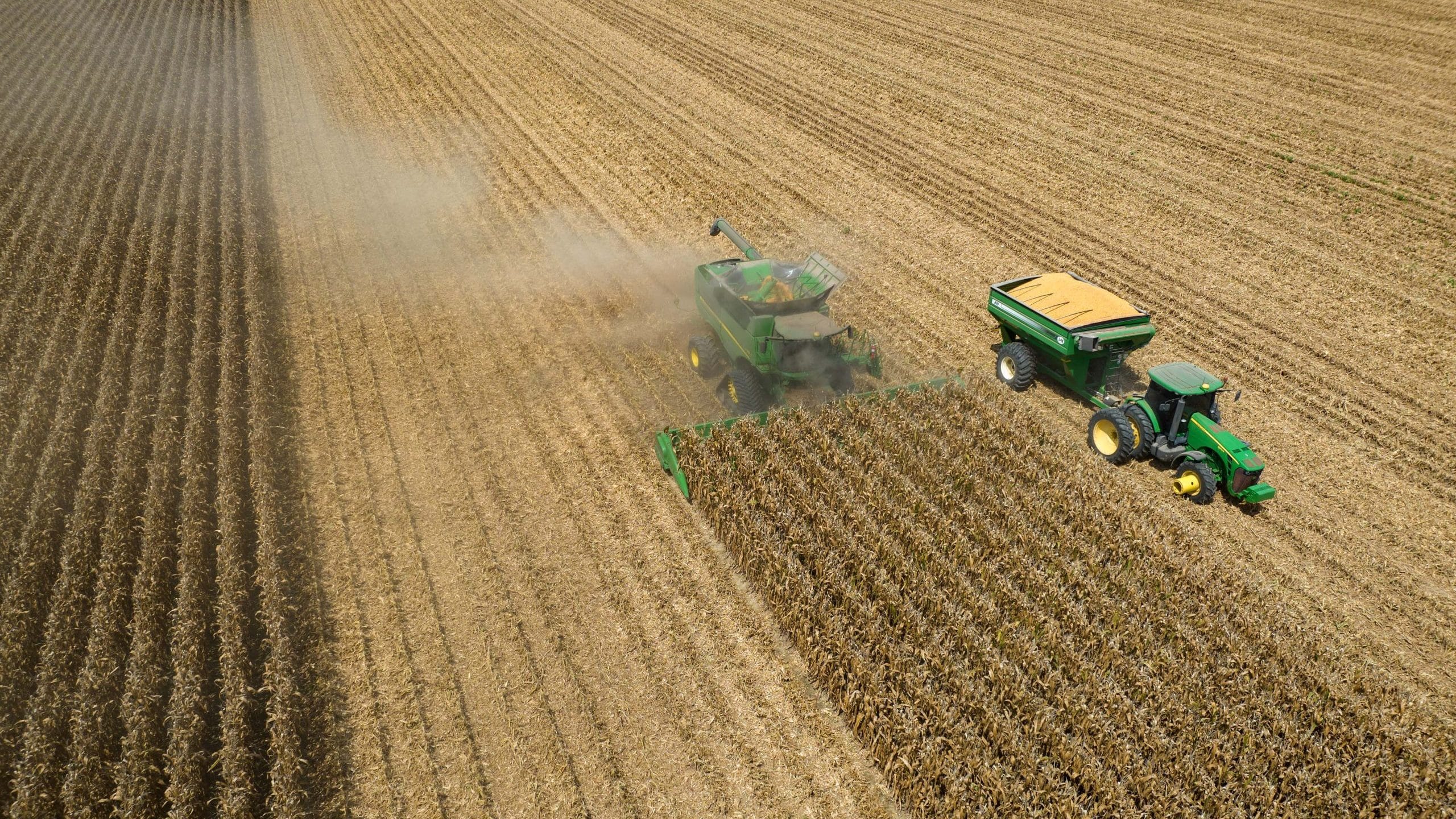
But now, more and more of this land is being turned into fields of corn and soybeans to make biofuel, especially for airplanes.
This is bad for the bees because they need different kinds of plants to eat and live.
The bees are getting weaker, and people who keep bees are making much less honey.
Some people think using corn and soybeans for biofuel is not good for the environment, but others say it can help reduce pollution from airplanes.
There are also other plants that could be used for biofuel that are better for the environment, but right now, corn and soybeans are the main ones being used.
This is making people worried about what will happen to the bees and the land in the future.

North Dakota's honey production has declined due to the conversion of grasslands to corn and soybean fields for biofuel.
Corn production in North Dakota has quadrupled since 2000, crowding out diverse vegetation bees depend on.
The demand for biofuel, especially for jet fuel, is driven by government incentives and the need to reduce greenhouse gas emissions.
Beekeepers like the Millers have seen a significant drop in honey production, from 140 to 33 pounds per beehive.
Experts warn that using corn and soybeans for biofuel could lead to more land transformation and negative environmental impacts.
- Who
- Beekeepers in North Dakota, agricultural lobbyists, environmentalists, and researchers
- What
- The transformation of North Dakota's grasslands into corn and soybean fields for biofuel production, threatening honeybee populations and honey production
- Where
- North Dakota, primarily in and around Gackle
- When
- Since the turn of the century, with recent acceleration due to the Sustainable Airline Fuel Grand Challenge in 2021
- Why
- To meet the growing demand for biofuel, particularly for jet fuel, and to reduce dependence on foreign oil and greenhouse gas emissions
Key facts
- North Dakota Honey Production
- 40 million pounds annually
- Annual Revenue from Honey
- $67 million
- Corn Production Increase
- Quadrupled to 16.5 million acres since 2000
- SAF Production Capacity
- Increased from 5,000 to 30,000 barrels per day in 2021
- Honey Production Decline
- From 140 to 33 pounds per beehive
- US Pollination Industry Value
- $400 million
- Aviation's Global CO2 Emissions
- 2.5%
- SAF Production Goal
- 3 billion gallons by 2030
Quotes
Braden Limb
Research scientist at Colorado State University
“The maximum amount of land that we’ve converted to cropland in a single year (roughly 1.8 million acres), would have to be quadrupled every year for the next 30 years”
 theprint.in
“All of our optimization work says corn and soybeans are not the answer.”
theprint.in
Katrina Klett
Doctoral student at the University of Minnesota studying land use change and honeybee health
“What I fear is that we’re not going to attach the environmental ethics to sustainable aviation fuel. If we properly attach environmental metrics and outcomes to tax credit payments, we could move the needle to support farmers to adopt practices that increase diversity on the landscape.”
theprint.in
“Folks are concerned about how sustainable aviation fuel production could change the landscape, unless we get the rules right.”
theprint.in
Andrew Swanson
Agricultural economist at Montana State University
“There is no real indication that we will move towards a clear, widely applicable standard for assessing land-use change and biodiversity impacts. This puts the SAF industry in a difficult position. Contradictory policy standards will mean that by catering to one market you are cutting off the opportunity to produce for a different market.”
theprint.in
“Existing policy incentives make renewable diesel more profitable for most biofuel producers.”
theprint.in
Jason Miller
Beekeeper in Gackle, North Dakota
“We used to make 140 pounds of honey per beehive. But these days, Miller’s bee colonies appear to be weakening. This year, he averaged only 33 pounds.”
theprint.in

Jeremy Martin
Director of fuels policy at the nonprofit Union of Concerned Scientists
“Turning wild grasslands into homogenous fields of corn and soybeans remains a very real problem for biofuels.”
theprint.in