Archive · 4 Sep 2026
Rupee Hits Ten-Week High as RBI Inflows Boost Liquidity

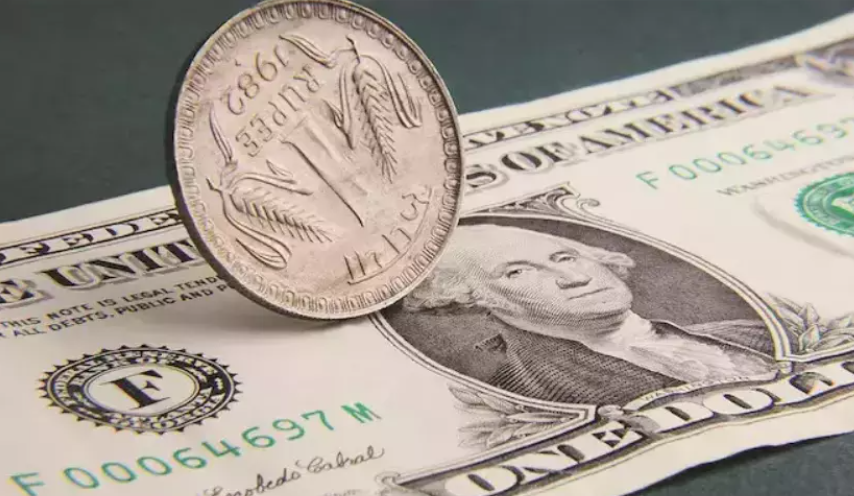
The Indian rupee became stronger compared with the US dollar.
It rose to its best closing level in about ten weeks.
The Reserve Bank of India received a very large amount of dollars through special forex schemes.
Reports put the total inflow at about $136.4 billion.
A weaker US dollar and steady oil prices also helped the rupee.
The extra dollars gave banks more money to lend and manage during the festive season.
However, too much extra money in the banking system can also create a new problem.
The RBI may need to use tools to remove some of that excess money.
Experts think the rupee could become stronger, but higher oil prices, US interest-rate yields or geopolitical tensions could weaken it again.

The rupee gained 0.51% on Thursday, closing at ₹94.48 per dollar in one report and ₹94.51 in another.
The currency recorded its biggest single-day rise since July 27 and reached its strongest level since June 25 or June 26, according to differing reports.
The RBI’s special forex schemes attracted about $136.4 billion, including roughly $127.23 billion through dollar deposits under the FCNR(B) window.
A weaker US dollar, softer US Treasury yields, steady oil prices and a stronger yen also supported the rupee.
The inflows lifted India’s banking-system liquidity surplus to a reported record ₹9.70 trillion, while analysts warned that excess liquidity may require RBI intervention.
- Who
- The Indian rupee, the Reserve Bank of India, Indian banks, currency traders and analysts including Dilip Parmar, Anuj Choudhary, Kunal Sodhani, Anil Bhansali and Siddhartha Khemka.
- What
- The rupee rose to a roughly ten-week high after the RBI’s special forex schemes attracted about $136.4 billion and increased banking-system liquidity.
- When
- Thursday; the articles do not provide a calendar date.
- Where
- Mumbai and the Indian foreign-exchange market.
- Why
- The rise was driven mainly by substantial dollar inflows under the RBI schemes, with additional support from a weaker dollar, softer US Treasury yields, steady oil prices and a stronger yen.
Benefits of RBI Forex Inflows
Risks and Policy Concerns
Banking liquidity
Benefits of RBI Forex Inflows
The inflows increased the banking-system liquidity surplus, which could support deposits and credit growth, improve banks’ ability to manage funds and reduce pressure on domestic interest rates.
Risks and Policy Concerns
The reported ₹9.70 trillion surplus could be excessive, potentially creating pressure on banks’ net interest margins and requiring the RBI to absorb funds through multiple measures.
Rupee outlook
Benefits of RBI Forex Inflows
Some traders expect the rupee to appreciate toward ₹94.10–₹93.50 per dollar because of the large dollar supply, a weaker US currency and steady oil prices.
Risks and Policy Concerns
Analysts warned that higher crude prices, rising US yields or renewed US-Iran and other geopolitical tensions could limit gains and push the rupee toward ₹96 per dollar.
RBI currency strategy
Benefits of RBI Forex Inflows
Kunal Sodhani said the inflows give the RBI greater flexibility to manage both excessive depreciation and excessive appreciation, rebuild reserves and manage forward-book exposure.
Risks and Policy Concerns
Anil Bhansali said the RBI may need to buy about $216 billion in coming months to cover short positions, and that its eventual strategy and profitability remain uncertain.
- Closing exchange rate
- ₹94.48 per US dollar in one report; ₹94.51 in another
- Daily appreciation
- 0.51%, the rupee’s biggest single-day gain since July 27
- Total forex mobilisation
- About $136.4 billion through the RBI’s special forex schemes
- FCNR(B) inflows
- About $127 billion; one report specifies $127.23 billion
- Banking-system liquidity surplus
- Reported at a record ₹9.70 trillion
- Potential rupee target
- Analysts cited a possible move toward ₹94.10–₹93.50 per dollar
- Downside risks
- Crude above $100 a barrel, higher US yields and renewed geopolitical stress could push the exchange rate toward ₹96 per dollar
- Possible liquidity tools
- Longer-tenor variable-rate reverse repos, dollar-rupee sell-buy swaps, the Market Stabilisation Scheme or a higher cash-reserve ratio