1 week ago
Cambridge Report Calls for Teachers in India’s AI Education

A new report says teachers should help decide how artificial intelligence is used in Indian schools.
Teachers understand what works in real classrooms, so policymakers should listen to them.
The report says teachers need training to use AI safely and effectively.
Students and teachers should also help test and improve AI tools.
Schools should teach students to question whether AI answers are accurate.
AI should help learning rather than let students avoid doing the work themselves.
The report recommends ethical rules, safety protections and fair access to good AI tools.
It says people should remain at the centre of education.

A Cambridge University Press & Assessment report urges Indian policymakers to involve teachers in shaping AI education policy.
The report calls for greater investment in teacher professional learning so educators can use and critically assess AI tools.
Teachers and learners should help design, procure, implement and evaluate generative AI tools, it says.
Recommendations include critical AI literacy in curricula, human-centred outcomes, ethical use and strong safeguards.
The report also stresses protecting teacher judgement and ensuring equitable access to high-quality AI tools.
- Who
- Cambridge University Press & Assessment, policymakers, teachers and learners.
- What
- A report recommends teacher involvement and stronger safeguards in shaping AI education policy and practice.
- Where
- India, with recommendations informed by English language teachers worldwide.
- When
- The report was presented on Thursday; no specific date is provided.
- Why
- To make AI integration in schools practical, ethical, human-centred and grounded in classroom realities.
Key facts
- Report
- Shaping AI Policy and Practice in English Language Teaching
- Publisher
- Cambridge University Press & Assessment
- Primary focus
- Teacher involvement in artificial intelligence education policy
- Professional learning
- The report calls for investment in teacher training and ongoing professional learning.
- AI literacy
- Students should learn to critically assess AI outputs and use generative AI to support, not shortcut, learning.
- Governance
- Teachers and learners should contribute to the design, procurement, implementation and evaluation of generative AI tools.
- Safeguards
- Recommendations include ethical use, robust safeguards, teacher agency and equitable access to high-quality tools.
Quotes
Dr Evelina Galaczi
Director of Research English at Cambridge University Press & Assessment
“Teachers who are already successfully experimenting with AI in their classrooms are prioritising professional judgement, human-centred practices and critical AI literacy. By following this lead, we can ensure AI becomes an effective and responsibly applied tool for teaching and learning, not a crutch for learning shortcuts.”
 rediff.com
“This has led to gulfs in knowledge, and an inconsistent approach to AI education and adoption. As often happens, it has become the quiet responsibility of teachers in India and worldwide to develop the practical knowledge of what responsible AI integration actually looks like.”
rediff.com
Sources
Related news
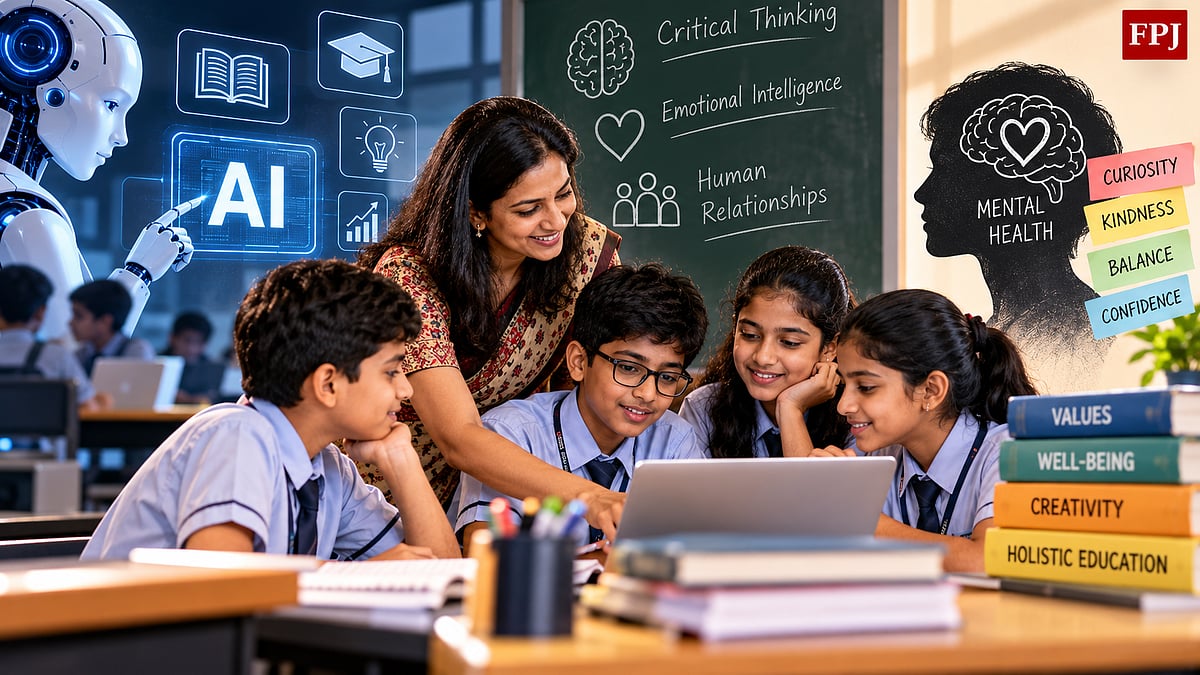
Educators Urge Human Skills and Well-Being as AI Enters Classrooms

UNESCO Sets Framework to Prepare Teachers for AI
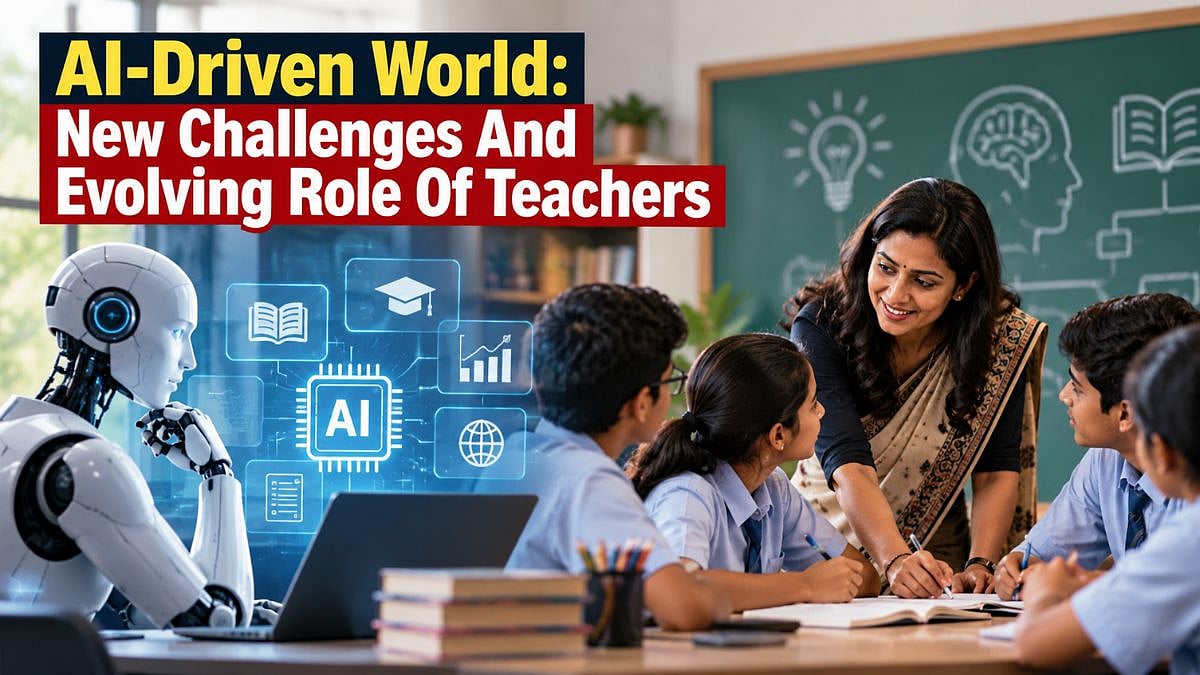
AI’s Rise Makes Teachers’ Human Role More Important

IIHM Bangalore honours educators at 2026 Teachers’ Day Awards

AI Will Redefine the MBA, Not Replace It

Telangana Education Debate Centers on Parents, Curriculum and Infrastructure

Indian Students Choose Local Degrees Before Overseas Master’s Study

Indian Students Choose Domestic Degrees Before Overseas Study