

2 days ago
Kerala High Court Upholds Removal of Intoxicated Train Passengers
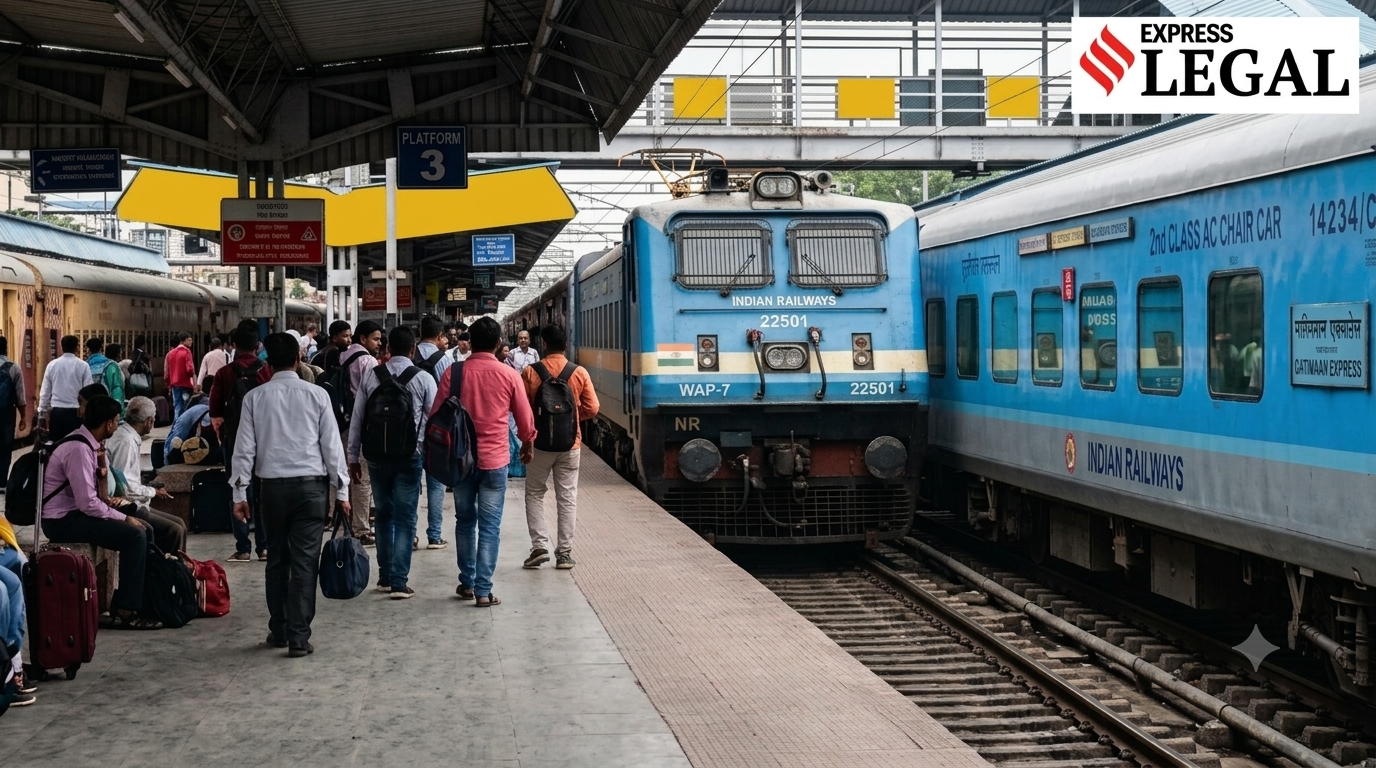
The Kerala High Court decided that railway staff can remove people who appear drunk from trains.
This power comes from Section 145(a) of the Railways Act.
A passenger had argued that the rule was unfair because it did not clearly define intoxication.
The court said the rule helps protect passengers and keep trains orderly.
Railway staff must look at a person’s behaviour and physical signs before taking action.
Signs can include slurred speech, staggering, aggressive behaviour or the smell of alcohol.
Seeing only one or two signs does not automatically prove that someone is intoxicated.
Staff may use a breath analyser and a doctor may examine the person later.
The court said requiring a blood test immediately would take too long.
It also said people can seek legal remedies if the power is used arbitrarily.

The Kerala High Court upheld Section 145(a) of the Railways Act, allowing railway servants to remove intoxicated passengers.
The court ruled that the provision is not arbitrary or unconstitutional and protects passenger safety, public order and comfort.
The judgment followed a challenge by K N Shastry, who argued that “state of intoxication” was undefined and open to misuse.
Railway Board guidelines require physical observation of appearance and behaviour before suspected intoxication is assessed.
The court said breath analysers may be used initially, while requiring blood tests before removal would be impractical.
- Who
- The Kerala High Court, Justice Bechu Kurian Thomas, railway authorities and petitioner K N Shastry.
- What
- The court upheld the railways’ power under Section 145(a) of the Railways Act to remove intoxicated passengers.
- Where
- On trains and railway premises in Kerala and elsewhere under the Railways Act.
- When
- The order was issued on July 29; the Railway Board guidelines considered by the court were issued on September 14, 2023.
- Why
- The court found the provision necessary for public order, passenger safety and the comfort of fellow travellers.
Challenge to Removal Powers
Railways’ Safety Argument
Definition of intoxication
Challenge to Removal Powers
K N Shastry argued that “state of intoxication” was undefined and could give railway personnel excessive discretion.
Railways’ Safety Argument
The railways and court relied on Railway Board guidelines requiring observation of multiple physical or behavioural indicators.
Personal liberty and implementation
Challenge to Removal Powers
The petitioner argued that arbitrary identification could interfere with passengers’ personal liberty and travel.
Railways’ Safety Argument
The court said possible arbitrary implementation does not make the provision unconstitutional and that affected people may seek a legal remedy.
Need for testing
Challenge to Removal Powers
The challenge raised concerns about removing people without a precise legal or medical determination of intoxication.
Railways’ Safety Argument
The court said removal is an initial safety measure distinct from later prosecution, and that immediate blood testing would be impractical.
Key facts
- Legal provision
- Section 145(a) of the Railways Act permits railway servants to remove people found intoxicated from trains or railway premises.
- Petitioner
- K N Shastry, managing director of a tour and travel company, challenged the provision.
- Constitutional challenge
- The challenge invoked Articles 14, 19 and 21 of the Constitution.
- Assessment process
- Railway Board guidelines call for physical observation of appearance and behaviour before a prima facie assessment of intoxication.
- Indicative signs
- Signs include bloodshot or watery eyes, slurred speech, irrational statements, aggression, staggering, drowsiness, vomiting and the odour of alcohol or chemicals.
- Testing
- A breath analyser may be used initially, followed by examination by a competent doctor if appropriate.
- Court’s reasoning
- The court said a blood test before removal would be impractical because analysis could take several hours.
Quotes
Justice Bechu Kurian Thomas
Kerala High Court judge who delivered the ruling
“A provision in the nature of Section 145(a) of the Act is a recognition of the requirement of ensuring public order and safety and the comfort of other passengers inside a railway carriage and also premises of the railway.”
 indianexpress.com
“It is a settled principle of law that the manner of implementing a provision cannot render the provision itself unconstitutional.”
indianexpress.com
Sources
Related news
Railways Ordered to Pay ₹75,000 Over Crowded Reserved Berths
Indian Railways Doubles Cleanliness Penalty to Rs 1,000

Kerala railway safety drive arrests 33 under Operation Rakshitha
RPF Registers 2,581 Mumbai Cases During August Crackdown

Woman Alleges Harassment, Delayed Security Response on Jaipur Train
Orissa High Court Says Brothel Customers Cannot Face Trafficking Charges
Kerala High Court Rejects Student’s Short Attendance Plea
Kerala High Court Upholds Conviction Over Kissing Child’s Genitals

Kerala High Court Says POCSO Applies to Minor Marriage
High Court Refuses Relief to Couple in Child Labour Case
