9 months ago
Chetan Anand's Centenary: A Retrospective of His Landmark Films
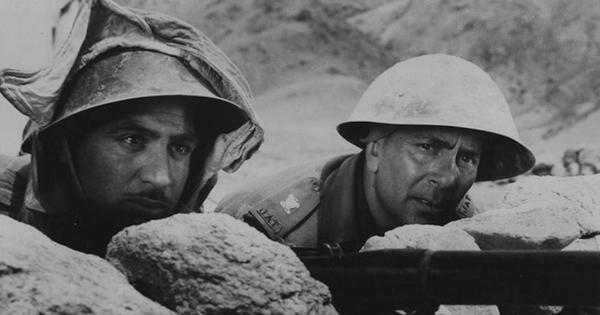
Chetan Anand was a famous Indian filmmaker who made many important movies.
Even though he made great films, he didn't get as famous as he should have.
Now, some of his best movies are going to be shown at a big film festival in Mumbai.
These movies talk about different things like fighting, money problems, and sad love stories.
Anand was the oldest of three brothers who all worked in the movie business.
He made his first movie in 1946, and even though it was a long time ago, it's still a good movie.
His other movies are also very good and have influenced other filmmakers.

Chetan Anand, a pioneering Indian filmmaker, will be honored with a retrospective at the Jio MAMI Mumbai Film Festival.
Despite his significant contributions, Anand remains one of India's least recognized filmmakers.
His films, including 'Neecha Nagar', 'Taxi Driver', 'Haqeeqat', and 'Heer Ranjha', will be showcased at the festival.
Anand's works tackled diverse subjects such as war, capitalism, and tragic love stories, often blending social realism with innovative cinematic techniques.
He was the eldest of three brothers in the Hindi film industry, with Dev and Vijay Anand also achieving success as actors and directors.
- Who
- Chetan Anand, an Indian filmmaker
- What
- A retrospective of his films at the Jio MAMI Mumbai Film Festival
- Where
- Mumbai, India
- When
- October 29-November 5
- Why
- To honor Anand's significant contributions to Indian cinema
Key facts
- First Film
- Neecha Nagar (1946)
- Notable Films
- Taxi Driver (1954), Haqeeqat (1964), Heer Ranjha (1970)
- Awards
- Grand Prix du Festival International du Film at Cannes for Neecha Nagar
- Family
- Eldest of three brothers (Dev and Vijay Anand) in the Hindi film industry
- Career Span
- Active from the 1940s to the 1970s
Quotes

K.A. Abbas
Scriptwriter of 'Neecha Nagar' and a prominent member of the Indian People’s Theatre Association (IPTA)
“The story of 'Neecha Nagar' highlights the use of water as a weapon to control the poor, recalling Maxim Gorky’s 'The Lower Depths' and Fritz Lang’s 'Metropolis'.”
 scroll.in
Chetan Anand
Director of 'Heer Ranjha'
“'Heer Ranjha' avoids using the color yellow entirely until the scene that marks the beginning of a spring festival.”
scroll.in