

6 days ago
RBI Intensifies Rupee Support as Reserves Cushion Currency Pressure

India’s central bank is trying harder to stop the rupee from falling too quickly.
It has received about $73 billion in new dollar inflows since June.
This gives the bank more dollars to sell when people want to buy dollars.
On one day, it reportedly used $7 billion to support the rupee.
The rupee has become less jumpy, but it is still losing value against the dollar.
Higher oil prices make India need more dollars because it imports fuel.
Businesses are also buying dollars to protect themselves from a weaker rupee.
The central bank must decide how much support to provide without raising interest rates and slowing the economy.

The Reserve Bank of India is intervening more consistently to support the rupee after attracting $73 billion in fresh dollar inflows since June.
The RBI reportedly spent $7 billion in one day as the rupee approached a record low, helping reduce near-term currency volatility.
The rupee has still weakened 0.8% this quarter as higher crude prices and a narrowing India-United States interest-rate gap create pressure.
Importer demand for dollars has increased, while exporter dollar sales have not kept pace, adding to pressure on the currency.
The RBI faces a trade-off between defending the rupee and avoiding interest-rate increases that could slow economic growth.
- Who
- The Reserve Bank of India, led by Governor Sanjay Malhotra, is supporting the rupee amid pressure from markets, importers and higher oil prices.
- What
- The RBI has shifted toward more regular foreign-exchange intervention to slow the rupee’s decline and reduce volatility.
- Where
- The intervention is occurring in India’s onshore and offshore foreign-exchange markets.
- When
- The more consistent intervention has taken place over the past month; the report was published on August 27, 2026.
- Why
- Higher crude prices, a narrowing interest-rate gap with the United States, strong importer dollar demand and limited exporter dollar selling are putting pressure on the rupee.
Support More Aggressive Intervention
Question Intervention’s Effectiveness
Currency stability
Support More Aggressive Intervention
Regular intervention can dampen volatility and slow potentially self-reinforcing rupee declines, according to market observers quoted in the report.
Question Intervention’s Effectiveness
Intervention has slowed depreciation but has not reversed the rupee’s broader decline, and more than $700 billion in reserves have not convinced investors that the currency is undervalued.
Interest-rate response
Support More Aggressive Intervention
The RBI can use its additional dollar inflows to support the rupee without immediately raising interest rates, helping avoid added pressure on economic growth.
Question Intervention’s Effectiveness
Higher interest rates may be needed to raise forward premia and reduce importer dollar demand, but rate increases could slow an economy facing headwinds from the Iran war.
Scale of support
Support More Aggressive Intervention
The new inflows give the RBI capacity to maintain its current intervention stance for a period and allow some forward positions to mature without excessive liquidity strain.
Question Intervention’s Effectiveness
The RBI must manage future dollar-selling obligations exceeding $100 billion, while continued oil costs and capital outflows could prolong pressure on the currency.
Key facts
- Fresh dollar inflows
- About $73 billion attracted through RBI measures since June
- Reported one-day intervention
- $7 billion spent as the rupee approached a record low
- Rupee performance
- Down 0.8% against the dollar this quarter, compared with a 5.2% decline in January-March
- Currency volatility
- One-month dollar-rupee implied volatility fell about 100 basis points this month
- Importer forward purchases
- Monthly average purchases rose 40% to $60 billion this year
- Exporter dollar sales
- Monthly average sales rose 27% to $32 billion this year
- Future dollar-selling obligations
- More than $100 billion
Quotes
Abhishek Upadhyay
Economist at ICICI Securities Primary Dealership
“What needs to be tackled is the relentless stream of dollar demand from importers and a lack of dollar selling from exporters. You need higher forward premia, driven by higher interest rates to correct that situation.”
 thehindubusinessline.com
“The RBI’s primary objective is to dampen volatility and the velocity of moves in either direction, rather than fundamentally altering the trajectory.”
thehindubusinessline.com
Sources
Related news

Rupee Climbs to Two-Month High on RBI Intervention
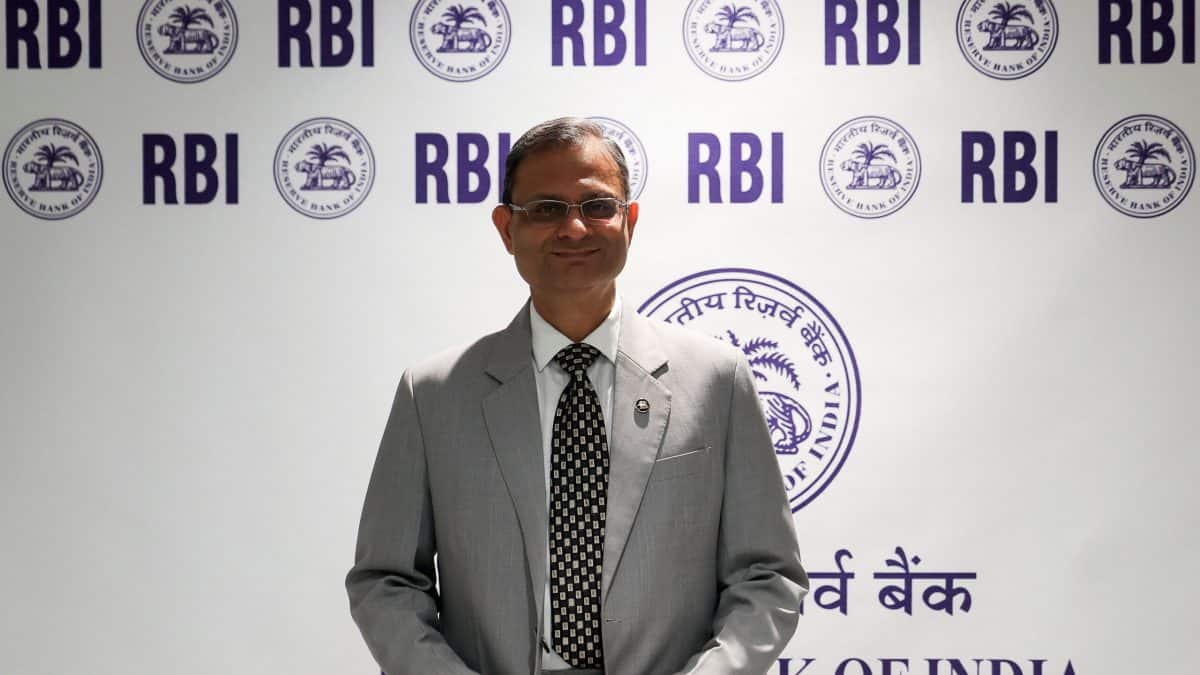
Why RBI Is Likely Stepping In To Support the Rupee

Rupee stays near two-month high despite oil, yield pressures

Rupee opens 6 paise higher at 95.38 against US dollar

FCNR(B) Inflows Cross $100 Billion as RBI Closes Window

Indian Bond Yields Near 7% as Rate Hike Bets Rise

India Hosts BRICS 2026 Amid US-Iran War Tensions

Finance Ministry Flags Global Yield and Inflation Risks for India
HDFC Bank CEO Jagdishan Opts Out of Reappointment
