

Archive · 5 Oct 2026
New Mokama Bridge Adds Rail Capacity Across Bihar
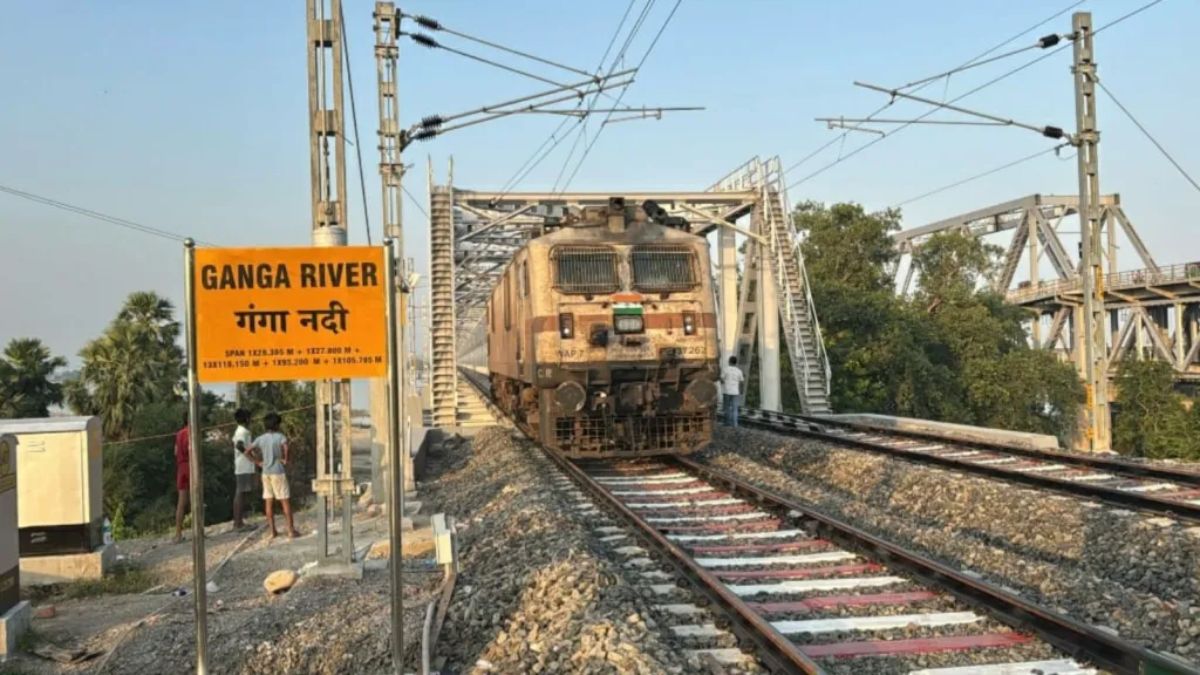
A new railway bridge has opened over the Ganga at Mokama in Bihar.
It was built beside the older Rajendra Pul bridge.
The new bridge has two railway lines.
Trains will keep using the old bridge too.
The Mahananda Express was the first train to cross the new bridge.
The project cost around Rs 2,400 crore.
Railway officials expect the route to carry about two and a half times as much rail traffic.
They say this could help passenger trains and freight trains run more smoothly.

Indian Railways commissioned a new double-line bridge over the Ganga at Mokama, Bihar.
The bridge cost around Rs 2,400 crore and received safety clearance after inspections on October 3 and 4.
The Mahananda Express was the first train to cross the new bridge, around midnight after operations began.
Built parallel to Rajendra Pul, the new bridge adds two lines while train operations continue on the old bridge.
Railway officials expect corridor capacity to rise around 2.5 times, improving passenger and freight movement.
- Who
- Indian Railways commissioned the bridge; the Mahananda Express was the first train to cross it.
- What
- A new double-line rail bridge over the Ganga was commissioned.
- When
- Train operations began around midnight after safety inspections on October 3 and 4; the articles do not state the year.
- Where
- At Mokama, Bihar, connecting the banks near Mokama and Barauni.
- Why
- To add railway capacity and improve passenger and freight movement between North and South Bihar and along the wider corridor.
- Project cost
- Around Rs 2,400 crore
- Main bridge length
- 1.9 km over the Ganga
- Total project length
- Around 15.5 km
- Bridge structure
- 17 steel spans, supported by around 3.6 km of rail viaducts
- Additional structures
- Eight minor bridges, two road overbridges and three rail-over-rail structures
- Capacity projection
- Rail traffic capacity on the corridor is expected to increase around 2.5 times
- Existing bridge
- Rajendra Pul has been operational since 1959 and will remain in use