

Archive · 13 Sep 2025
AI Transforms Agriculture, from Soil to Supply Chains
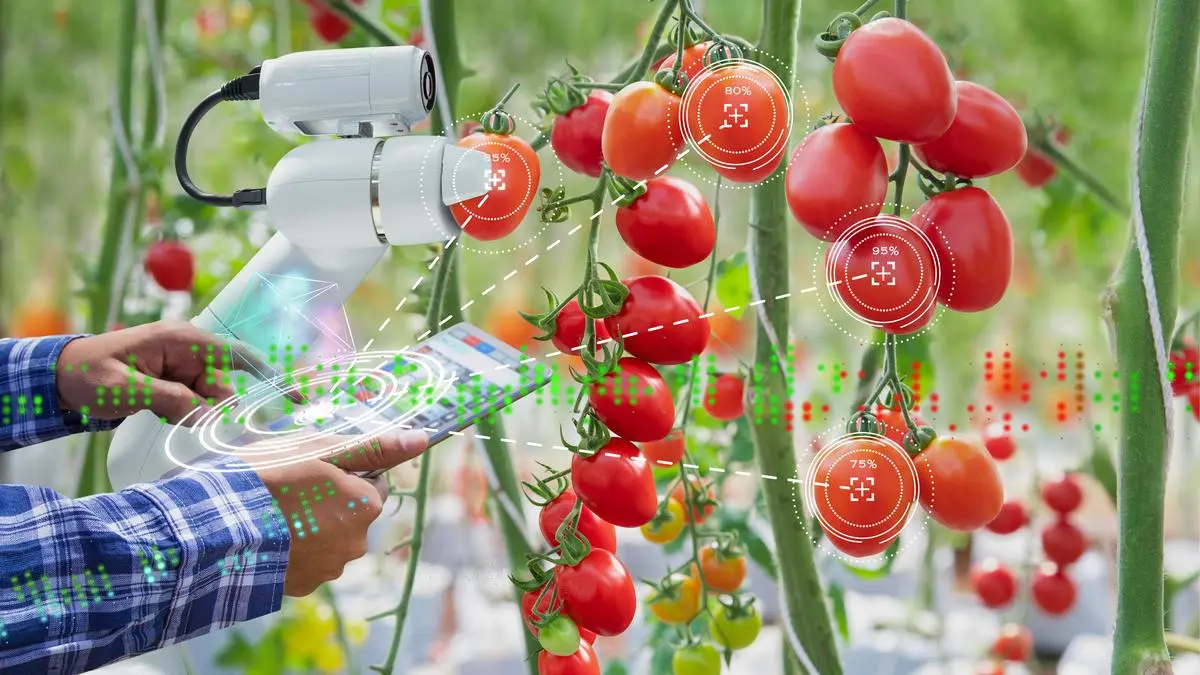
AI is changing farming by using data to make better decisions.
Sensors track soil, drones monitor crops, and AI helps with irrigation and disease detection.
Robots can harvest crops, improving efficiency.
This leads to less water use, fewer chemicals, and better harvests.
While it has challenges like connectivity issues, successful implementation involves easy-to-use tools and clear advice for farmers.
This helps make farming more efficient, sustainable, and profitable.

AI is transforming agriculture by using data to make better decisions.
Soil sensors, drones, and AI models are used for irrigation, crop management, and harvesting.
AI helps with disease detection and the use of fertilizers and pesticides.
Robotics and automation are increasing efficiency during harvest time.
Challenges include connectivity issues, language barriers and gaining farmers' trust.
- Who
- Farmers and AI developers
- What
- AI integration in agriculture
- When
- September 13, 2025 (publication date)
- Where
- Focus on the agriculture ecosystem
- Why
- To improve efficiency, sustainability, and profitability
- Focus
- Transforming agriculture using AI
- AI Applications
- Soil sensors, irrigation, crop management, robotics, and sustainability
- Benefits
- Increased efficiency, reduced costs, and improved sustainability
- Challenges
- Connectivity issues, language barriers, trust gaps
- Successful Implementation
- Simple farmer experience, localized advice, interoperability

