Archive · 10 Sep 2026
Indian Railways Explains What Happens When Emergency Chains Are Pulled
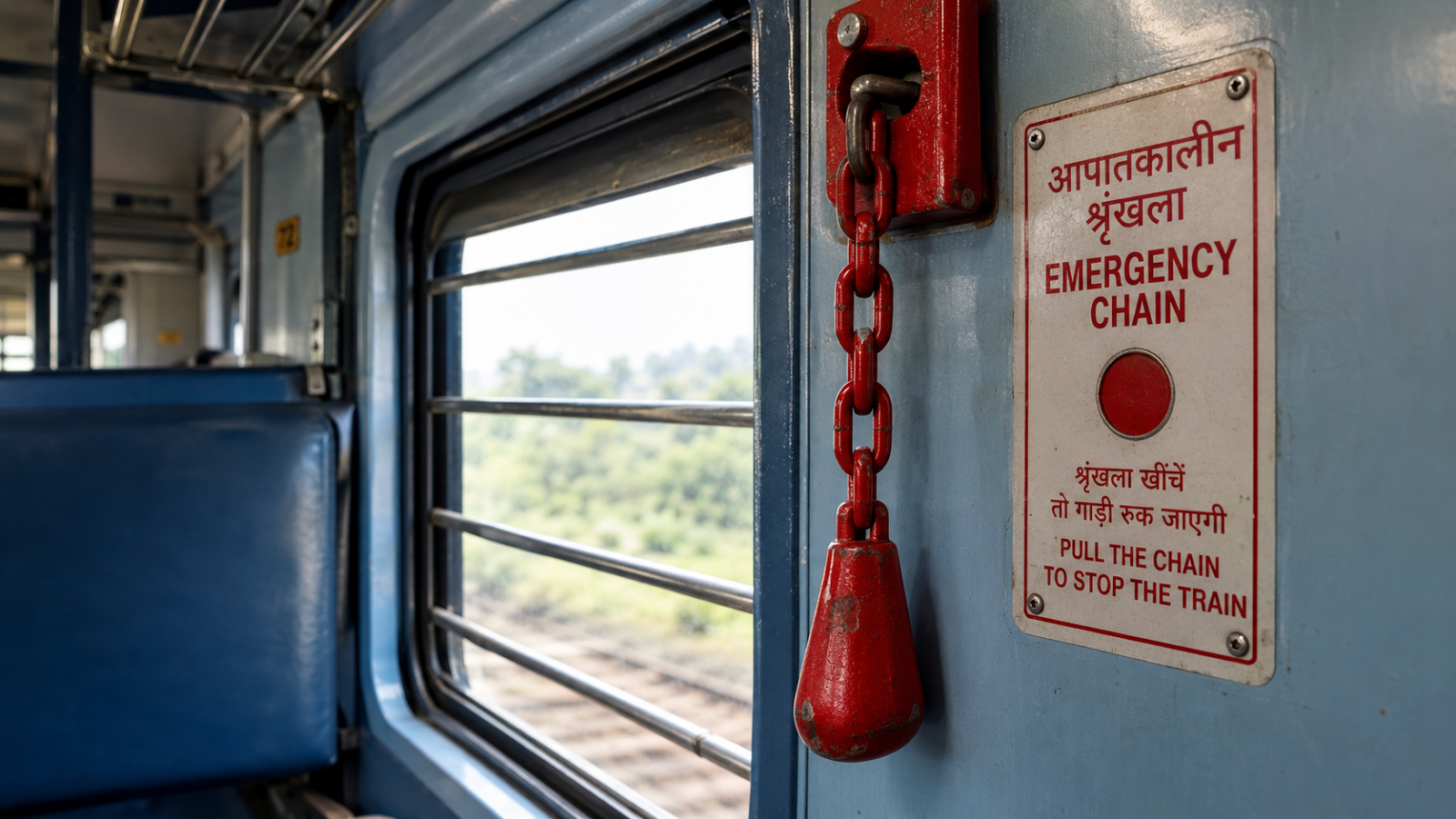
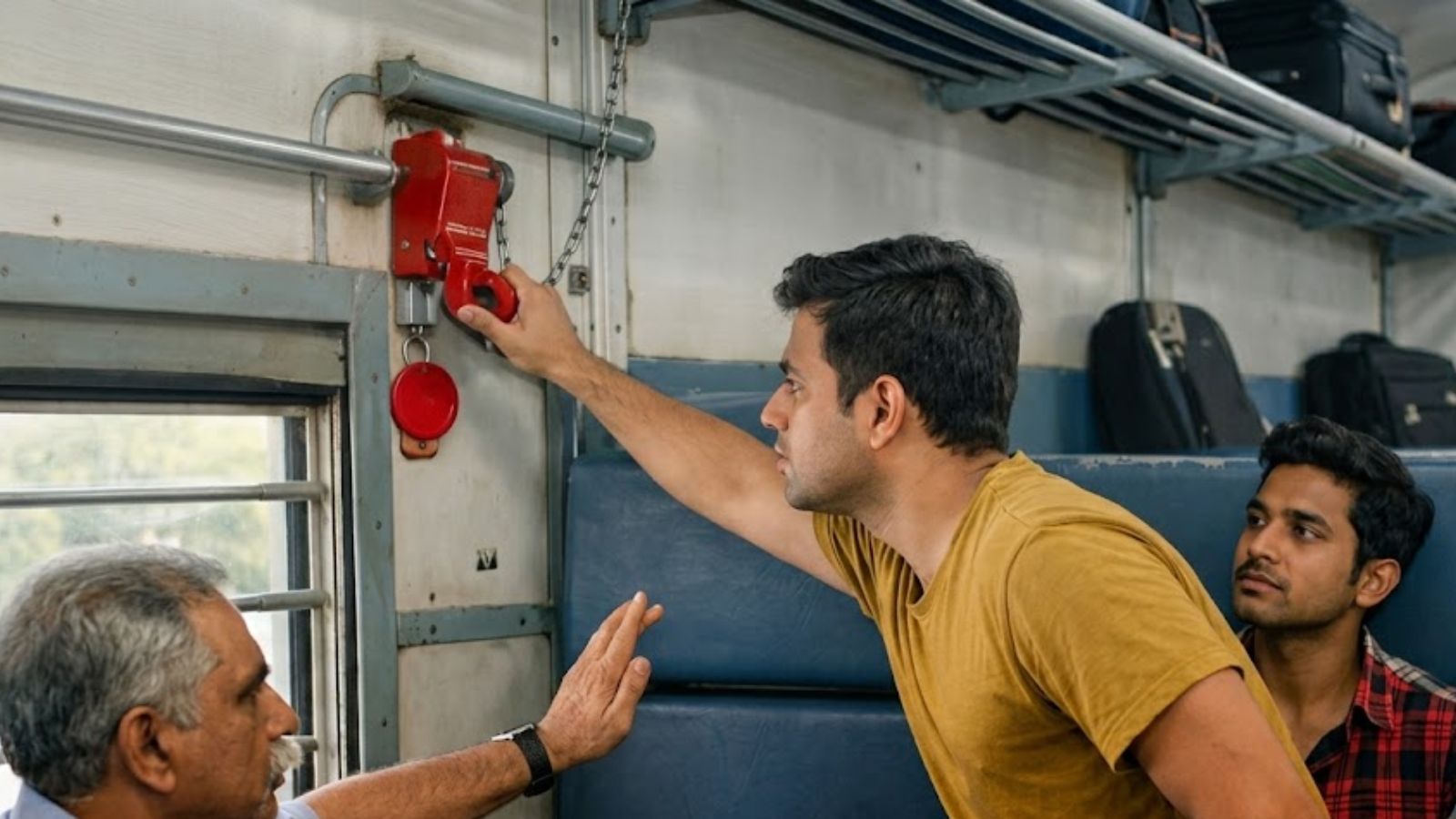
An emergency chain on a train is meant for serious dangers, not ordinary travel mistakes.
When someone pulls it, air escapes from the train’s brake pipe.
This lowers the pressure and tells the loco pilot to slow and stop the train.
A fast train may need time to stop safely.
Railway workers then find the coach and compartment where the chain was pulled.
They check what happened and reset the chain before the train continues.
The chain can be used for events such as a fire, a serious medical emergency or someone falling from the train.
If someone misses a station or boards the wrong train, they should get off at the next station instead.
Misusing the chain can delay many passengers and result in a fine or imprisonment.

Pulling the emergency chain vents air from the train’s brake pipe, lowering pressure and prompting the loco pilot to stop.
Railway staff identify the affected coach, investigate the reason and manually reset the chain before the train resumes.
The chain is intended for serious emergencies including medical crises, fires, passenger falls and major safety incidents.
Missing a station, boarding the wrong train or trying to correct a travel mistake is not a valid reason to pull it.
Unnecessary use can delay other trains and lead to penalties under Section 141 of the Railways Act, 1989.
- Who
- Passengers, loco pilots, guards, railway staff, the Railway Protection Force and Indian Railways are involved.
- What
- Indian Railways explained how pulling an emergency chain stops a train, when it is justified and what penalties apply for misuse.
- When
- The report cites 6,393 alarm chain pulling cases recorded from January through August 2026.
- Where
- The mechanism operates inside train coaches; the reported cases came from the Agra, Jhansi and Prayagraj divisions.
- Why
- The chain is designed to protect passengers during genuine emergencies, while unnecessary stoppages can disrupt the train and other services.
- Brake-pipe pressure
- The brake pipe normally maintains pressure of around 5 kg per square centimetre.
- How stopping begins
- Pulling the chain opens a vent valve, allowing air to escape and reducing brake pressure.
- Warning signals
- Three horn sounds indicate to the guard and security personnel that the chain was pulled.
- Valid emergencies
- Examples include serious medical emergencies, passenger falls, fires and serious safety, criminal or security incidents.
- Legal provision
- Section 141 of the Railways Act, 1989, covers unjustified use or interference with train communication equipment.
- Possible penalty
- A person may face up to one year in prison, a fine of up to Rs 1,000, or both; the article also cites a minimum Rs 500 fine for a first conviction and three months’ imprisonment for a later conviction, subject to legal circumstances.
- Reported enforcement
- Across the Agra, Jhansi and Prayagraj divisions, Railways recorded 6,393 cases, 6,379 arrests and Rs 16.63 lakh in fines from January through August 2026.
- Passenger assistance
- Passengers needing help are advised to call 139 or use the Rail Madad app.