

Archive · 22 Jul 2026
How to Verify Genuine Income Tax Notices
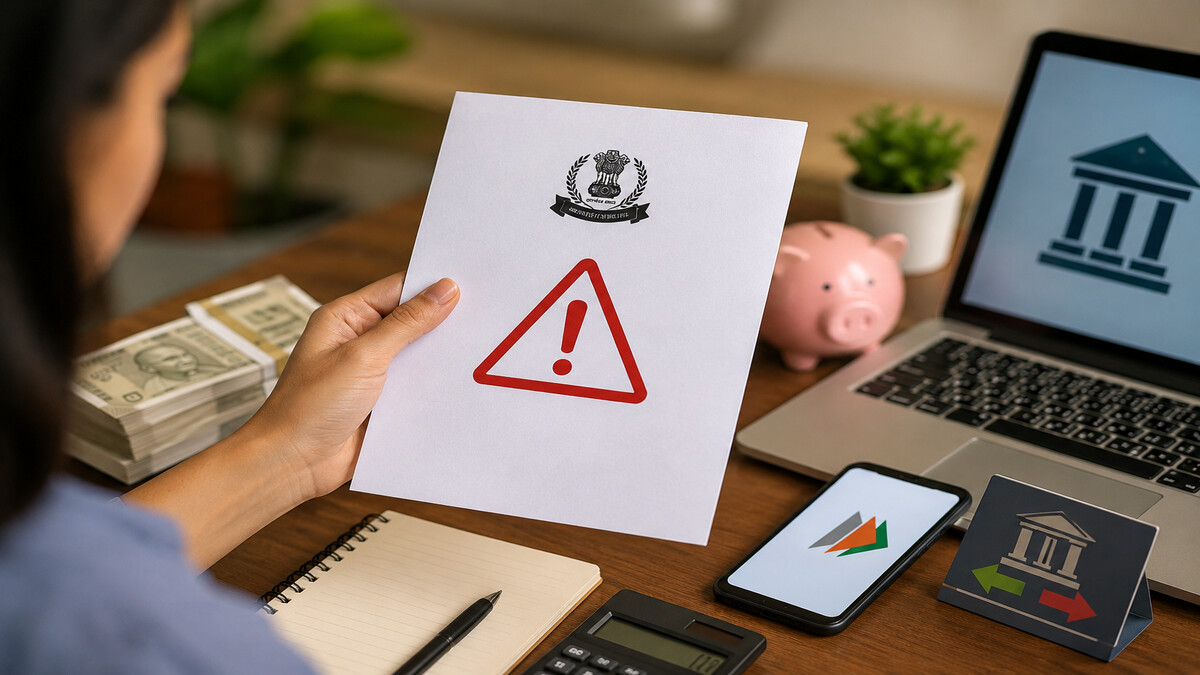
When you receive a message claiming to be from the Income Tax Department, it's important to verify if it's real or a scam.
Genuine notices have a unique Document Identification Number (DIN) and can be checked on the official e-filing portal.
Fake notices often use urgent language, suspicious links, and ask for personal information.
Always verify the notice independently before taking any action.
Use strong passwords and keep your accounts secure to protect yourself from fraud.

Genuine income tax notices have a unique Document Identification Number (DIN) and can be verified on the e-filing portal.
Fake notices use urgent payment demands, suspicious links, and pressure to act immediately.
Taxpayers should verify notices using PAN, Document type, Assessment Year, Date of Issue, and Mobile Number or DIN.
Do not click links, open attachments, or make payments based only on the message; verify through the official portal.
Use strong passwords, enable multi-factor authentication, and keep software updated to protect against fraud.
- Who
- Taxpayers and the Income Tax Department
- What
- Verification of genuine income tax notices and identification of scams
- When
- During the ITR filing season and throughout the year
- Where
- India
- Why
- To prevent fraud and ensure the authenticity of tax communications
Taxpayers
Scammers
Verification Process
Taxpayers
Taxpayers should verify the authenticity of income tax notices through the official e-filing portal using PAN, Document type, Assessment Year, Date of Issue, and Mobile Number or Document Identification Number (DIN).
Scammers
Scammers create fake notices that lack a valid DIN and use suspicious links and urgent payment demands to trick taxpayers.
Communication Tone
Taxpayers
Genuine notices from the Income Tax Department do not use panic language or pressure taxpayers into immediate action.
Scammers
Scammers use urgent payment demands, threats, and pressure to act immediately to deceive taxpayers.
Request for Information
Taxpayers
Legitimate notices do not ask for passwords, OTPs, bank details, or other confidential information.
Scammers
Fake notices often request sensitive information to steal personal and financial data.
- Document Identification Number (DIN)
- A unique number assigned to every communication by the Income Tax Department issued on or after 1st October, 2019.
- Authenticate Notice/Order Service
- A pre-login service on the e-Filing portal to verify the legitimacy of notices issued by the Income Tax Department.
- Common Genuine Notices
- Intimations after return processing, notices for mismatch or additional information, demand notices, defective return notices, and scrutiny-related notices.
- Red Flags for Fake Notices
- Urgent payment demands, suspicious links, threats, requests for unusual payment methods, and pressure to act immediately.
- Verification Process
- Taxpayers can verify notices using PAN, Document type, Assessment Year, Date of Issue, and Mobile Number or DIN.
- Response to Suspected Fraud
- Do not click links, open attachments, or make payments based only on the message. Verify through the official portal.
- Cyber Precautions
- Use strong passwords, enable multi-factor authentication, avoid public Wi-Fi, and keep software updated.