

Archive · 25 Nov 2025
India's Air-Power Inflection Point: Tejas, Sindoor, and New Tech-Doctrine Convergence
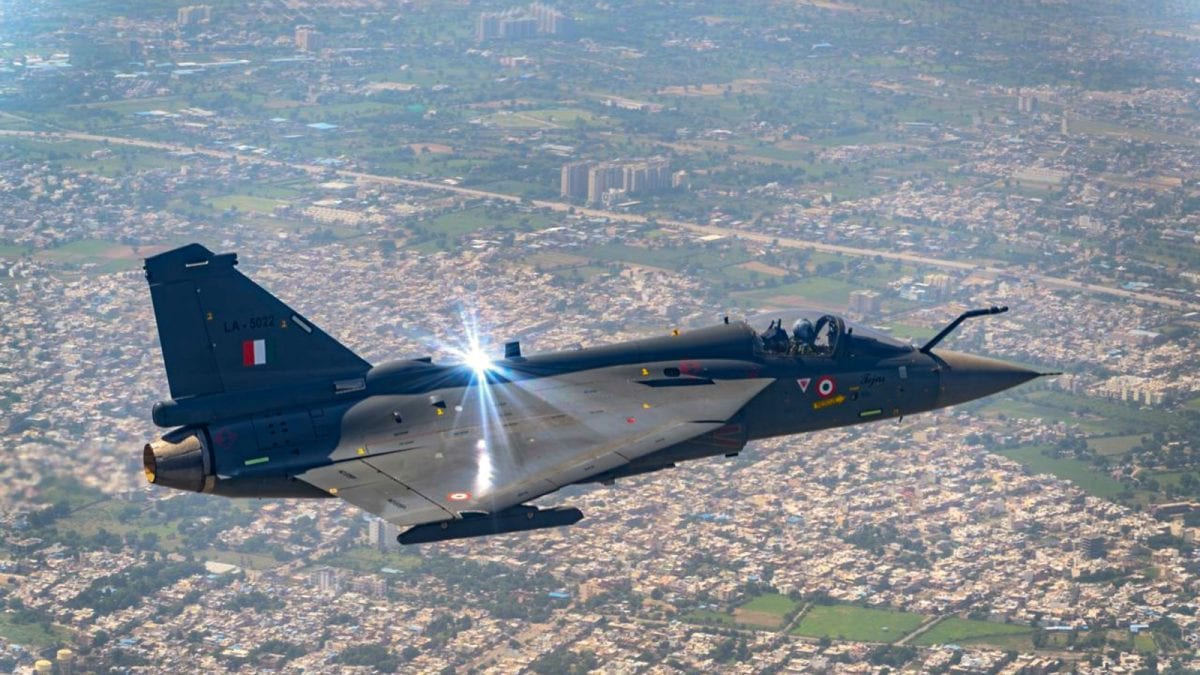
India has recently shown significant advancements in its air-power capabilities.
During Operation Sindoor, India successfully executed precision strikes on Pakistani airbases and terror sites, demonstrating a new doctrine of calibrated, controlled, precision punishment.
India's air-defence systems, including the S-400, Akash batteries, and laser-based anti-drone systems, successfully neutralized 413 Pakistani drones and missiles.
This showcases India's ability to absorb and counter coordinated missile-drone salvos, a capability only a few nations possess.
The Tejas fighter jet, with an impressive safety record, is a key component of India's air-power strategy.
India's advancements in air-power are not just military but also geopolitical, altering regional stability and demonstrating India's ability to shape its own strategic destiny.

India demonstrated a new air-power doctrine during Operation Sindoor, executing precision strikes on Pakistani airbases and terror sites.
India's air-defence systems, including the S-400, Akash batteries, and laser-based anti-drone systems, successfully neutralized 413 Pakistani drones and missiles.
The Tejas fighter jet has an impressive safety record, with only one non-combat crash before Dubai.
India's advancements in air-power are not just military but also geopolitical, altering regional stability and demonstrating India's ability to shape its own strategic destiny.
India is ramping up Tejas production and developing directed-energy systems, showcasing its indigenous aerospace capacity.
- Who
- India and Pakistan
- What
- India's air-power capabilities and recent developments
- When
- November 24, 2025
- Where
- India and Pakistan
- Why
- To demonstrate India's new air-power doctrine and capabilities
- Tejas Safety Record
- Over 20 years with only one non-combat crash before Dubai
- Operation Sindoor
- India demonstrated precision strikes on Pakistani airbases and terror sites
- Pakistan's Failed Retaliation
- India neutralized 413 Pakistani drones and missiles
- India's Air-Defence Layers
- S-400, Akash batteries, MR-SAM systems, and laser-based anti-drone systems
- Geopolitical Implications
- China's export ecosystem tested and found lacking
- Indigenous Aerospace Capacity
- India is ramping up Tejas production and developing directed-energy systems
- Kill-Chain Autonomy
- India executed strikes without foreign oversight
- Industrial Deterrence
- India's ability to sustain long-term aerospace production
