

Archive · 25 Jul 2025
Yarlung Tsangpo River Basin and Hydropower Development
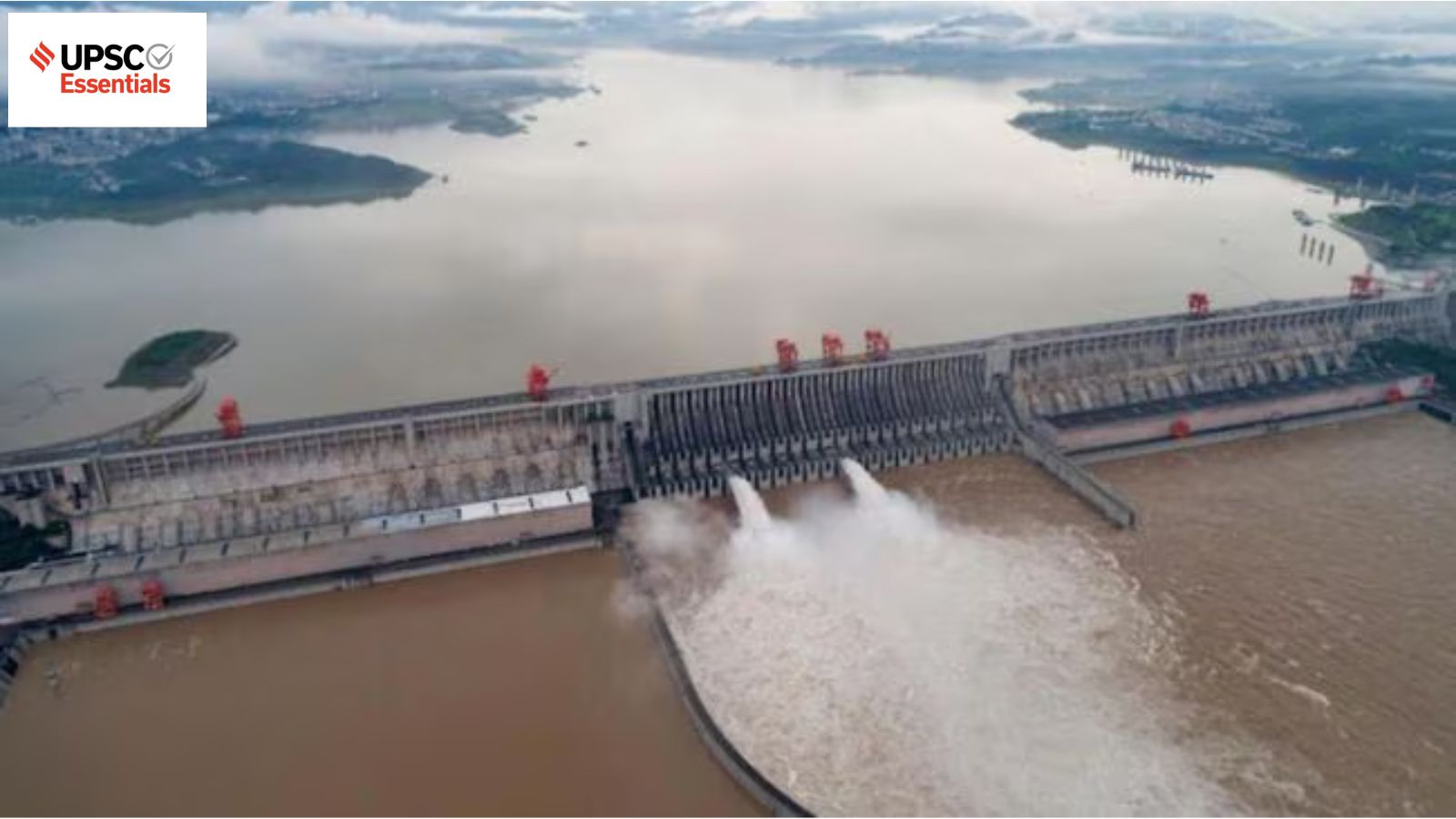
The Yarlung Tsangpo River, also known as the Brahmaputra, is a big river in Tibet.
It goes through China and India, providing a chance to make electricity with water.
China and India are building dams to use this power.
Where the river goes between India and China is a bit tricky, and both countries have different views on it.
The water from melting ice in the mountains affects how much water the river carries and can cause flooding.
Some worry about a 'water war' because of dam projects.

The Yarlung Tsangpo River originates in the Tibetan plateau and flows through China and India.
It's significant for global hydropower development, with China and India exploring dam projects.
The river flows through the disputed McMahon Line between India and China.
The YTB's energy is harnessed for renewable energy, especially in India and China.
Melting Himalayan glaciers impact the river's flow and flood intensity.
- Who
- China, India, and Bangladesh, as well as international bodies.
- What
- Geomorphological features and significance for hydropower of the Yarlung Tsangpo River Basin.
- When
- Ongoing discussions about hydropower development and its effects.
- Where
- Tibet, China, India, and Bangladesh.
- Why
- To generate hydroelectricity and address the impacts of climate change on the river.
China
India
Border Disputes
China
China is contested the border, arguing that Tibet was not an independent state at the time of the treaty, making it invalid.
India
India and the international community continue to recognize it as the legal border.
- Origin
- Tibetan plateau
- Length in Tibet
- 2,057 km
- Countries in Basin
- China, India, Bhutan, Bangladesh
- Indian Name
- Brahmaputra
- Key Feature
- Great Bend