7 months ago
Kerala Hosts First Kumbh Mela
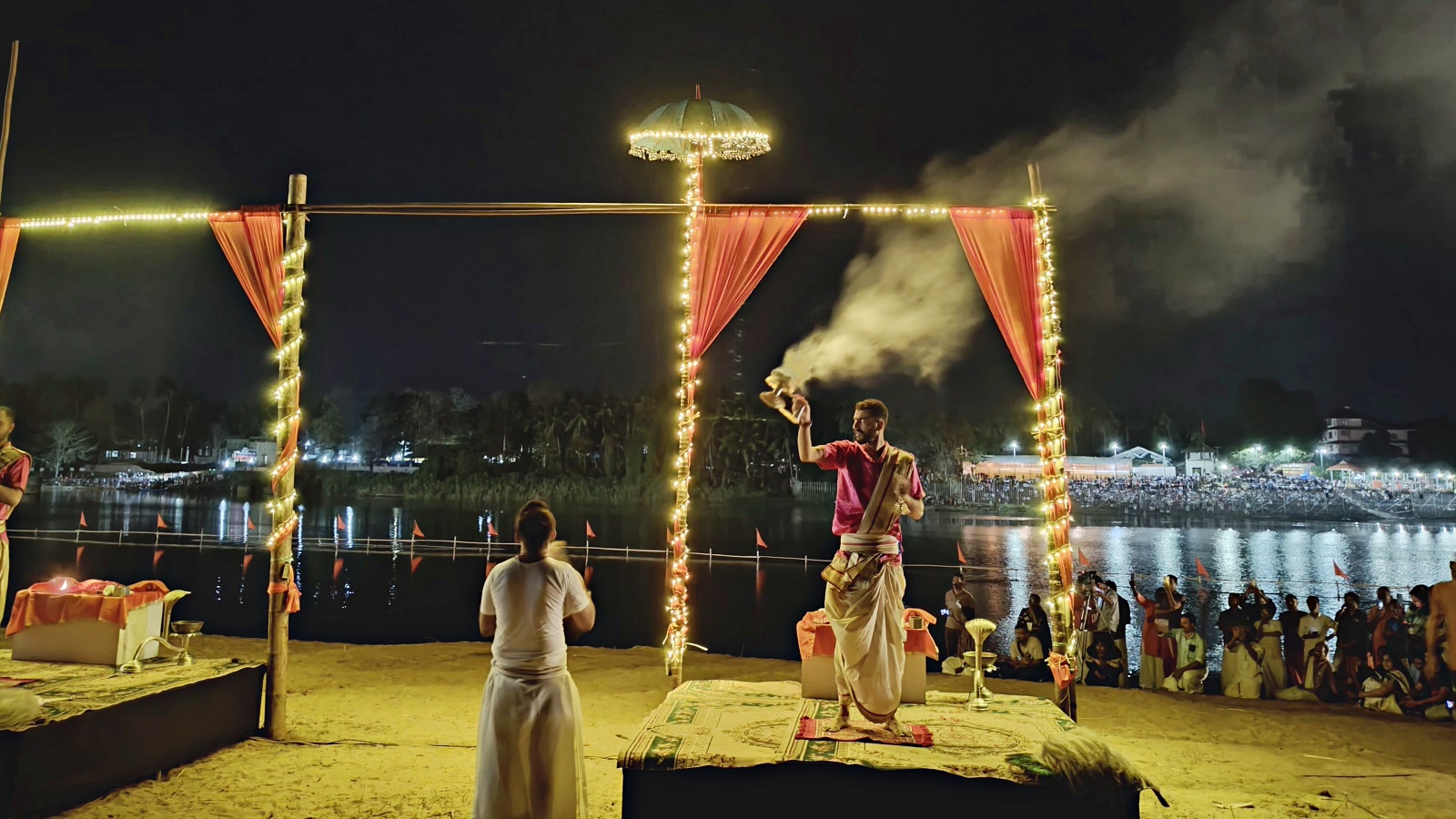
Kerala is hosting its first Kumbh Mela, a big Hindu festival, at the Nava Mukunda Temple in Thirunavaya.
Thousands of people are visiting the river Bharathapuzha to take holy dips and participate in rituals.
The event is organized by various groups and supported by different political leaders.
Some people believe this festival will make Hindus in Kerala stronger and more united.
The festival is seen as a way to bring back old traditions and make the Hindu community feel more secure.
The government and local leaders have shown support, and even people from other communities are helping out.
The festival has attracted more visitors than expected, and it's changing the way people see the temple and the river.

Kerala is hosting its first Kumbh Mela at the Nava Mukunda Temple in Thirunavaya, Malappuram district.
The 18-day event ends on February 3 and involves holy dips in the Bharathapuzha river and Vedic chants.
Organized by groups like Bharatheeya Dharma Prachara Sabha and Mohanji Foundation, with key figures including Mata Amritanandamayi and Swami Anandavam Bharati.
The festival aims to revive Hindu traditions and culture in Kerala, with political implications for parties like the BJP, CPI(M), and Congress.
The event has attracted more visitors than expected, with daily attendance reaching up to a lakh (100,000) people, and has received support from various communities.
- Who
- Organized by Bharatheeya Dharma Prachara Sabha, Mohanji Foundation, and others; key figures include Mata Amritanandamayi, Swami Anandavam Bharati, and V N Vasavan
- What
- Kerala's first Kumbh Mela, a Hindu festival involving holy dips and rituals
- Where
- Nava Mukunda Temple, Thirunavaya, Malappuram district, Kerala
- When
- 18-day event ending on February 3
- Why
- To revive Hindu traditions and culture in Kerala, with a focus on river worship and Hindu revivalism
Key facts
- Location
- Nava Mukunda Temple, Thirunavaya, Malappuram district, Kerala
- Duration
- 18 days, ending on February 3
- Organizers
- Bharatheeya Dharma Prachara Sabha, Mohanji Foundation, and others
- Key Figures
- Mata Amritanandamayi, Swami Anandavam Bharati, V N Vasavan
- Expected Sadhus
- Around 750 more expected
- Daily Attendance
- Up to a lakh (100,000) people
- River
- Bharathapuzha (Dakshin Ganga)
- Political Implications
- BJP sees potential gains, CPI(M) remains neutral, Congress sees no politics
Quotes

Narendra Modi
Prime Minister of India
“To restore the heritage of Tribheni and revive the pride of the Kumbha tradition, the Kumbha Mela was organised here last year. After 7 centuries, the three-day Kumbha Mahasana and Mela have generated a new energy in this area. For 3 days, people participated in the Ganga Aarti, Rudrabhishek and Yajna…Various rituals associated with Bengali traditions, such as Kirtan, Baul, Godiyo Nritto, Sree-Khol, Poter Gaan, Chou Nach were the centres of attraction in the evening program. It is a very commendable effort to connect our youth with the golden past of the country.”
 opindia.com
“I congratulate all the people associated with this organisation. You are not only reviving a tradition, but you are also protecting the cultural heritage of India. Tribheni has been known as a sacred place in West Bengal for centuries. It is mentioned in various Mangal Kavyas, Vaishnav literature, Shakta literature and other Bengali literary works. It is known from various historical documents that this area was once the centre of Sanskrit education and Indian culture.”
opindia.com
Ashok Ganguly
Local historian
“There was a connection between Tribeni Kumbh Mela and Gangasagar Mela. The saints of that time, after the end of Gangasagar Mela, used to come to Tribeni on foot. They used to take a bath on the day of Magh Sankranti. That day was considered Anukumbh in Tribeni. Saptagram and Tribeni were pilgrimage sites of education and culture.”
opindia.com
Sources
Related news

Satheesan Says Kerala’s LDF Faces Turmoil Amid Left Rift

Thomas Isaac Blames Arrogance, Candidate Lapses for CPI(M) Setback

CPI(M) Alleges Bishop, Wife Assaulted Over Conversion Charges
Calcutta High Court Grants Interim Bail to CPI(M) Leader
SFI Secretariat March Turns Tense Over University Police Action