

Archive · 26 Sep 2025
Hindu Temples: Evolution, Survival and Transformation
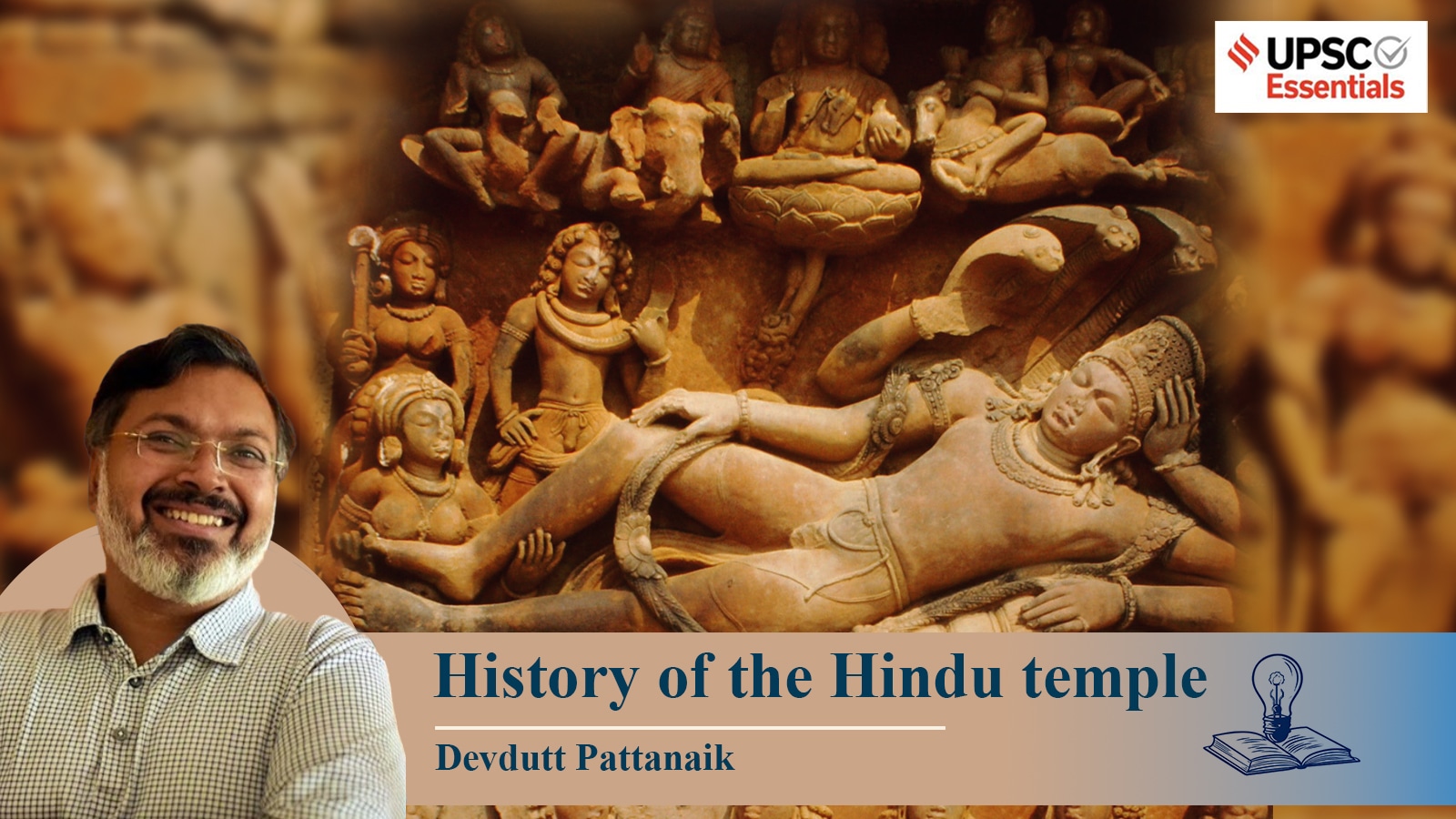
Imagine temples as houses for gods.
Long ago, people saw the divine in nature, like trees and rivers, instead of in a building.
Later, they started making statues of gods, and then building temples to keep them in.
Over time, temples changed a lot!
Some were carved into mountains, while others were built stone by stone.
When new ideas like the Bhakti movement came along, temples became more about everyone singing and dancing together.
Even when invaders attacked, temples found ways to survive, like by moving to safer places.
Today, Hindu temples continue to change and adapt.

Early Hindus worshipped the divine in nature before sculptures and temples.
Sculptures of Hindu gods first appeared around 2,000 years ago.
Temples evolved, with structures built to house images and replicate natural elements.
Freestanding temples marked a shift to enduring architectural styles.
Temples adapted through the Bhakti movement and survived attacks, evolving over centuries.
- Who
- Hindu temples
- What
- Evolution and transformation of Hindu temples over time
- When
- From ancient times to the present
- Where
- Across India
- Why
- To understand how they survived political upheavals and philosophical shifts
- Earliest Worship
- Nature-based, in trees, animals, rivers, and rocks
- Earliest Sculptures
- Appeared around 2,000 years ago in Mathura
- Bhitargaon Temple
- 500 AD, one of the earliest brick temples
- Architectural Styles
- Nagara (north), Vimana (south) styles by 10th century
- Bhakti Movement
- Shifted focus to public participation in worship