

Archive · 7 Nov 2025
Southeast Asia Scam Centers Continue to Grow Despite Crackdowns
Imagine some bad people in Southeast Asia built big places like compounds to trick others.
They trick people all over the world into sending them money by pretending to be someone else or offering fake jobs.
Inside these places, many workers are forced to do the tricking for long hours and can't leave.
They even take their passports away!
Sometimes, police try to stop these bad people and rescue the workers.
But there are so many of these tricking places, and the main people in charge are hard to catch.
So, even when police close one down, others keep popping up.
It's like playing a game of whack-a-mole, and the tricksters keep finding new ways to fool people, costing them billions of dollars.

Scam centers in Southeast Asia continue to proliferate despite authorities' efforts to curb them.
Billions of dollars have been scammed globally, with hundreds of thousands of people forced into labor within these operations.
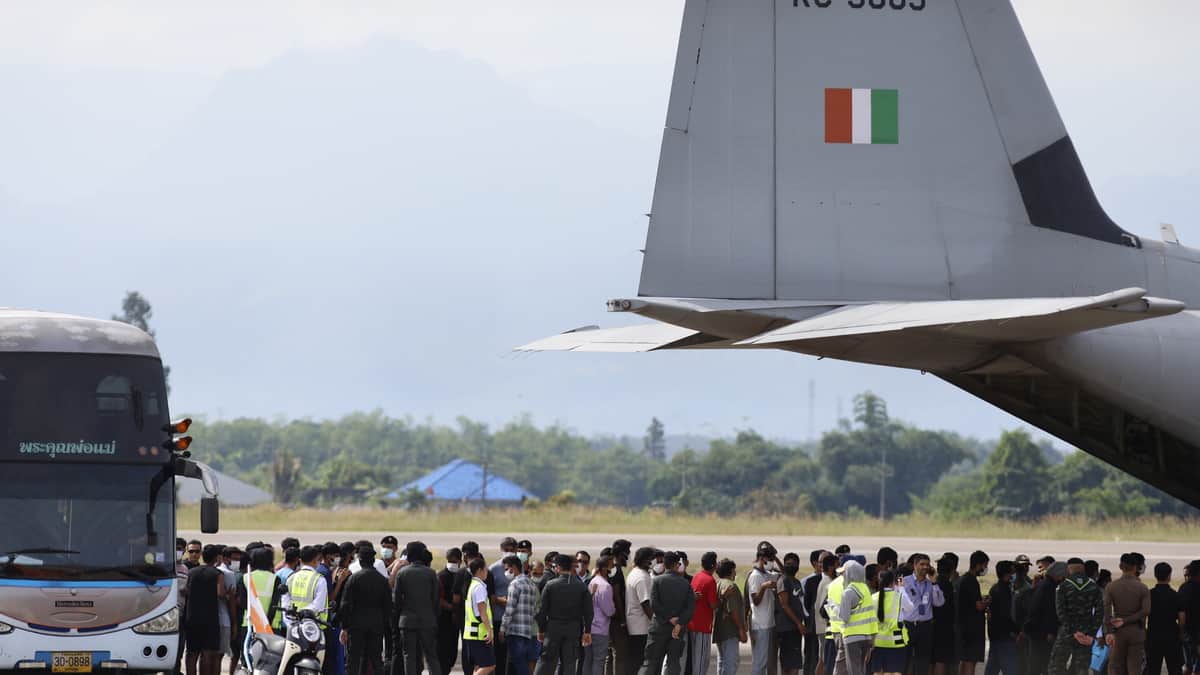
A recent crackdown by the Myanmar military on KK Park, a major scam hub, led to the flight of around 1,500 workers, but experts believe it's a minor impact.
These centers often operate with the protection of local elites and have grown from the region's casino industry, shifting to digital fraud.
Scammers target victims worldwide using various methods, including fake investments and romance scams, with the US alone losing an estimated $10 billion in 2024.
- Who
- Criminal organizations operating scam centers and their victims, alongside authorities attempting to shut them down and workers trapped in these operations.
- What
- Large-scale scam operations are perpetuating globally, defrauding individuals out of billions of dollars while forcing thousands into labor under harsh conditions.
- When
- Ongoing, with recent crackdowns and significant US losses reported in 2024.
- Where
- Primarily in Southeast Asia, including Myanmar and Cambodia, with victims targeted globally.
- Why
- Scam operations have evolved from casino businesses, utilizing digital fraud and preying on victims worldwide for financial gain, often protected by local elites.
Government Efforts
Skepticism and Persistence of Scams
Effectiveness of Raids and Rescues
Government Efforts
Authorities, like the Myanmar military, are conducting crackdowns on scam hubs and facilitating the repatriation of workers, demonstrating an effort to dismantle these operations.
Skepticism and Persistence of Scams
Activists and experts argue that these actions are a 'drop in the ocean,' with new compounds emerging and real organizers remaining untouched, suggesting that current efforts are insufficient to stop the industry.
Origin and Expansion of Scam Operations
Government Efforts
The scam industry evolved from the region's casino boom, with some online casinos shifting models during the pandemic to digital fraud.
Skepticism and Persistence of Scams
Scam centers are now scattered across Southeast Asia, operating under the protection of local elites, and utilizing both trafficked and voluntary labor from a diverse range of countries, indicating a pervasive and adaptable industry.
- Estimated Victims in Scam Compounds
- Approximately 120,000 in Myanmar and 100,000 in Cambodia.
- Number of Countries Supplying Labor
- 56 countries.
- Estimated US Losses to Southeast Asia Scams (2024)
- $10 billion.
- Location of a Major Scam Hub Crackdown
- KK Park near the Thai border in Myanmar.
- Scam Types
- Fake romance, bogus investment schemes, illegal gambling, fake cryptocurrency investments, online task scams.
- Methods Used by Scammers
- Friendly initial contact, prolonged work hours for scammers, creation of urgency, use of AI-powered translation tools.