

Archive · 27 Jul 2025
Relationship Farming Shapes Future of Indian Dairying
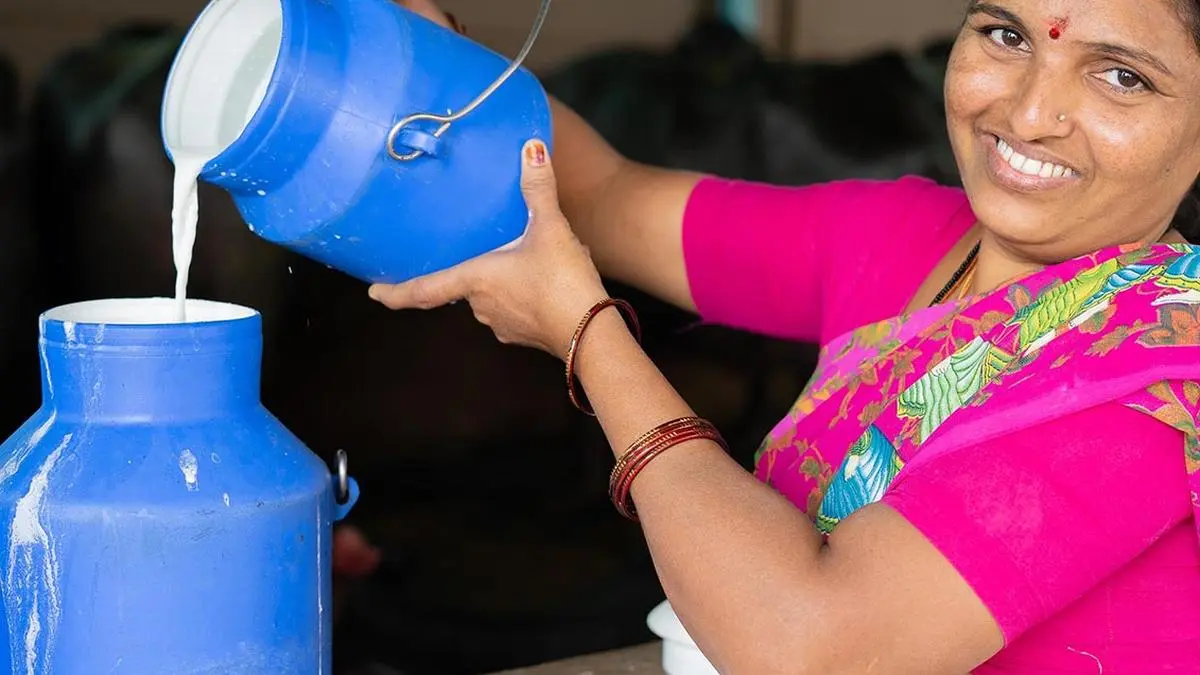
Milk in India is really important and part of their culture!
Most dairy farmers are small, and they depend on selling milk daily for money.
Companies work closely with these farmers, treating them like partners by paying them fairly.
This builds trust by measuring milk accurately, paying on time, and helping farmers.
It's a bit different from big farms because it's about relationships.

Indian dairying is deeply rooted in culture and tradition, dating back millennia.
India faced a severe milk shortage at independence but has since become the world's largest producer.
Relationship farming, emphasizing trust and long-term engagement, is the foundation of the sector's success.
Cooperatives and private players prioritize women farmers, transparency, and consistent support.
Trust, built through accurate measurements, fair pricing, and timely payments, is crucial in dairying.
- Who
- Dairy farmers, cooperatives, and private players in the Indian dairy industry.
- What
- Indian dairying is shaped by relationship farming, prioritizing trust and long-term engagement with farmers.
- When
- The article discusses the transformation of India's dairy industry since independence and the evolution of relationship farming.
- Where
- India
- Why
- Relationship farming is essential for the success of Indian dairying due to the small-scale, fragmented nature of production and the need for a steady income stream for farmers.
Traditional Dairy Approach
Relationship Farming Approach
Approach to Production
Traditional Dairy Approach
Focusing solely on industrial efficiency and scale.
Relationship Farming Approach
Prioritizing human relationships and trust-building.
- Annual Milk Production
- Exceeds 240 million tonne
- Per Capita Milk Availability
- Over 450 grams
- Marketable Surplus
- 54% of India’s milk
- Primary Farmer Income Source
- Agriculture
- Procurement Model
- Decentralized, relationship-driven