Archive · 16 Sep 2026
India Adds UPI Merchant Fees Above ₹2,000
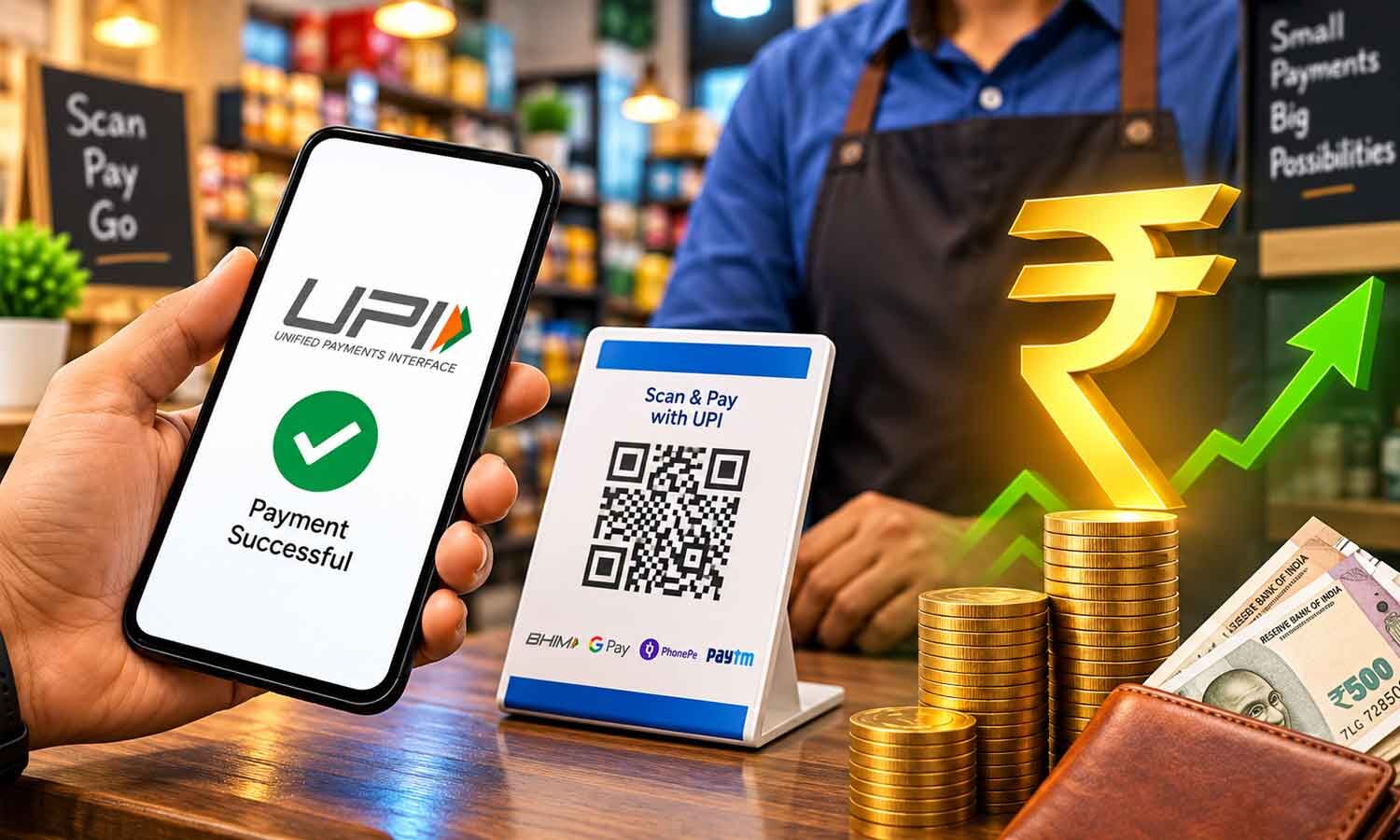
India is changing how some UPI payments are funded.
Sending money to another person will remain free, even for large amounts.
Buying something from a merchant for ₹2,000 or less will also remain free.
For some merchant purchases above ₹2,000, the merchant’s payment system will pay a 0.4% fee.
Customers are not supposed to pay this fee directly.
Very small merchants receiving up to ₹1 lakh each month through UPI QR codes will remain exempt.
Some important services, such as railways, utilities and fuel, will have a flat ₹5 fee instead.
The government and NPCI say the money will help maintain UPI and improve security.
Critics say the policy ends nearly six years of fully free UPI payments and could create problems if merchants try to recover the cost from customers.

A 0.4% Merchant Discount Rate will apply from October 15, 2026, to specified UPI person-to-merchant payments above ₹2,000.
Person-to-person transfers and merchant payments up to ₹2,000 will remain free, with no monthly usage quotas for individuals.
Merchants receiving up to ₹1 lakh monthly through UPI QR codes will continue to pay zero MDR on all transactions.
Railways, telecom, insurance, fuel, agricultural inputs, selected utility bills and education payments above ₹2,000 will generally attract a flat ₹5 MDR.
The government and NPCI say the fees will fund payment infrastructure, cybersecurity and innovation, while opposition parties criticized the policy.
- Who
- The Government of India, the National Payments Corporation of India, banks, payment providers, merchants and UPI users are affected; opposition criticism included Congress leader Rahul Gandhi.
- What
- A revised MDR framework will charge 0.4% on specified UPI person-to-merchant transactions above ₹2,000, while consumers remain free from UPI transaction charges.
- When
- The policy was announced on September 15, 2026, and the revised MDR takes effect on October 15, 2026.
- Where
- The framework applies to UPI transactions in India.
- Why
- The government and NPCI say the revenue will support infrastructure, fraud prevention, cybersecurity, customer service and technological investment while reducing reliance on government subsidies.
Critics and Opposition
Government and Payment Ecosystem
Political interpretation
Critics and Opposition
Rahul Gandhi called the levy another surrender by Prime Minister Narendra Modi to American pressure, while opposition parties criticized ending the fully free UPI model.
Government and Payment Ecosystem
The Bharatiya Janata Party accused the Congress of spreading fake news and said the policy clearly does not impose MDR on consumers.
How UPI should be funded
Critics and Opposition
Critics objected to ending nearly six years of fully free UPI payments and raised concerns about introducing charges into a widely used payment system.
Government and Payment Ecosystem
The government and NPCI said permanent reliance on government subsidies creates funding uncertainty and that threshold-based MDR is needed to support infrastructure, fraud prevention, cybersecurity and innovation.
Who bears the cost
Critics and Opposition
Critics and analysts questioned whether merchants might eventually pass the cost to customers or encourage bill-splitting to avoid the threshold.
Government and Payment Ecosystem
The Finance Ministry and NPCI said MDR is an internal merchant-payment charge rather than a tax, while app providers are barred from platform fees and banks are advised to stop merchants from passing costs to customers.
- Standard MDR
- 0.4% on specified person-to-merchant UPI transactions above ₹2,000.
- High-value cap
- MDR is capped at ₹300 for payments of ₹75,000 and above.
- Essential and public services
- Railways, telecommunications, insurance, fuel, agricultural inputs, selected utility bills and education payments above ₹2,000 attract a flat ₹5 MDR.
- Capital-market payments
- Payments involving mutual funds, securities, stockbrokers and dealers attract a lower MDR capped at ₹300; the supplied reports differ on whether the rate is 0.02% or 0.2%.
- Small merchants
- Merchants receiving up to ₹1 lakh per month through UPI QR codes remain at zero MDR on all transactions; those exceeding the threshold for three consecutive months move into standard P2M treatment.
- Consumer protection
- Individuals will not pay transaction or platform fees, and banks are advised to prevent merchants from passing MDR costs to customers.
- Expected coverage
- The government says approximately 96% of person-to-merchant transactions will remain unaffected, with about 4% subject to the new MDR.
- Implementation date
- October 15, 2026.
Sources
Govt opens doors to fee on large UPI payments
The end of the free lunch

Government Introduces Charges On UPI Merchant Transactions Above Rs 2,000

Govt sets 0.4% fee on UPI payments above Rs 2,000 amid political criticism