

Archive · 31 Dec 2025
Thwaites Glacier: Climate Change and Future Risks
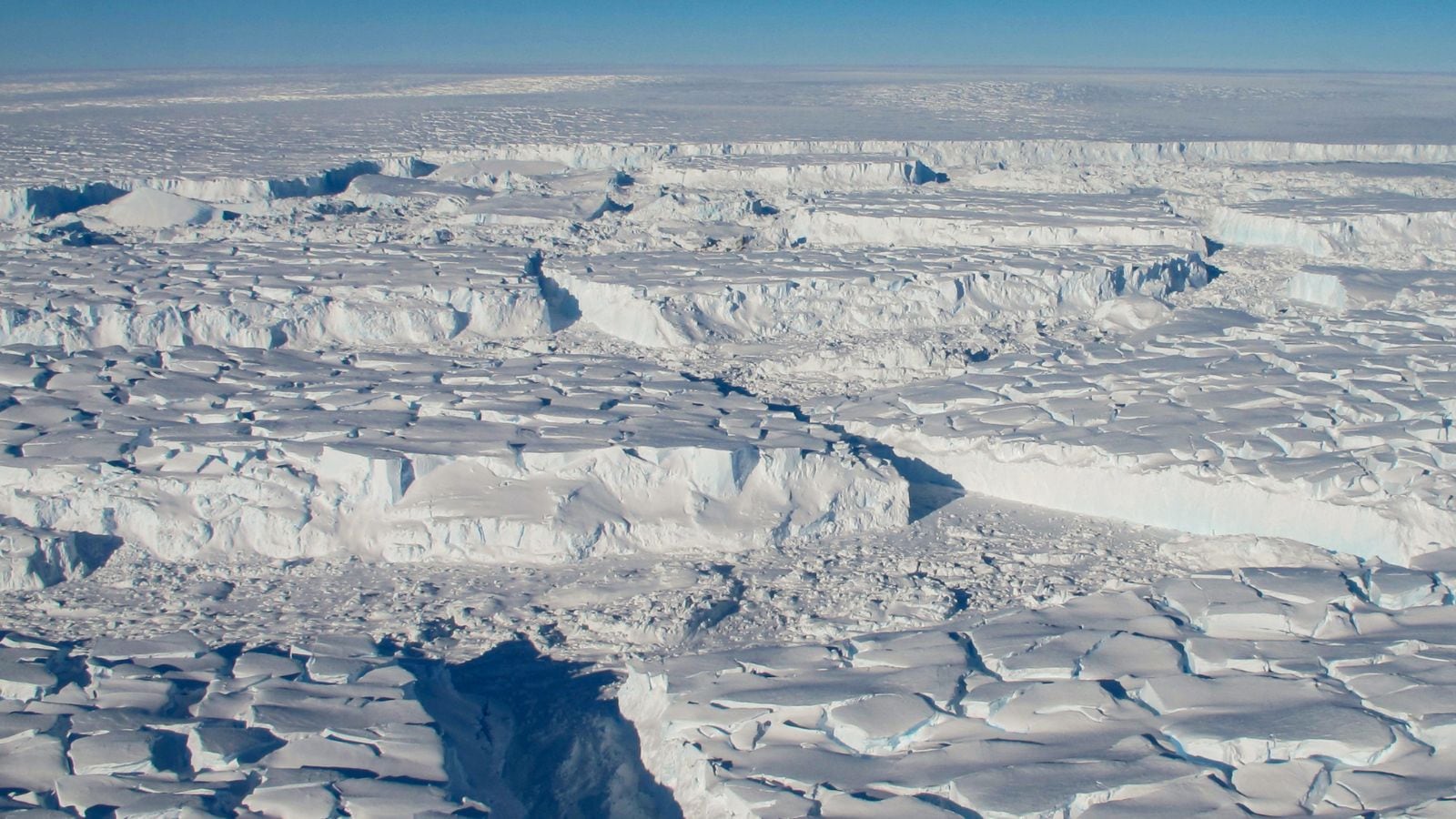
Thwaites Glacier in Antarctica is as big as Florida.
If it melts completely, it could raise global sea levels by 2 feet.
Scientists are studying it to see how soon it might collapse.
They say that by reducing carbon emissions, we might still save the glacier.
However, global emissions are still very high, and some melting might already be unavoidable.
The glacier's shape makes it vulnerable to warm ocean currents that melt it from below.
This could cause the glacier to retreat and melt even faster.
While some worst-case scenarios seem less likely, scientists are focusing on predicting sea-level rise in the next few decades to help plan for the future.

Thwaites Glacier could raise global sea levels by 2 feet if fully melted.
Scientists are studying the glacier to predict its collapse and sea-level rise.
Cutting carbon emissions could still protect the glacier from complete collapse.
Warm ocean currents are melting the glacier from below, causing it to retreat.
Scientists are focusing on predicting sea-level rise in the next few decades.
- Who
- Scientists and researchers studying Thwaites Glacier
- What
- Potential collapse of Thwaites Glacier due to climate change
- When
- Current and future impacts, with focus on next decades
- Where
- Thwaites Glacier in Antarctica
- Why
- To understand and predict sea-level rise and its global consequences
- Glacier Size
- Size of Florida
- Potential Sea-Level Rise
- 2 feet if fully melted
- Current Emissions
- Record levels in 2025, no decline
- Glacier Shape
- Floating ice tongue, bedrock below sea level
- Grounding Line
- Retreating due to warm ocean currents
- Research Focus
- Predicting sea-level rise in next decades
- Study Findings
- Unlikely to collapse completely in next few decades
- Worst-Case Scenario
- Less likely due to stable ice cliffs