7 months ago
India Can Make SMRs 30% Cheaper: L&T

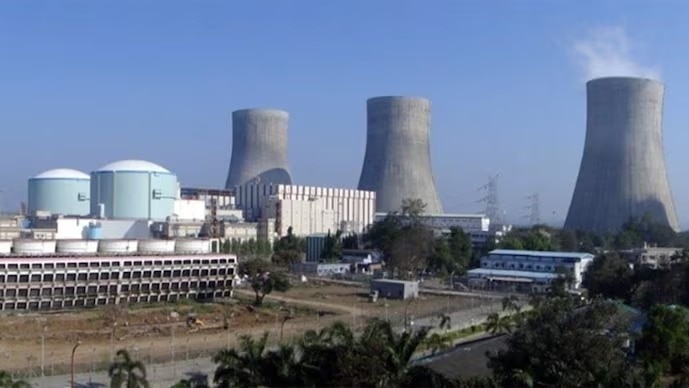
Larsen & Toubro (L&T), a big company in India that makes nuclear plant equipment, says India can make small modular reactors (SMRs) much cheaper than other countries.
They think it can be done 30% cheaper.
But some experts are not sure if these SMRs will be good for the economy.
L&T says the cost depends on the design and that India's current reactors cost less.
They also talked about maybe selling these reactors to other countries and even running their own nuclear power plants.
However, nuclear power doesn't get the same financial help as other green energy sources.

L&T claims India can produce SMRs 30% cheaper than global competitors.
Estimated cost of Indian SMRs is around ₹30 crore per MW, compared to global range of ₹50-100 crore per MW.
Experts question the economic viability of SMRs until large order volumes materialize.
L&T is open to owning and operating nuclear power plants, especially for data centers with high energy needs.
Nuclear power lacks 'green' classification, limiting access to green finance and viability gap funding.
- Who
- Larsen & Toubro (L&T), Anil V. Parab, experts like Dr. Anil Kakodkar
- What
- India's potential to produce small modular reactors (SMRs) at a lower cost than global competitors
- Where
- India
- When
- January 8, 2026
- Why
- To explore economic viability and potential export opportunities for SMRs
Key facts
- Company
- Larsen & Toubro (L&T)
- Claim
- India can produce SMRs 30% cheaper than global peers
- Estimated Cost
- ₹30 crore per MW
- Global Cost Range
- ₹50 crore to ₹100 crore per MW
- PHWR Cost
- ₹15 crore per MW
- GST on Nuclear Equipment
- 18%
- GST on Renewable Energy
- 5%
Quotes
NPCIL
The Nuclear Power Corporation of India Limited
“In furtherance of the government’s policy to enable private industry access to reliable and carbon-free nuclear power, NPCIL has earlier issued a request for proposal, outlining the Business Model for industry participation.”
 businesstoday.in
“To this end, NPCIL seeks structured inputs from industry stakeholders to ensure that the revised model adequately addresses implementation requirements while safeguarding national policy objectives.”
businesstoday.in
Sources
Related news
Goyal Defends India’s 7.8% GDP Growth Amid Data Debate

Jefferies Sets Target Prices for Indian Industrial Stocks

Indian Stocks in Focus After Key Corporate Announcements

Edelweiss Large & Mid Cap Fund Bets on Next Cycle
Mumbai Monorail Restart Awaits IIT Bombay Safety Recommendation