Archive · 17 Jan 2026
Andaman and Nicobar Islands to Lead India's Blue Economy

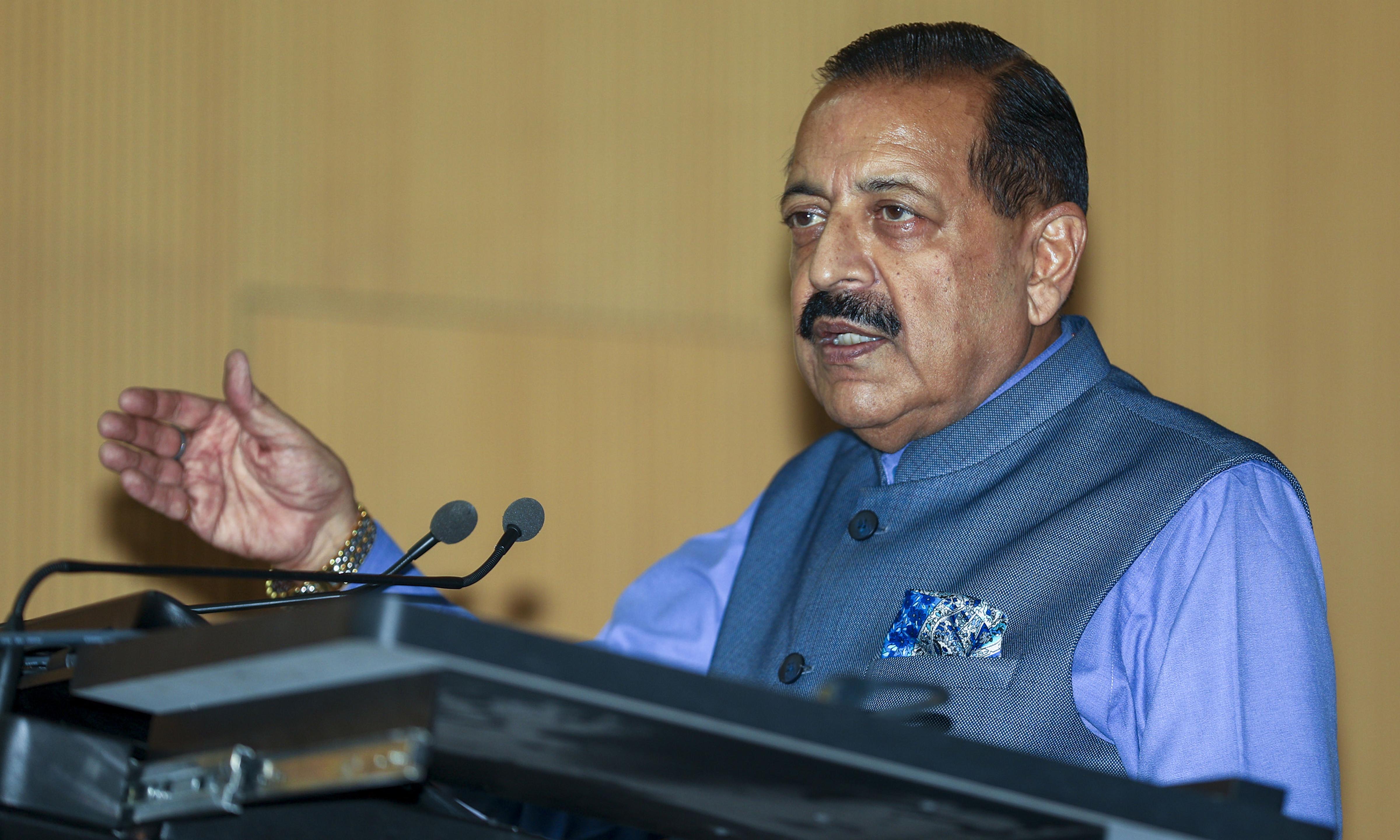
Union Minister Jitendra Singh visited the Andaman and Nicobar Islands on January 17 to talk about how to use the ocean to help the economy.
The islands have a lot of seaweed and fish that can be used to make money and create jobs.
The minister said the islands are very important for India's Blue Economy, which is about using the ocean in a way that is good for the environment and the people.
He talked about growing more seaweed and fish, and using special rocks from the deep sea that have important metals.
The government is giving money to help with these projects and wants to make the islands a big part of India's future economy.
The minister also said that women and local groups should be involved in these projects to help their communities.

Union Minister Jitendra Singh visited the Andaman and Nicobar Islands on January 17 to discuss oceanic harvest and seaweed cultivation.
The archipelago has a potential sea harvest of 1,48,000 tonne, with current harvests at 49,138 tonne per year.
Singh reviewed a Detailed Project Report (DPR) on pilot-scale cultivation of marine fin fish like tuna, cod, and snapper, and seaweed in the open sea.
There are 244 species of seaweed in the Andaman and Nicobar Islands, with 58 types recognized as commercially viable, providing an alternate livelihood for fishermen.
The government has allocated Rs 640 crore to promote seaweed culture under the Pradhan Mantri Matsya Sampada Yojana (PMMSY), aiming for 1.12 million tonne of seaweed production by 2030.
- Who
- Union Minister Jitendra Singh, officials from the Ministry of Earth and Science, Department of Biotechnology, and Director NIOT
- What
- Visit to Andaman and Nicobar Islands to discuss oceanic harvest, seaweed cultivation, and deep-sea exploration
- When
- January 17
- Where
- Andaman and Nicobar Islands, specifically the National Institute of Ocean Technology (NIOT) and the Atal Centre for Ocean Science and Technology for Islands at Dollygunj in Sri Vijaya Puram
- Why
- To explore ways to increase oceanic harvest, promote seaweed cultivation, and discuss the Samudrayaan Mission for deep-sea exploration
- Date of Visit
- January 17
- Current Sea Harvest
- 49,138 tonne per year
- Potential Sea Harvest
- 1,48,000 tonne
- Current Tuna Harvest
- 4,420 tonne
- Potential Tuna Harvest
- 60,000 tonne per annum
- Seaweed Species
- 244 species
- Commercially Viable Seaweed
- 58 types
- Funding for Seaweed Culture
- Rs 640 crore (2020-2025)
- Targeted Seaweed Production
- 1.12 million tonne by 2030
- Polymetallic Nodules Collected
- 100 kg (2024)