

Archive · 11 Jun 2025
Climate Change Impacting Gut Health
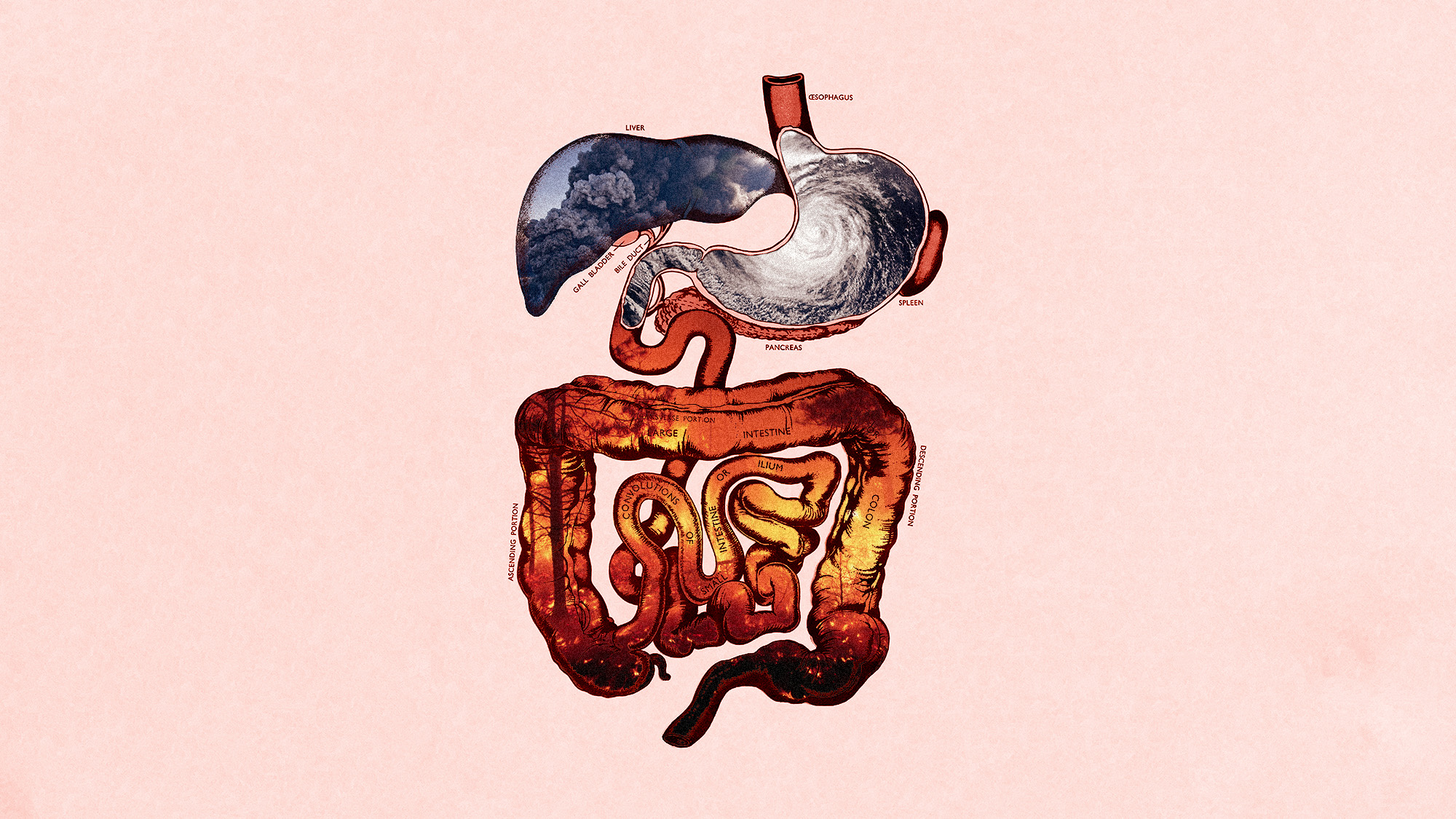
Imagine your tummy has a bunch of tiny helpers called the microbiome.
These helpers keep you healthy.
But when the Earth gets too hot because of climate change, it's like a party where everything gets messed up in your tummy!
Heat makes your helpers unhappy, and it can cause problems like the helpers getting out of balance.
It can even make it easier for bad germs to get into your body.
Also, hot weather can change the food we eat, making it less healthy.
It's a bit like a chain reaction: hot weather messes up your tummy helpers, and that can make you feel sick.

Rising temperatures negatively affect the human gut microbiome.
Heat stress induces changes in the gut, affecting its composition.
High temperatures can decrease antioxidants in plants.
Increased water consumption may introduce pathogens.
The gut microbiome may be a sensitive indicator of climate change's impact.
- Who
- Humans, livestock, and populations globally are affected.
- What
- Climate change impacts gut health, leading to issues like dysbiosis and increased risk of pathogens.
- When
- Ongoing, with impacts intensifying as climate change continues.
- Where
- Globally, with specific impacts on gut health.
- Why
- Rising temperatures and climate change negatively affect the human gut microbiome, causing a range of health problems.
- Core Issue
- Rising temperatures impact gastrointestinal systems.
- Impact of Heat
- High temperatures cause changes in gut microbiota and stress hormone increase.
- Effect on Intestines
- Intestinal permeability can be decreased.
- Impact on Food
- Air temperatures above 30°C (86°F) may decrease antioxidants in plants.
- Water Consumption
- Higher water consumption might introduce pathogens and pollutants.
- Microbiome Role
- Gut microbiome could be a biosensor for climate-related health vulnerabilities.