

1 week ago
R. Venkataraman’s Legacy Offers Lessons in Fair Governance
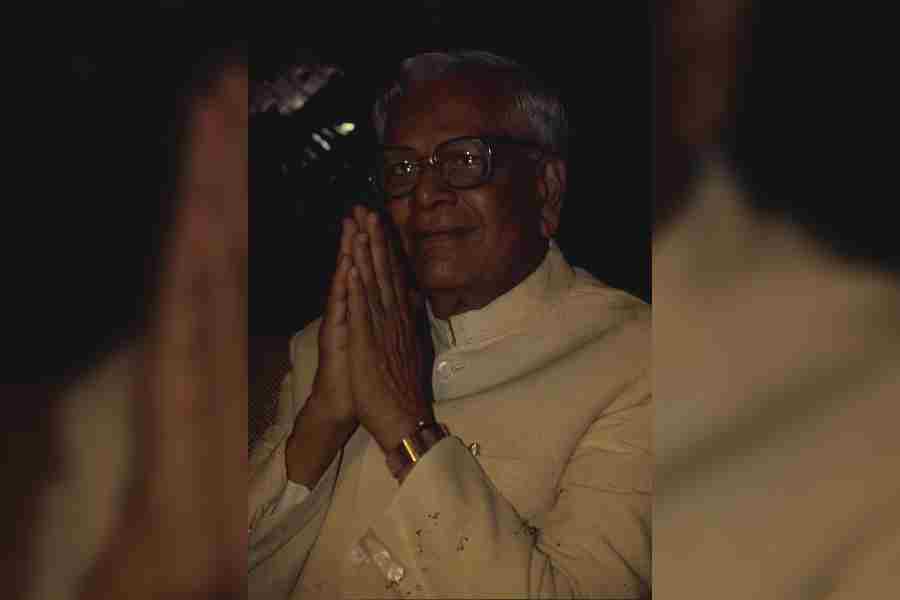
Ramaswamy Venkataraman was an important Indian leader from Tamil Nadu.
He first became vice-president and later became president.
As chairman of the Rajya Sabha, he made sure MPs followed the rules.
He was strict, but people generally believed he was fair.
He respected leaders from political parties different from his own.
The article says he did not treat a friendly meeting as a secret political deal.
At the time, President Giani Zail Singh had refused to approve a bill allowing the government to intercept personal mail.
Venkataraman understood the constitutional issue but also disliked censorship.
The writer believes he would have tried to persuade Prime Minister Rajiv Gandhi to withdraw the bill.

Ramaswamy Venkataraman served as India’s vice-president from 1984 before becoming president in 1987.
As Rajya Sabha chairman, Venkataraman enforced parliamentary rules firmly while treating ruling-party and Opposition MPs equally.
He maintained cordial relations with political opponents, including communist leader E.M.S. Namboodiripad.
The article praises his ability to keep personal preferences separate from public duties and political courtesies.
Venkataraman’s handling of the 1986 Postal Bill is presented as an example of balancing constitutional duty with opposition to censorship.
- Who
- Ramaswamy Venkataraman, then India’s vice-president and chairman of the Rajya Sabha, along with political figures including Giani Zail Singh, Rajiv Gandhi and E.M.S. Namboodiripad.
- What
- The article reflects on Venkataraman’s conduct as vice-president and draws lessons about fairness, parliamentary discipline, political courtesy and public conscience.
- Where
- India, particularly the Rajya Sabha, Parliament House and diplomatic events in Delhi.
- When
- Venkataraman served as vice-president from 1984 and became president the following year; the article recalls the period around 1986 and the forty-second anniversary of his assuming office.
- Why
- The author argues that Venkataraman’s legacy offers a model of impartial public service and respectful democratic conduct.
Democratic Courtesy and Public Conscience
Political Suspicion and Executive Authority
Relations across political lines
Democratic Courtesy and Public Conscience
The article presents Venkataraman’s respectful meetings with Opposition figures as normal democratic courtesy and mutual respect.
Political Suspicion and Executive Authority
It says that in contemporary politics, courtesies such as handshakes can be interpreted as evidence of a secret deal or conspiracy.
Postal Bill and mail interception
Democratic Courtesy and Public Conscience
The author argues that protecting personal correspondence and opposing censorship should have guided the response to the 1986 bill; the writer believes Venkataraman would have urged Rajiv Gandhi to withdraw it.
Political Suspicion and Executive Authority
The bill had been passed by Parliament, creating a constitutional question about whether the president could leave it unresolved rather than approve or return it.
Parliamentary discipline
Democratic Courtesy and Public Conscience
Venkataraman’s strict enforcement of procedure is portrayed as fair because he applied it to ruling-party and Opposition MPs alike.
Political Suspicion and Executive Authority
MPs who disrupted proceedings, used excessive supplementaries or made irregular motions were curtailed, and one Congress MP was ordered to leave after improper conduct.
Key facts
- Vice-presidential term
- Ramaswamy Venkataraman took over as vice-president in 1984.
- Later office
- He became president the following year and served for five years.
- Parliamentary role
- As vice-president, he was chairman of the Rajya Sabha.
- Leadership style
- He was described as a strict but trusted chairman who enforced rules against MPs across political parties.
- Political courtesy
- He warmly met E.M.S. Namboodiripad at a Chinese embassy reception in Delhi.
- Postal Bill
- The Indian Post Office (Amendment) Bill, 1986, would have authorised the government to intercept personal mail.
- Bill’s outcome
- President Giani Zail Singh neither approved nor returned the bill, and it eventually remained unresolved after Rajiv Gandhi lost office.
Quotes

Ramaswamy Venkataraman
India’s former vice-president and president, recalling E.M.S. Namboodiripad.
“What are we before this giant of a man! He had inherited a big tharavad (family estate) but gave up everything for his beliefs, evverything”
 telegraphindia.com
“All right… attendance is optional…”
telegraphindia.com
Sources
Related news

Vice President Radhakrishnan to visit Uttarakhand, address IAS, IFS probationers

Kerala Congress Leaders Remember Rajiv Gandhi on Birth Anniversary

Vice President Radhakrishnan Begins Three-Day Visit Across Southern Regions

TN CM Vijay apologises as minister omits Karunanidhi honorific
Dhankhar Resigned a Year Ago
