Archive · 3 Oct 2025
Subscriber Analyses Nepal's Crisis: A Cycle of Societal Failure?
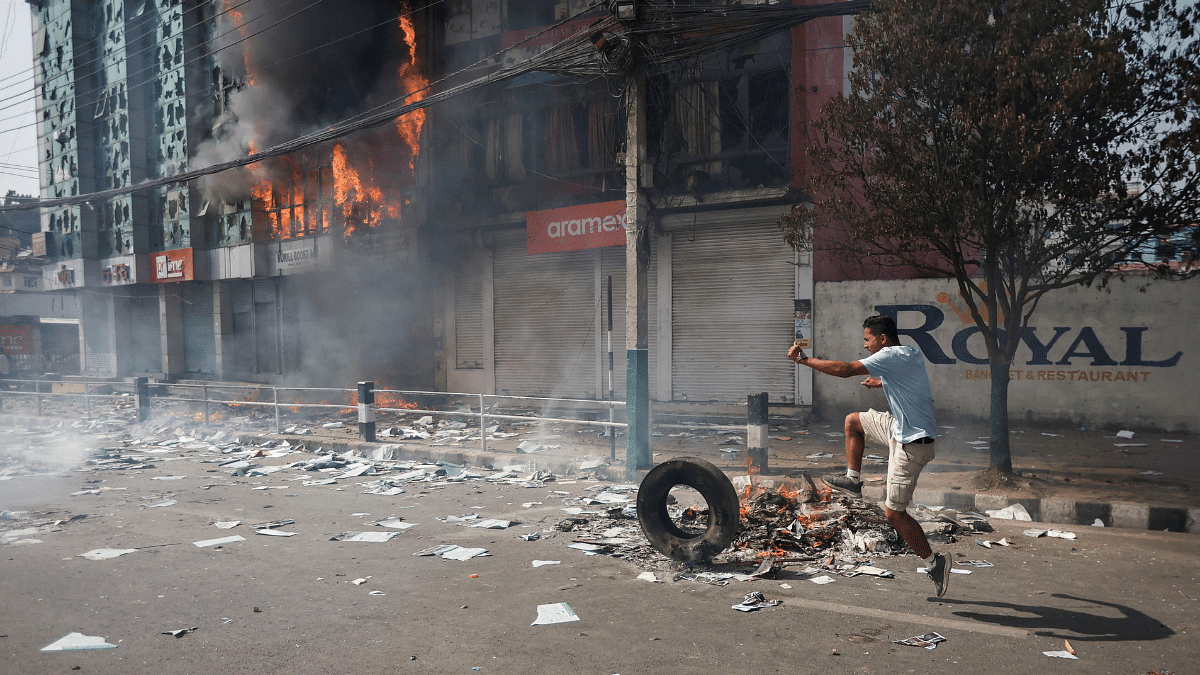
Someone wrote about what happened in Nepal.
They think the problems there come from the government not doing its job well.
They talk about how society is split into different groups, with some people having more power than others.
The author believes the government only helped a small group of people, which is why things went wrong.
The author thinks the government should not continue.

The subscriber's article analyzes the Nepal crisis.
It attributes the crisis to a failure of the government.
The author describes the structure of Nepalese society.
The government failed to meet moral and virtuous obligations.
The author concludes this type of government should not continue.
- Who
- An unnamed ThePrint subscriber.
- What
- An analysis of the Nepal crisis.
- When
- Not explicitly stated.
- Where
- Nepal.
- Why
- To offer a perspective on the causes of the crisis.
- Core Argument
- Nepal's crisis is a result of the government's failure to meet societal obligations.
- Government Failure
- Failure to satisfy minimum morality and virtue leading to an abrupt end.
- Societal Structure
- A perceived class structure including the 'untouchables', ruling class, wealthy, well-off, middle class, struggling class, and the ignored.
- Government Legitimacy
- The author believes the government served only a small percentage of the population
- Author's Opinion
- Author doesn't want such a government to survive.