

Archive · 19 Jul 2025
Forgotten Udayagiri Fort Awaits Restoration and Recognition
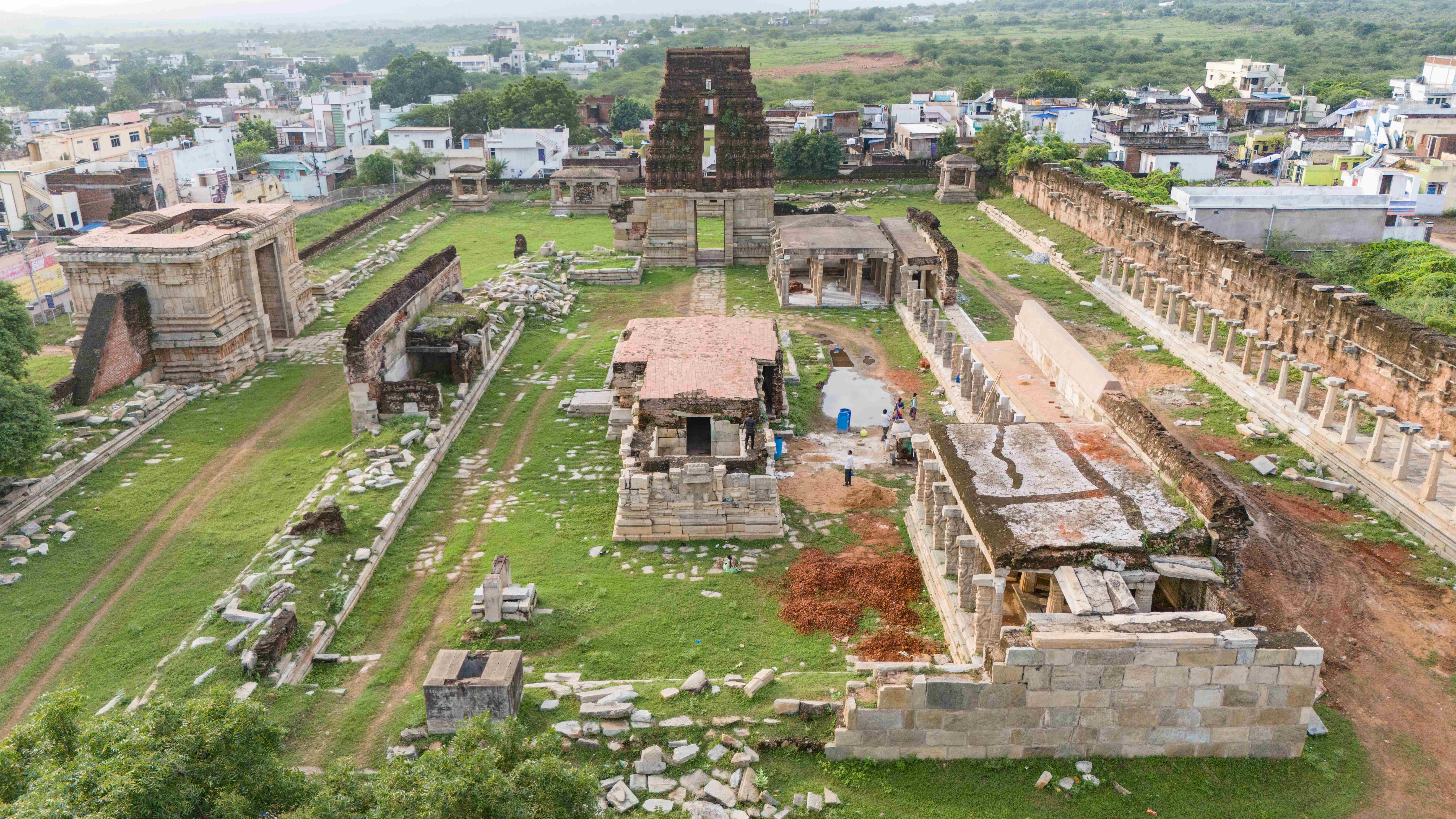
Imagine a very old fort on top of a hill called Udayagiri.
It was once a busy place with temples, palaces, and soldiers.
Kings and different groups of people used to live there.
There are even temples there, like the Krishna Temple with special carvings.
Now, it is not taken care of properly, and many of the old buildings are in ruins, making it difficult for tourists to visit.
People hope it will be restored so that others can learn its stories and enjoy its history.

Udayagiri Fort, a historic site in Nellore district, Andhra Pradesh, is a forgotten kingdom.
The fort, with 13 distinct forts, was built by the Gajapati dynasty and later ruled by various others.
It houses temples like the Krishna Temple, which once held a revered idol of Bala Krishna.
The Ranganayakula Temple, once a vibrant Vaishnava site, is now in ruins.
Despite being under the Archaeological Survey of India, the fort is neglected and lacks amenities.
- Who
- The Gajapati dynasty, Aswapathis, Vadiyas, and Krishnadevaraya of Vijayanagar, along with pilgrims and various rulers.
- What
- Udayagiri Fort, a historic site with temples, palaces, and a rich history.
- When
- The fort was built by the Gajapati dynasty and later ruled by several other dynasties.
- Where
- Nellore district, Andhra Pradesh, India.
- Why
- The fort holds historical and cultural significance, but is currently neglected despite its potential.
Current Status
Future Perspective
Neglect vs. Preservation
Current Status
Udayagiri Fort is under the Archaeological Survey of India, Amaravati Circle.
Future Perspective
Despite being under the Archaeological Survey of India, the fort is in a state of neglect and lacks proper amenities and infrastructure.
- Location
- Nellore district, Andhra Pradesh
- Initial Builders
- Gajapati dynasty
- Ruler
- Krishnadevaraya of Vijayanagar
- Main Temples
- Krishna Temple, Ranganayakula Temple
- Height
- 1,000 metres above sea level
- Other Names
- Forgotten Crown of Andhra