

Archive · 8 Nov 2025
Smart Shoes: From Fashion to AI-Powered Footwear Revolution
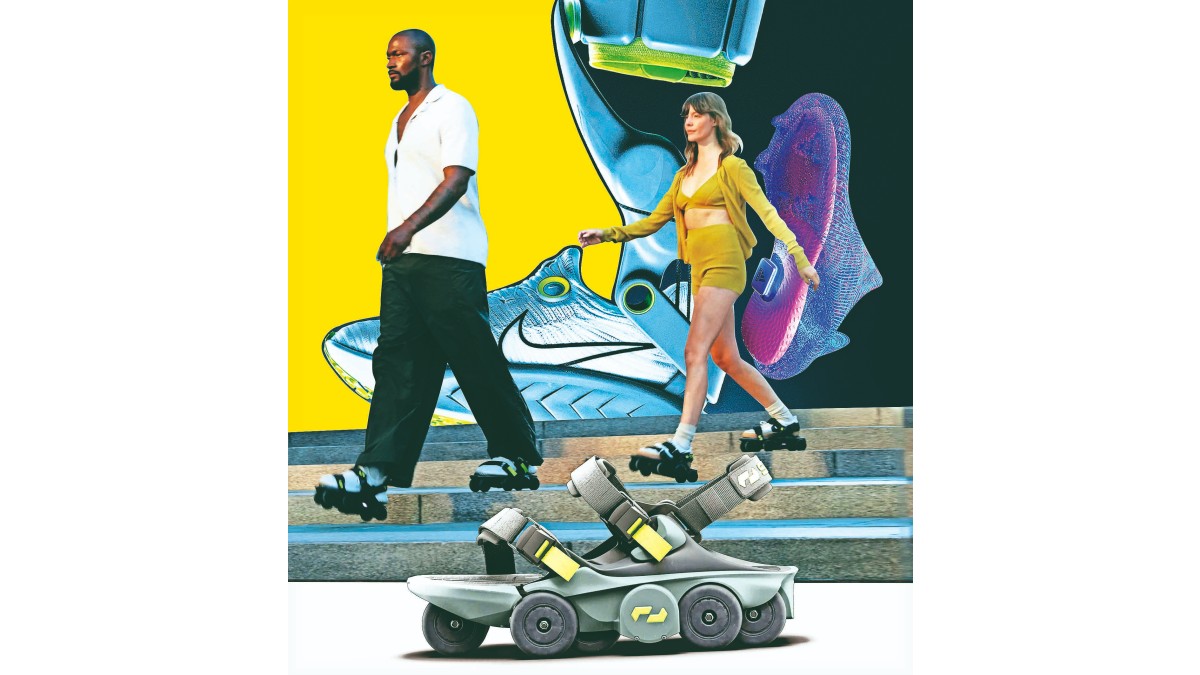
Imagine your shoes used to be just for walking and looking nice.
But now, clever companies are putting computer chips, tiny motors, and even smart AI into them!
Some new shoes, like Nike's Project Amplify, give you a little boost with each step, making you feel like you have superpowers.
Others, called Moonwalkers, let you walk super fast, almost like you're jogging, using AI that learns how you walk.
Even shoes for sports are getting smarter, like Nike's Adapt BB that tightens itself when you need more support, or Adidas's GMR that helps you play soccer games better.
There are even special insoles that help you find your way by gently vibrating.
These smart shoes can track your steps, help you not to fall, and some can even talk to the internet.
It’s like your shoes are becoming mini-computers on your feet!
The goal is to make shoes more helpful, whether it’s for fun, exercise, or even to stay safe as people get older.

The footwear industry is rapidly integrating technology, with shoes evolving into smart devices featuring sensors, processors, and AI.
Nike's Project Amplify uses a motor to enhance strides, while Shift Robotics' Moonwalkers use AI to allow users to walk at jogging speeds.
Smart shoes offer features like automatic lacing (Nike Adapt BB), gamified experiences (Adidas GMR), and navigation assistance (Lechal).
The innovation in smart footwear ranges from basic fitness tracking to advanced platforms capable of real-time data analysis for health and safety.
The key challenge is blending advanced technology seamlessly into desirable footwear designs that consumers will want to wear.
- Who
- Footwear industry, including Nike, Shift Robotics, Adidas, and Lechal.
- What
- The evolution of shoes into 'smart footwear' incorporating sensors, processors, AI, and advanced technology.
- When
- Recently, with advancements like Nike's Project Amplify unveiled this year and ongoing development.
- Where
- Globally, with developments emerging from companies in the US (Pittsburgh) and innovations like Lechal originating in India.
- Why
- To enhance user experience, provide mobility assistance, gamify activities, offer health monitoring, and improve safety, particularly for aging populations.
Focus on Fashion
Focus on Technology
Consumer Priorities
Focus on Fashion
Consumers traditionally agonize over style, comfort, and how shoes complement their outfits or gym wear.
Focus on Technology
Consumers are increasingly looking for advanced features like self-lacing, AI-driven assistance, and health monitoring in their footwear.
Industry Transition
Focus on Fashion
The industry has a history rooted in traditional craftsmanship, focusing on materials like leather and stitching.
Focus on Technology
The industry is rapidly integrating technology, with shoes becoming platforms for sensors, processors, AI, and connectivity.
Design vs. Gadgetry
Focus on Fashion
There's a risk that smart shoes might be perceived as bulky or uncomfortable gadgets rather than stylish footwear.
Focus on Technology
The success of smart footwear depends on seamlessly blending technology into design so that the tech disappears into the experience.
- Nike Project Amplify
- Features a carbon-fibre-plated trainer with a motor, drive belt, and ankle cuff battery, functioning as a mild exoskeleton.
- Shift Robotics Moonwalkers
- AI-powered shoes that can accelerate a user's gait to a jogging speed of ~7 mph.
- Shift Robotics Aero
- Sleeker model of AI-powered shoes, priced lower than Moonwalkers.
- Nike Adapt BB
- Basketball shoes with motorized lacing and sensors that automatically adjust fit mid-game.
- Adidas GMR
- Gamified footwear created with Google's Jacquard and EA Sports FIFA Mobile to enhance football practice.
- Lechal Smart Insoles
- Use gentle vibrations for navigation, originally designed for the visually impaired, also track fitness metrics.
- Smart Footwear Hierarchy
- Ranges from basic GPS fitness shoes to advanced integrated platforms with AI analysis.