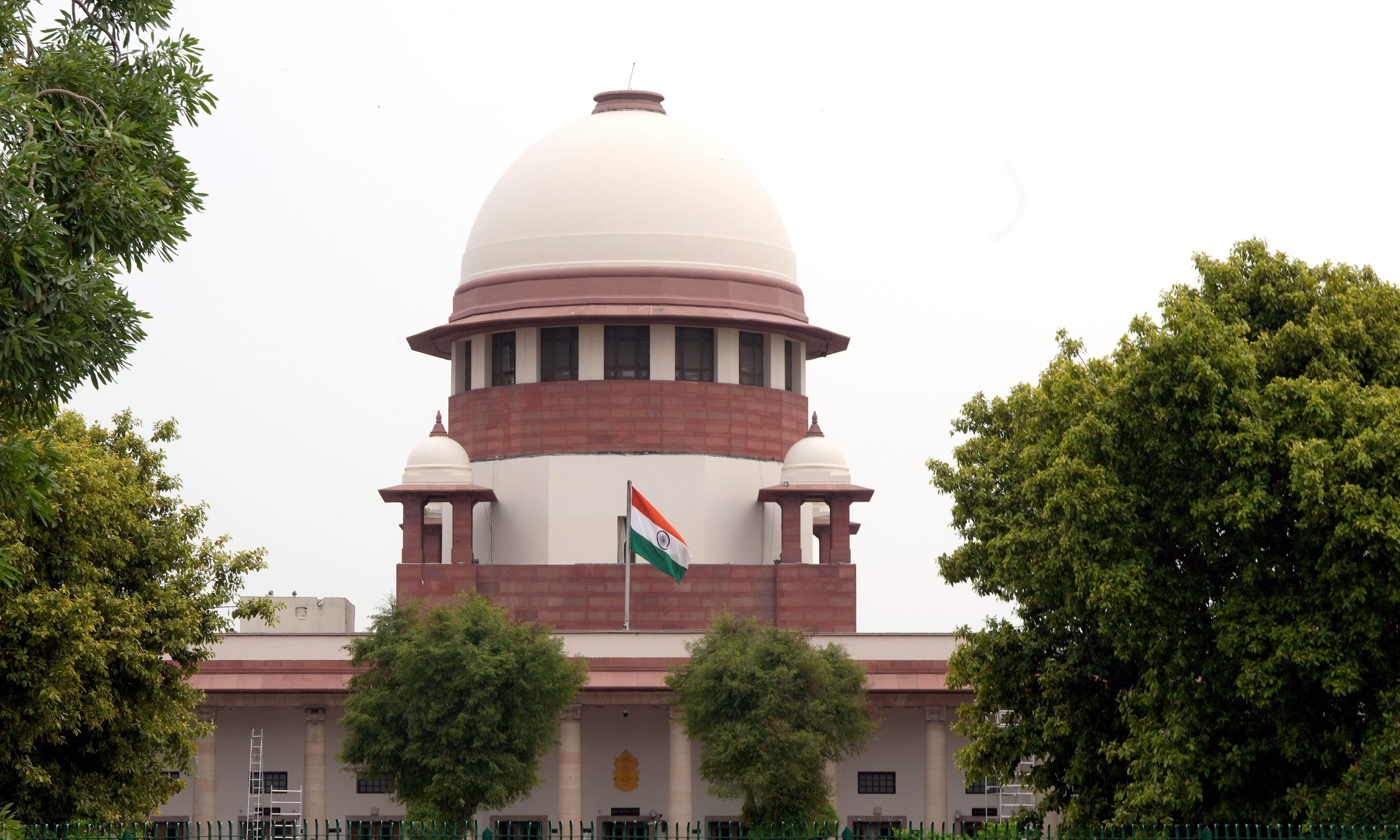
Archive · 28 Oct 2025
Supreme Court Restores Acquittal in 1997 Corruption Case

Imagine someone was accused of asking for money illegally a long time ago.
A first court said there wasn't enough solid proof that he asked for or took the money, so he was found not guilty.
Later, a higher court disagreed and said he was guilty.
The highest court in the country looked at the case again.
They decided the first court's reasons for finding him not guilty were good and based on the actual evidence.
The highest court felt the higher court didn't properly explain why it thought he was guilty.
So, the highest court said the person should be considered not guilty, just like the first court decided.
They reminded everyone that proving someone did something wrong needs strong evidence, not just a strong feeling that they might have done it.

The Supreme Court restored the acquittal of a man in a 1997 corruption case.
The man, an Assistant Commissioner of Labour, was accused of demanding a bribe of Rs 9,000 for renewing contract labour licenses.
A trial court acquitted him in 2003, finding the prosecution failed to prove demand and acceptance of the bribe.
The Andhra Pradesh High Court reversed this acquittal in 2011, convicting the man and sentencing him to one year imprisonment.
The Supreme Court stated that suspicion, however strong, cannot replace proof, and the trial court's reasoning was reasonable and evidence-based.
- Who
- The Supreme Court of India
- What
- Restored the acquittal of a man in a 1997 corruption case, overturning a High Court conviction.
- When
- Tuesday (reported on October 28)
- Where
- New Delhi (Supreme Court's location)
- Why
- The Supreme Court found that the High Court failed to properly engage with the trial court's reasoning and evidence, stating that suspicion cannot replace proof.
Trial Court
High Court
Verdict on Demand and Acceptance of Bribe
Trial Court
Acquitted the man, stating the prosecution failed to prove demand and acceptance of bribe beyond reasonable doubt.
High Court
Reversed the acquittal, finding the man guilty based on its own inferences without adequately addressing the trial court's reasoning or evidentiary gaps.
Strength of Criminal Process
Trial Court
Emphasizes restraint as much as scrutiny, acknowledging that suspicion cannot replace proof.
High Court
Potentially focused more on scrutiny, leading to a conviction based on inferences that the Supreme Court found insufficient.
- Court
- Supreme Court of India
- Case Type
- Corruption Case
- Original Allegation
- Demand of Rs 9,000 bribe for renewing contract labour licenses
- Appellant's Role
- Assistant Commissioner of Labour (January 1996 - September 1996)
- Trial Court Verdict
- Acquittal (November 2003)
- High Court Verdict
- Conviction (July 2011)
- Supreme Court Verdict
- Restored acquittal