Archive · 25 Sep 2026
Trump-Xi Summit Extends Trade Truce Amid Persistent Rivalry
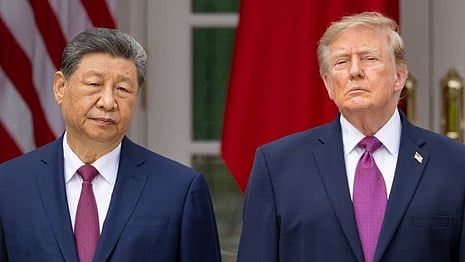
Donald Trump and Xi Jinping met at the White House to discuss problems between the United States and China.
They talked about trade, Taiwan, artificial intelligence, and the risk of conflict.
The countries agreed to extend a temporary trade agreement for about two more months.
This gives negotiators more time, but it does not solve their larger disagreements.
They still disagree about tariffs, agricultural purchases, rare-earth supplies, and technology restrictions.
Xi asked the United States to be careful about Taiwan and oppose Taiwanese independence.
The meeting did not announce a major change in Washington’s approach to Taiwan.
Trump and Xi also had different ideas about AI rules and safety.
Although the leaders were friendly in public, the rivalry between their countries continues.

The United States and China extended their trade truce by about two months, but broader disputes remain unresolved.
Negotiators still face disagreements over tariffs, agricultural purchases, rare-earth supplies, critical minerals, and technology restrictions.
Xi Jinping urged Washington to handle Taiwan cautiously and oppose Taiwanese independence, while no fundamental US policy change was announced.
Donald Trump favored leaving current AI policy in place, while Xi Jinping said AI should remain under human control and serve public well-being.
Both leaders emphasized cooperation and communication, including military dialogue and crisis-prevention measures, despite continuing strategic rivalry.
- Who
- US President Donald Trump and Chinese President Xi Jinping, alongside government officials, business leaders, and technology executives.
- What
- The leaders held a high-profile summit covering trade, Taiwan, artificial intelligence, and the broader US-China strategic rivalry.
- When
- September 24, during Xi Jinping’s White House visit; the trade truce was extended by about two months.
- Where
- The White House in Washington, United States.
- Why
- To manage unresolved economic and security disputes, extend trade negotiations, and seek cooperation while limiting the risk of confrontation.
United States and Trump Emphasis
China and Xi Emphasis
Trade negotiations
United States and Trump Emphasis
Washington extended the truce to gain more time for negotiations and continued focusing on Chinese purchases, rare-earth deliveries, tariffs, and technology restrictions.
China and Xi Emphasis
Beijing accepted the extension, while major questions about purchases, critical materials, and trade terms remained for further negotiations.
Taiwan policy
United States and Trump Emphasis
The United States showed no fundamental change in its longstanding approach and did not publicly announce opposition to Taiwanese independence in the summit readout.
China and Xi Emphasis
Xi urged Washington to handle the Taiwan question cautiously and oppose Taiwan independence.
Artificial intelligence
United States and Trump Emphasis
Trump favored technological development, leaving current AI policy in place, and relying on existing enforcement mechanisms rather than imposing new guardrails.
China and Xi Emphasis
Xi said the United States and China have a responsibility to manage AI, keep it under human control, and use it for public well-being.
Strategic rivalry
United States and Trump Emphasis
Trump stressed shared history, common interests, and the potential for cooperation between the two countries.
China and Xi Emphasis
Xi warned about the risks of conflict between a rising and an established power and called for military dialogue and stronger crisis-prevention measures.
- Trade truce
- The existing US-China trade agreement was extended by about two months and had been due to expire in November.
- Agricultural purchases
- US Treasury Secretary Scott Bessent said China was meeting a pledge to buy 25 million tons of soybeans but was behind on a pledge involving $17 billion in other agricultural goods.
- Trade disputes
- Tariffs, agricultural purchases, rare-earth and critical-mineral supplies, and technology restrictions remain unresolved.
- Taiwan
- Xi urged Washington to handle the Taiwan question with prudence and oppose Taiwan independence; the summit produced no fundamental change in the US approach.
- Artificial intelligence
- Trump favored leaving current policy in place and relying on the US Department of Justice, while Xi called for AI to remain under human control.
- Strategic communication
- Xi called for regular military dialogue and stronger crisis-prevention mechanisms.
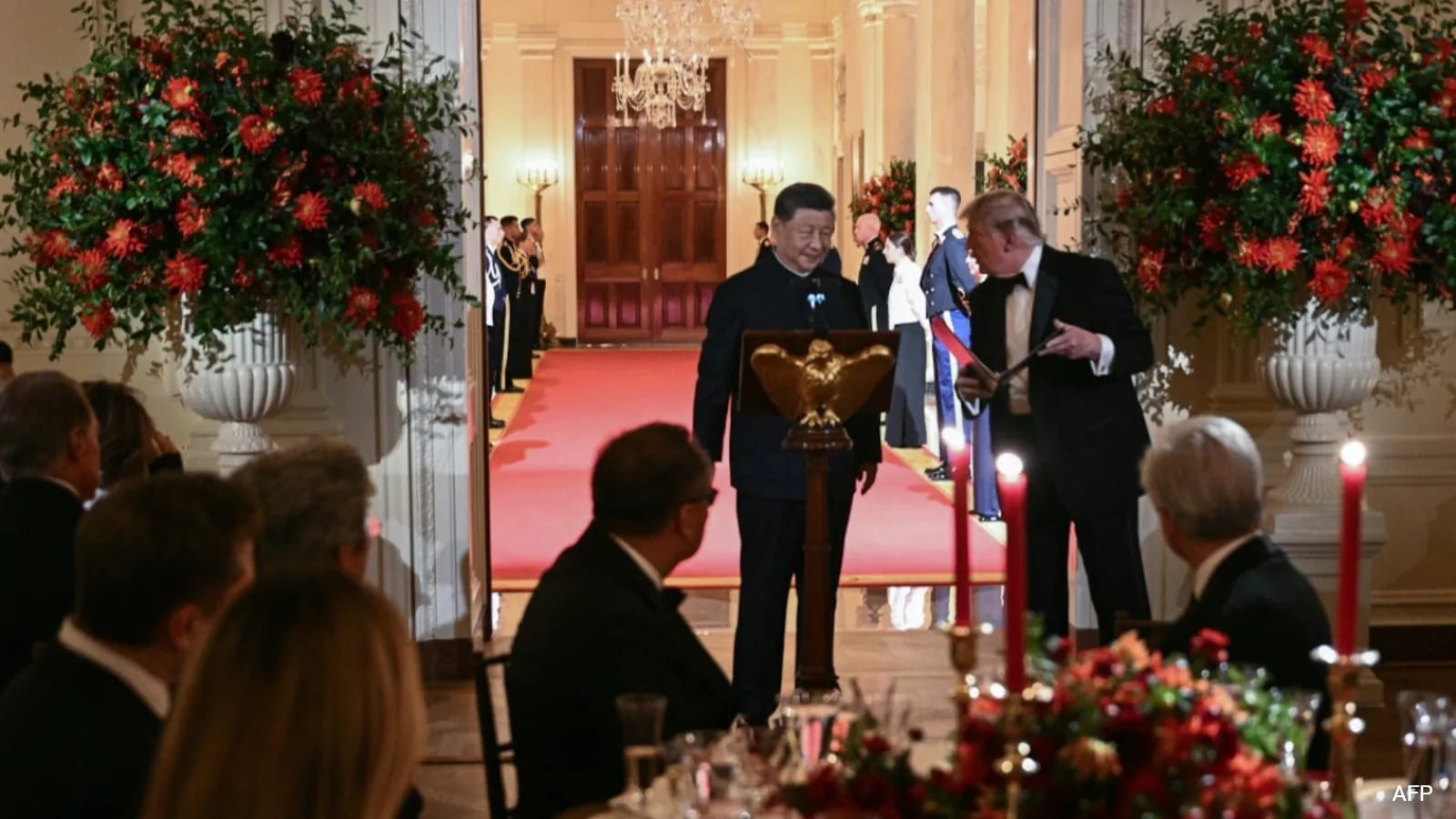
- Summit ceremony
- The White House hosted a state dinner, formal ceremonies, military performances, aircraft flyovers, and tours of redesigned grounds.