

Archive · 12 Oct 2026
Garba Evolves From Village Devotion Into Gujarat’s Multi-Crore Celebration
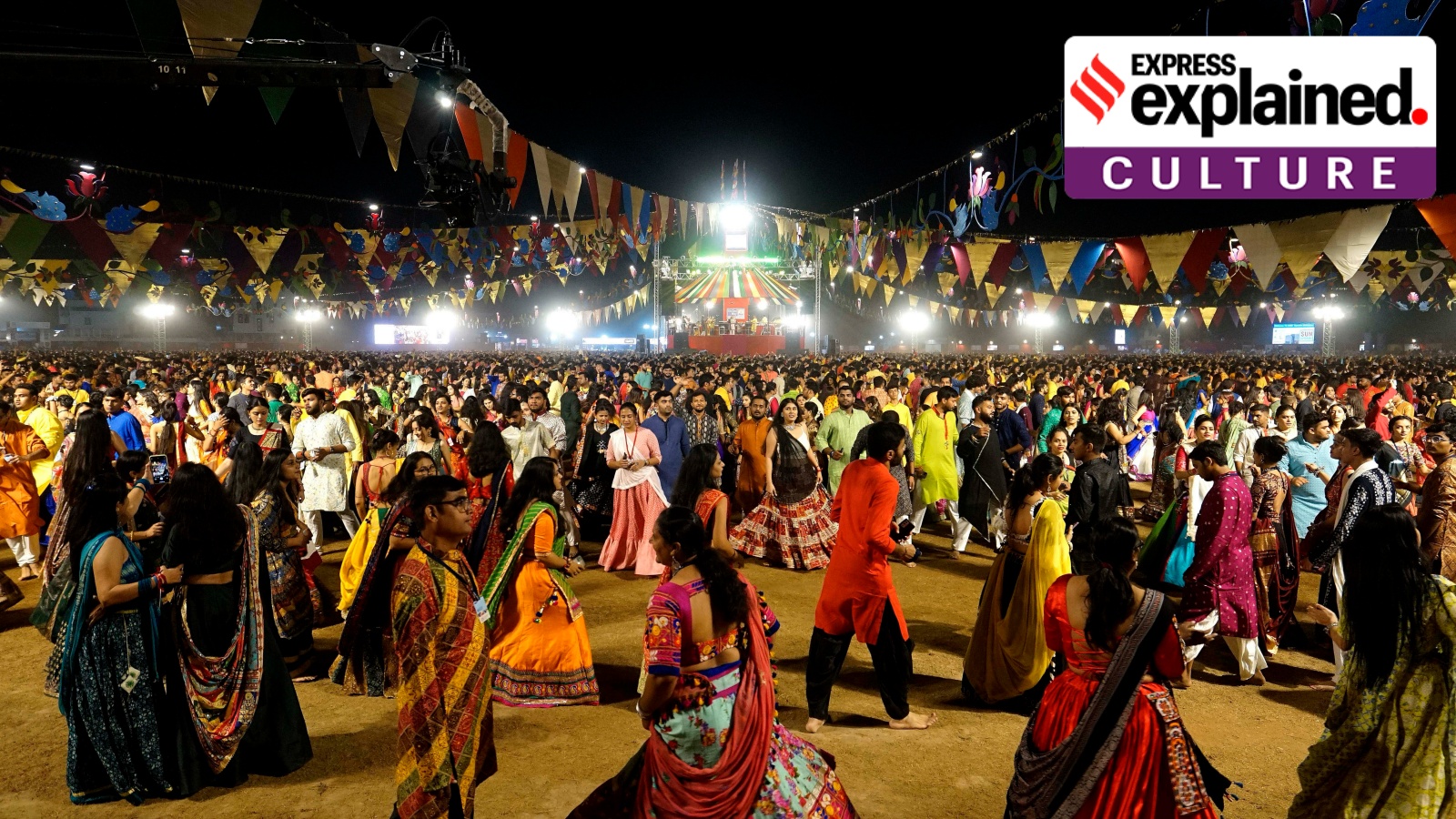
Garba is a dance people perform during the nine nights of Navratri in Gujarat.
Dancers move in a circle, clap, and follow music while celebrating the goddess and the idea of Shakti, or feminine energy.
It was once mainly performed by women in homes and temple courtyards.
Over time, men joined in, and Garba spread to big public events and communities around the world.
Today, some celebrations are small and traditional, while others have stages, lights, famous singers, and large crowds.
These events also provide work for many people, including musicians, artisans, and event planners.
Some people enjoy the new styles, but others feel the celebrations have become too commercial.
UNESCO recognized Garba as intangible cultural heritage in 2023.

Garba is a devotional circle dance traditionally performed during Navratri, with roots in homes, temples and village communities.
The tradition combines worship of feminine energy, Shakti, with music, singing and dance; UNESCO added Garba to its intangible cultural heritage list in December 2023.
Today, Garba events range from neighbourhood mandli and sheri gatherings to large commercial celebrations across Gujarat and among the Gujarati diaspora.
The celebrations support a broad economy involving event organisers, musicians, venues, artisans, food businesses, and clothing and jewellery makers.
Some participants and experts welcome Garba’s continuing evolution, while traditionalists criticize commercialization and younger people have shown renewed interest in older forms.
- Who
- Garba dancers and organizers across Gujarat, including community groups, event planners, musicians and artisans.
- What
- Navratri Garba, a devotional community dance that has grown into a large cultural and economic celebration.
- When
- During the nine nights of Navratri; the article says the festival began that year on Sunday, October 11.
- Where
- Across Gujarat, from homes, temples and village spaces to city grounds and event venues; also in Gujarati diaspora communities worldwide.
- Why
- It is performed as devotion to the goddess and feminine energy, and has also become a community celebration and major economic enterprise.
Garba’s evolution
Concerns about commercialization
Changing styles and large events
Garba’s evolution
Professor Parul Shah describes Garba as a living tradition that adapts through new performance styles, lyrics, fashion and venues while retaining its central circle and association with Shakti.
Concerns about commercialization
Singer Atul Brahmbhatt says many modern events feel professionalized and money-focused, and resemble fashion parades rather than devotional gatherings.
Community character
Garba’s evolution
Garba is described as an all-encompassing community celebration involving people from many walks of life and, beyond Gujarat, people from other communities and diaspora groups.
Concerns about commercialization
Brahmbhatt recalls earlier events as self-disciplined and socially harmonious, and says some people have recently sought to monitor participants.
- Festival
- Navratri is celebrated over nine nights.
- UNESCO recognition
- Garba was inscribed on UNESCO’s Representative List of the Intangible Cultural Heritage of Humanity in December 2023.
- Traditional setting
- Garba was once performed mainly by women at home and in temple courtyards.
- Dance formation
- Dancers move in a circle and spin individually without physical contact with others.
- Economic activity
- The celebrations involve venues, event planners, performers, artisans, food businesses, and clothing and jewellery industries.
- Vibrant Navratri
- The Gujarat government has organized the program at Ahmedabad’s GMDC ground since 2003.
- Traditional practice
- Sheri and mandli Garba are among the traditional forms that have seen renewed interest.