

Archive · 22 May 2025
Ancient Footprints Rewrite Reptile Evolutionary History
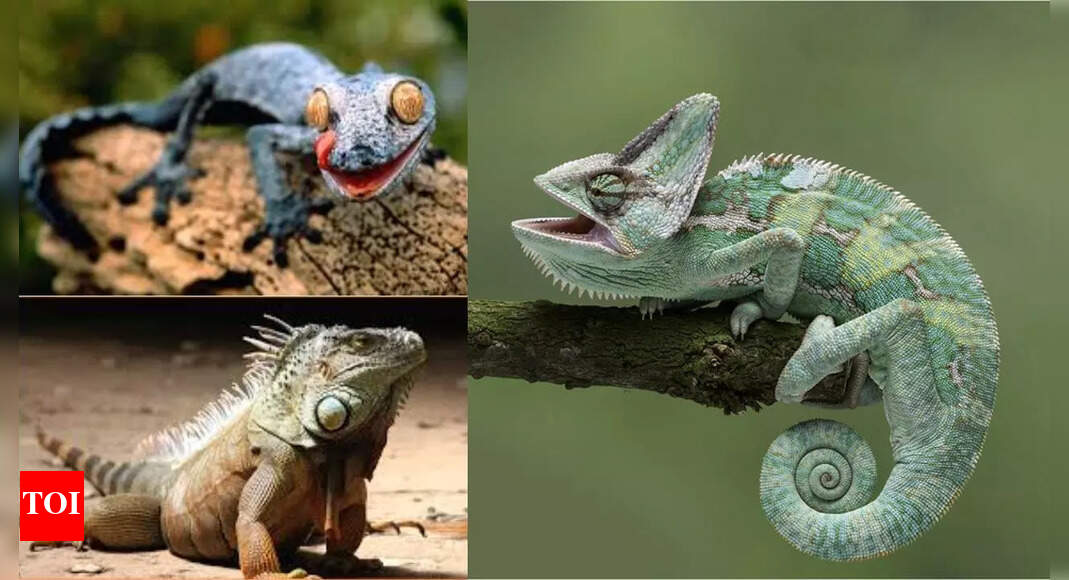
Imagine tiny animal footprints found in old rocks!
Scientists in Australia found some from a very long time ago, even before dinosaurs!
These footprints show that the animals that became reptiles, like lizards and snakes, might have been around much earlier than we thought.
They had claws and different-sized feet, which helps scientists tell what kind of animal it was.
This discovery is like finding a secret clue that helps us understand how reptiles first came to be and how they changed over time.
It helps us see how animals moved onto land and eventually became the many creatures we see today, including birds and even us!

Fossil footprints discovered in Australia push back the estimated emergence of reptiles by 40 million years.
The footprints, dating to the Carboniferous Period, provide new insights into reptile evolution.
Claw marks on some prints suggest the animals were true reptiles rather than amphibians.
The discovery challenges existing theories about the origin of reptiles.
Researchers are examining the find's implications for the evolution of amniotes, including birds and mammals.
- Who
- Paleontologists, including Professor John Long.
- What
- Discovery of fossilized footprints dating back to the Carboniferous Period, suggesting reptiles existed earlier than previously thought.
- When
- Carboniferous Period, around 359 million years ago.
- Where
- Northern Victoria, Australia
- Why
- To understand the origins and evolution of reptiles and other amniotes.
- Discovery Location
- Northern Victoria, Australia
- Footprint Age
- Approximately 359 million years old
- Period
- Carboniferous
- Significance
- Challenges established reptile evolution timelines
- Footprint Characteristics
- Claw marks, varying foot sizes
- Related Creatures
- Early reptiles, amphibians, and synapsids