

Archive · 19 Jul 2026
Bungee Jumping Can Cause Red Eyes
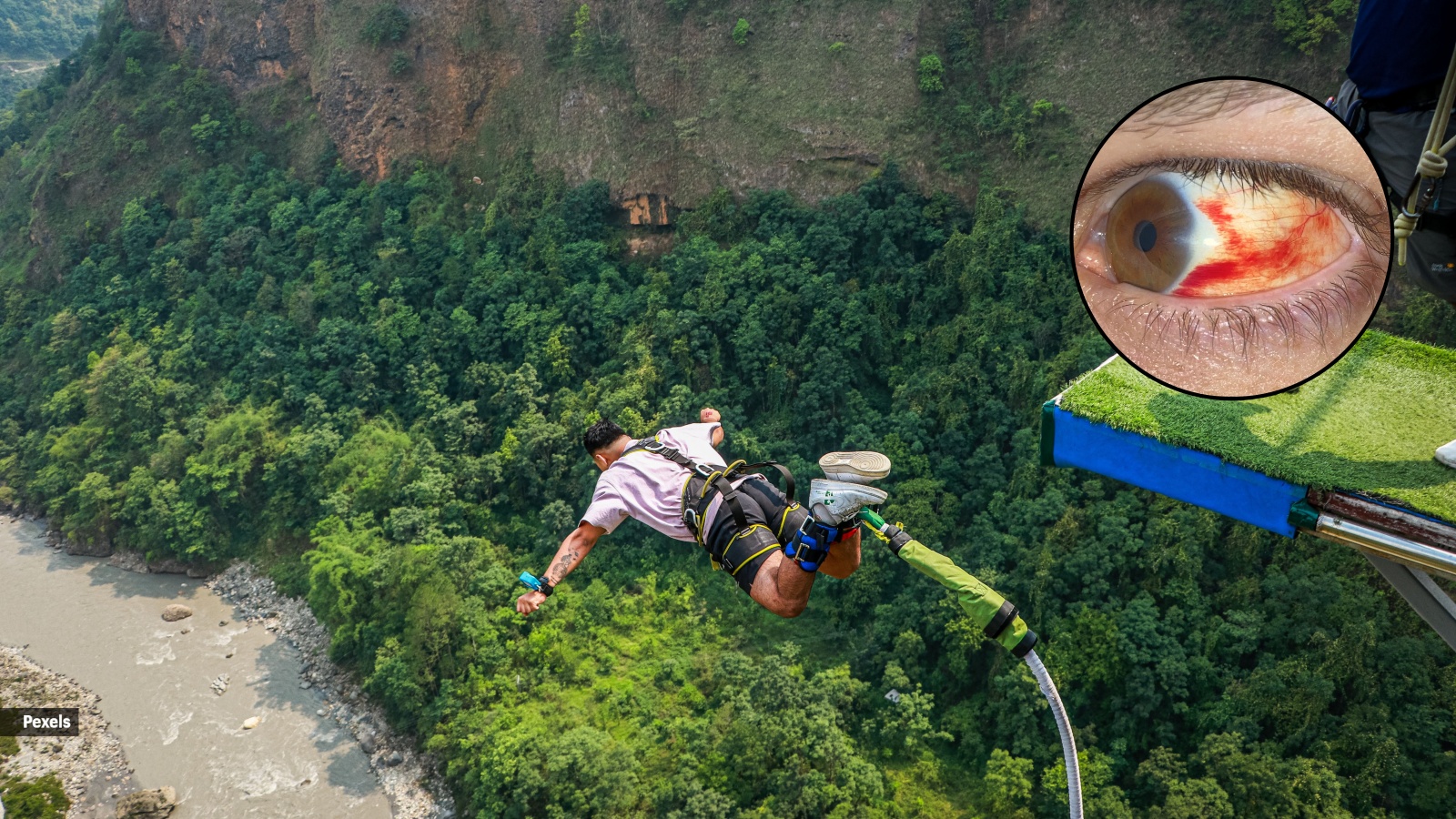
Bungee jumping can sometimes cause your eyes to turn red.
This happens because the sudden forces and pressure changes during the jump can make tiny blood vessels in your eyes burst.
Most of the time, this is not serious and your eyes will return to normal in a few weeks.
However, if you have certain health conditions like high blood pressure or are taking blood thinners, you might be at higher risk.
If your eyes turn red after bungee jumping, it's a good idea to put an ice pack on them and see a doctor to make sure everything is okay.

Bungee jumping can cause red eyes due to ruptured blood vessels from sudden forces and pressure changes.
Most cases involve a subconjunctival haemorrhage, which is usually harmless and clears up in 1-3 weeks.
High-risk individuals include those on blood thinners, with hypertension, high myopia, glaucoma, or recent eye surgery.
Preventive measures include choosing reputable operators and following safety instructions.
If redness occurs, apply an ice pack and consult a doctor, especially if symptoms like blurred vision or eye pain are present.
- Who
- Adventure enthusiasts, particularly those with certain medical conditions.
- What
- Red eyes caused by ruptured blood vessels during bungee jumping.
- When
- Immediately after a bungee jump.
- Where
- At bungee jumping locations.
- Why
- Due to sudden forces and pressure changes affecting the eyes.
Minimal Risk Perspective
Higher Risk Perspective
Safety of Bungee Jumping
Minimal Risk Perspective
Bungee jumping is generally safe with minimal risk of serious eye injury for most people.
Higher Risk Perspective
Bungee jumping poses significant risks, especially for individuals with certain medical conditions.
- Cause of Red Eyes
- Sudden forces and pressure changes during bungee jumping can rupture tiny blood vessels in the eyes.
- Common Condition
- Subconjunctival haemorrhage, a small bleed beneath the clear membrane covering the white part of the eye.
- Recovery Time
- 1 to 3 weeks for a simple subconjunctival haemorrhage; up to 6 weeks for more severe intraocular bleeds.
- High-Risk Individuals
- People on blood thinners, with hypertension, high myopia, glaucoma, or recent eye surgery.
- Preventive Measures
- Choosing reputable operators, following safety instructions, and avoiding prolonged breath-holding.
- Immediate Actions
- Apply an ice pack and consult a doctor if redness or other symptoms occur.