

Archive · 13 Jun 2025
Ancient Inscription Reveals Victory Over Tughlaq Dynasty
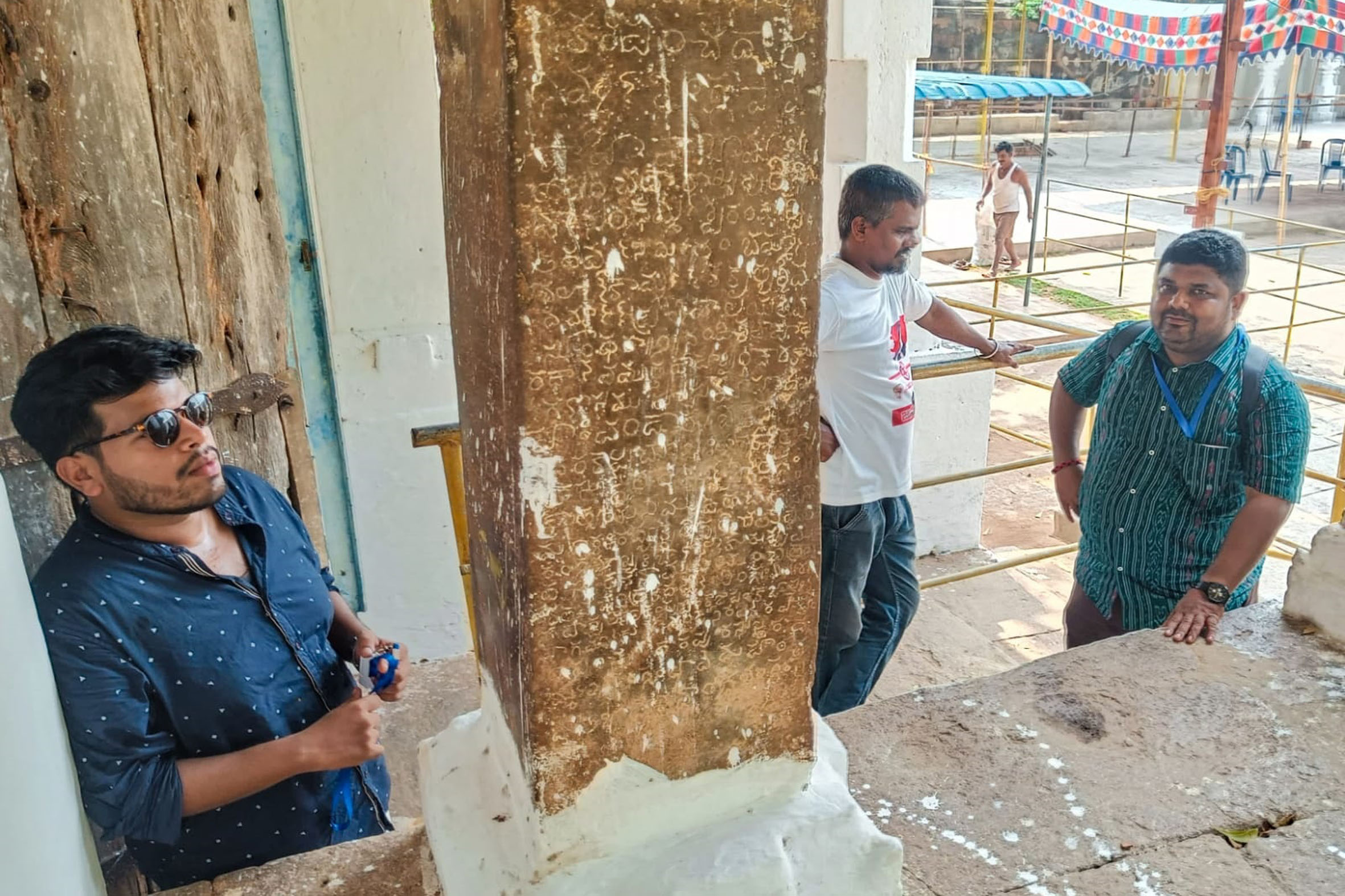
Imagine an old temple with a secret!
Engraved on a stone, there's a story about a king named Choda and his ancestor, Choda II.
They helped win a battle way back in the 14th century!
They fought against a powerful ruler from Delhi, named Firoz Shah Tughlak.
Choda II led an army to help the Sultan of Bengal, and they beat Firoz Shah.
This important event is written on a stone in the temple, so everyone knows the story.
Choda II was a hero, and he even gave gifts to celebrate the victory!

An inscription at the Dharmalingeswar Temple in Anakapalli district details a victory over Firoz Shah Tughlak.
The inscription is from the time of Choda III, a king of the Haihaya dynasty, dating to 1403 CE.
The inscription, in Telugu and Sanskrit, confirms the defeat of Delhi's Tughlaq dynasty ruler, Firoz Shah Tughlak.
Choda II, an ancestor of Choda III, aided the Sultan of Panduva against Firoz Shah Tughlak in 1353 CE.
The Haihayas of Panchadarla ruled regions of Simhachalam and Panchadarla during the 12th and 14th centuries CE.
- Who
- Combined armies of Eastern Gangas and Haihayas led by Choda II defeated Firoz Shah Tughlak.
- What
- A stone inscription records the victory of combined armies over Firoz Shah Tughlak.
- When
- Early 14th Century; inscription dated to 1403 CE.
- Where
- Dharmalingeswar Temple in Anakapalli district, India.
- Why
- The inscription commemorates the victory and the building of a temple.
- Location
- Dharmalingeswar Temple, Anakapalli, India
- Dynasty involved
- Tughlaq, Eastern Ganga, Haihaya
- King (Haihaya Dynasty)
- Choda III
- King (Tughlaq Dynasty)
- Firoz Shah Tughlak
- Inscription Language
- Telugu and Sanskrit
- Date of Inscription
- 1403 CE
- Related Event
- Battle in 1353 CE