Archive · 29 Jun 2025
Delhi's Slum Rehabilitation Policy Faces Challenges, Demolitions Rise

Imagine the government wants to help people living in slums.
They made a plan to build new homes where the old ones are (in-situ), but it's been slow.
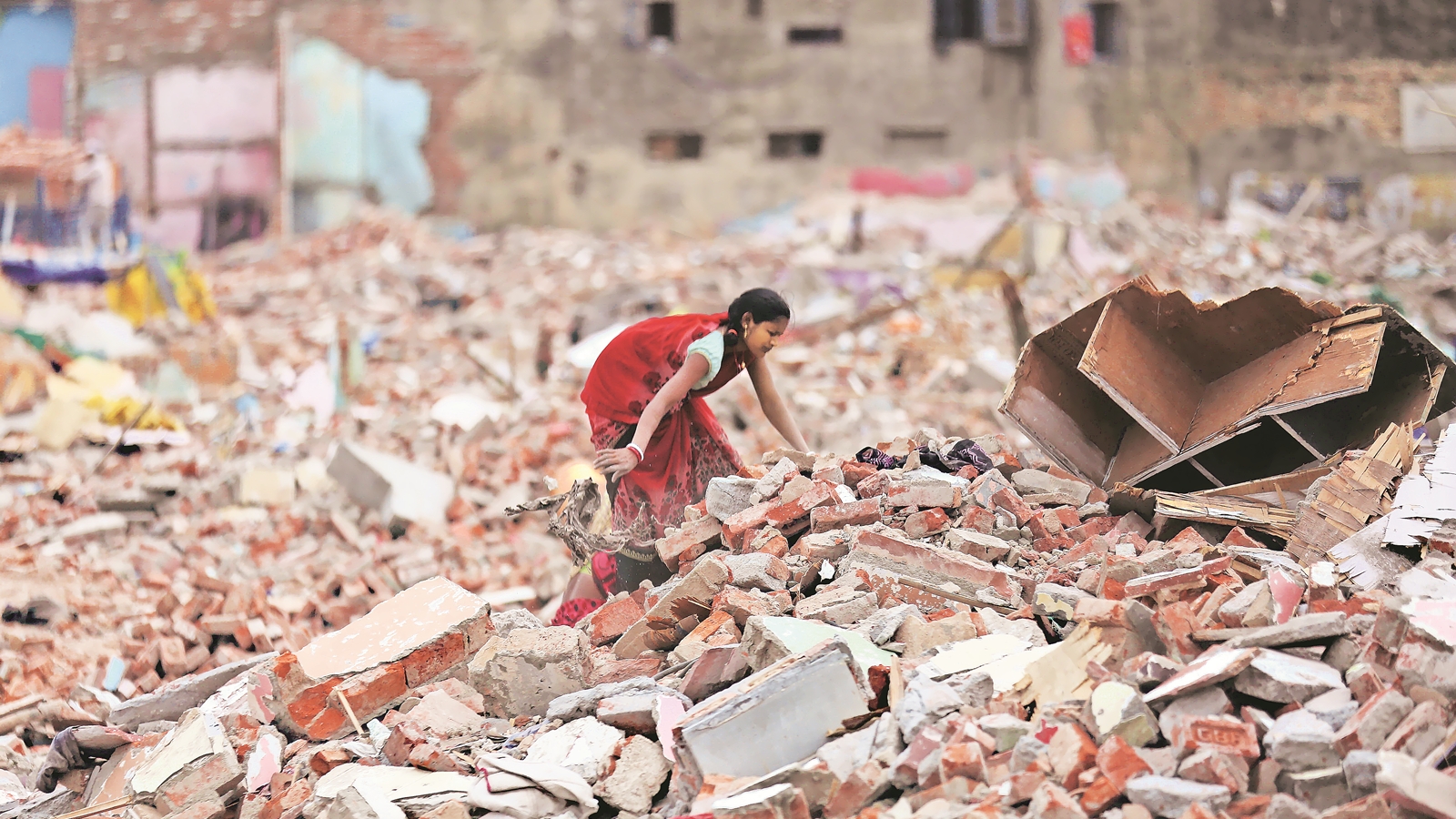
Lately, many slum homes have been torn down, and people have to move far away.
The plan says they should only move people if it's really necessary.
Experts say there are better ideas, like letting people stay and fix up their homes.
They also think there should be more cheap homes available for everyone.

Delhi's slum rehabilitation policy, prioritizing in-situ housing, has seen limited progress.
Multiple demolitions have occurred, displacing residents and leading to relocation challenges.
The 2015 policy mandates in-situ rehabilitation, with relocation allowed only in specific circumstances.
Experts suggest alternative models, including tenure rights and retrofitting, to improve housing.
Concerns exist about the slow pace of in-situ projects and lack of affordable housing options.
- Who
- Slum dwellers, government officials, and urban researchers.
- What
- Delhi's slum rehabilitation policy and its impact on residents.
- When
- Since 2015.
- Where
- Delhi, India.
- Why
- To understand the effectiveness and challenges of Delhi's slum rehabilitation efforts.
Advocates for Slum Dwellers
Government Officials
Demolitions vs. Rehabilitation
Advocates for Slum Dwellers
Emphasize in-situ rehabilitation and against demolitions without proper relocation and amenities.
Government Officials
Government's stance on following court orders, prioritizing public projects and redevelopment.
Speed of Housing Projects
Advocates for Slum Dwellers
Highlight the slow pace of affordable housing projects.
Government Officials
Government focuses on court mandates and equal development, criticizes prior governments.
- Policy Year
- 2015
- In-Situ Project Count
- 2 completed
- Slum Demolitions Since BJP came to power
- 30-40 (approximate)
- Eligibility Requirement
- Slum existed before January 1, 2006 and dwelling before January 1, 2015