

Archive · 16 Dec 2025
James Webb Telescope Finds Evidence of Giant Stars
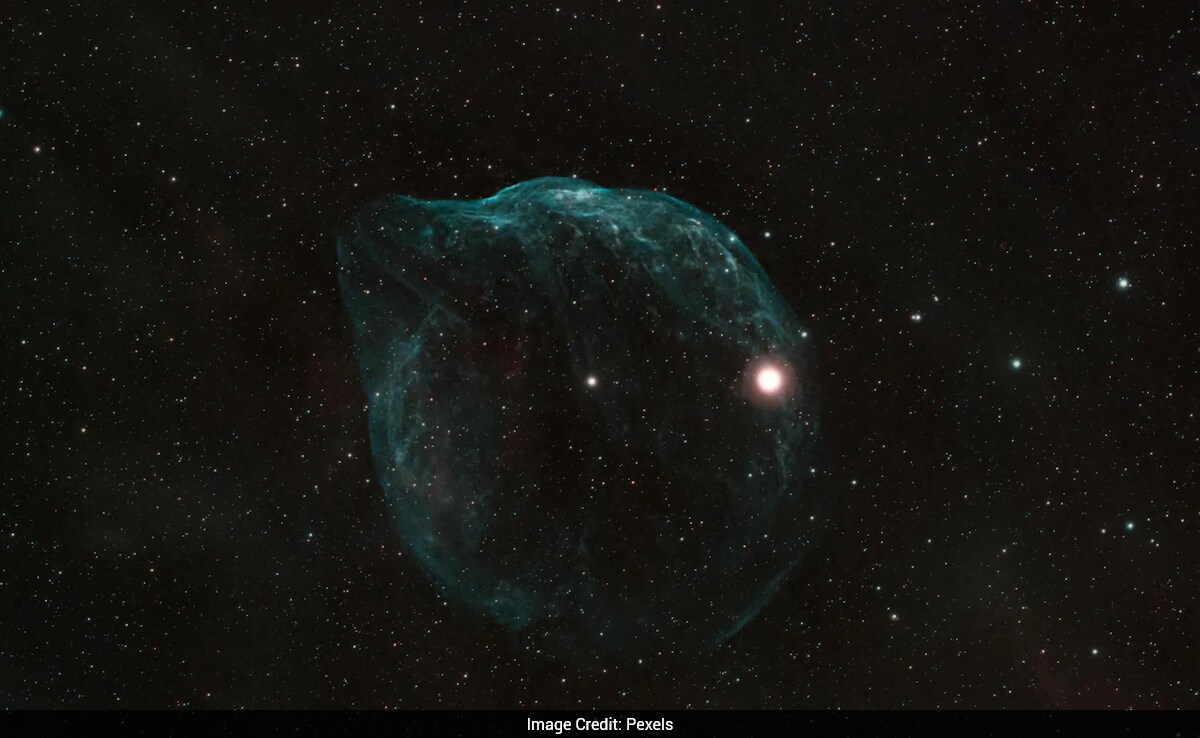
Scientists using the James Webb Space Telescope found clues about giant stars that lived shortly after the Big Bang.
These stars were much bigger than the Sun, up to 10,000 times its size.
They didn't live long, only about 250,000 years, but they left behind special chemicals that scientists can still see.
These chemicals, especially a lot of nitrogen, helped scientists figure out that these stars existed.
The stars likely turned into black holes directly, without exploding like normal stars.
These black holes then merged to form even bigger black holes.
The galaxy they studied, called GS 3073, is very far away, and we see it as it was a long time ago.
This discovery helps us understand how supermassive black holes formed so quickly in the early universe.

Astronomers using the James Webb Space Telescope found evidence of giant stars from the early universe.
These stars were up to 10,000 times more massive than the Sun and lived for about 250,000 years.
The galaxy GS 3073, located 12.7 billion light-years away, showed a unique chemical signature with high nitrogen levels.
The chemical traces suggest these massive stars transformed directly into black holes, contributing to the formation of supermassive black holes.
The discovery helps explain how supermassive black holes formed quickly in the early universe.
- Who
- Astronomers using the James Webb Space Telescope
- What
- Evidence of giant, early universe stars and their role in forming supermassive black holes
- When
- Observations from 1.1 billion years after the Big Bang
- Where
- Galaxy GS 3073, 12.7 billion light-years from Earth
- Why
- To understand the formation of supermassive black holes in the early universe
- Telescope Used
- James Webb Space Telescope
- Galaxy Studied
- GS 3073
- Distance from Earth
- 12.7 billion light-years
- Time Observed
- 1.1 billion years after the Big Bang
- Star Mass Range
- 1,000 to 10,000 times the Sun's mass
- Lifespan of Giant Stars
- 250,000 years
- Chemical Imbalance
- High nitrogen to oxygen ratio