

Archive · 19 Sep 2026
Europe Raises Hybrid Threat Alarm as NATO Rejects Imminent Attack
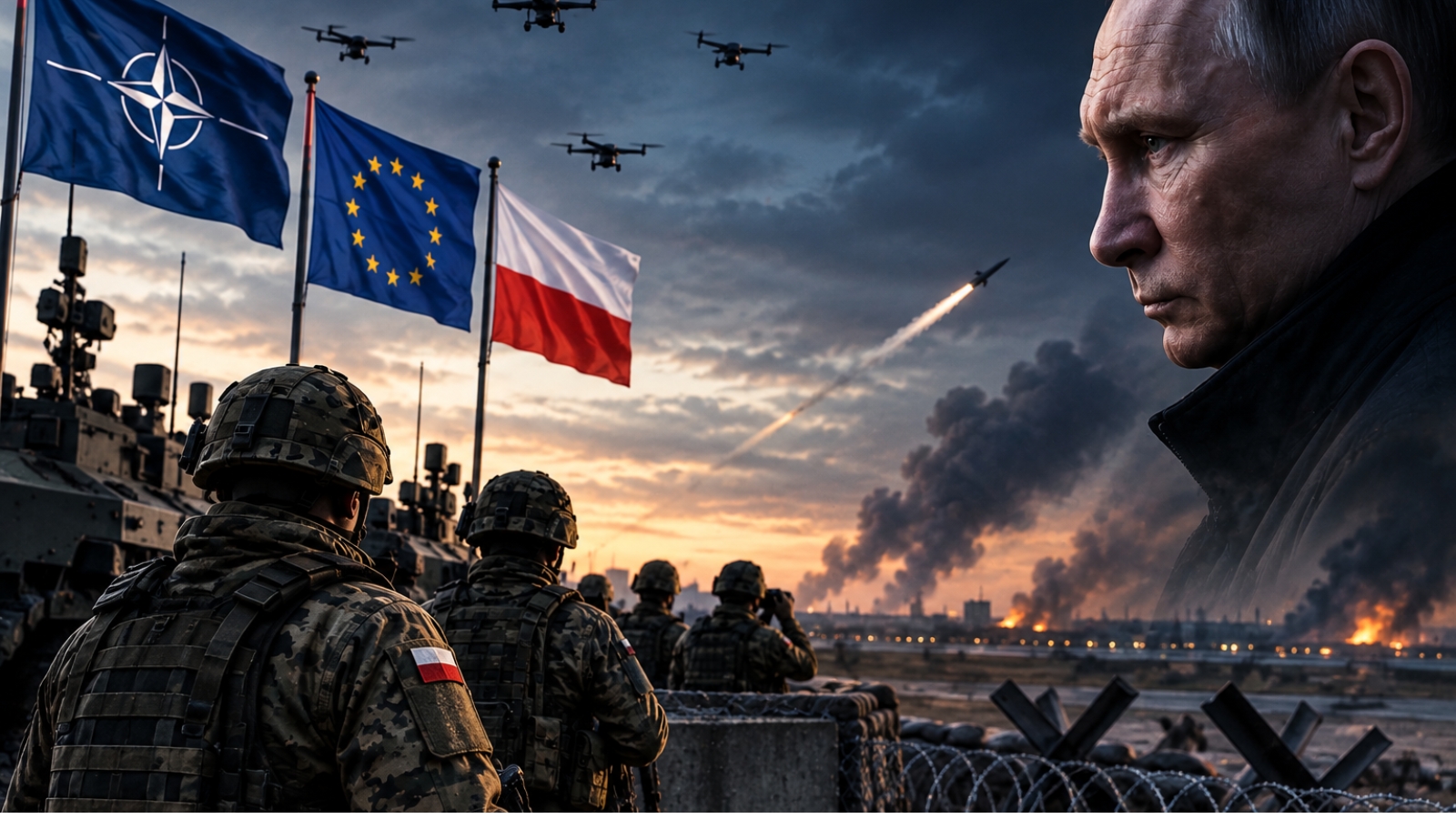
European leaders are worried that Russia’s conflict with Ukraine could cause problems in other European countries.
They are especially concerned about drones, cyberattacks, sabotage and false information.
Poland’s leader said Russia might use a small attack to test whether NATO countries would defend one another.
France also said the threat had grown and wants important buildings and facilities better protected.
Leaders in the Netherlands and Finland told people to take the risks seriously.
NATO says these activities are concerning, but it has not seen proof that Russia is about to launch a normal military attack on NATO.
Countries such as Germany and Lithuania are practicing emergency plans and improving preparedness.
The United Kingdom says it is ready to help defend NATO territory.
The United States is reviewing its military presence in Europe, while Poland is seeking a stronger permanent US presence.

Polish Prime Minister Donald Tusk warned that Russia could use drones or missiles against NATO countries supporting Ukraine, possibly disguising an attack as an accident.
French President Emmanuel Macron said Russia’s hybrid campaign had intensified and ordered plans to protect critical infrastructure from drone and cyberattacks.
The Netherlands and Finland urged vigilance, while Russia denied allegations of involvement in sabotage and other hybrid operations.
NATO said it had no evidence of an imminent conventional attack on allied territory, while reaffirming its commitment to collective defense.
Germany, Lithuania and NATO are expanding medical, civil-defense and military preparations, as the United States reviews its troop presence in Europe.
- Who
- European leaders, NATO, Russia, and governments including Poland, France, Germany, Lithuania, the Netherlands, Finland, the United Kingdom and the United States.
- What
- Officials warned that Russian hybrid operations or limited drone and missile incidents could affect NATO countries, while NATO said there was no evidence of an imminent conventional attack.
- When
- The warnings were reported on Thursday, September 17, and Friday, September 18; preparedness efforts and the US troop review are ongoing.
- Where
- Across Europe, especially NATO’s eastern flank, countries supporting Ukraine and areas near Ukraine’s borders.
- Why
- European governments are responding to concerns that Russia’s war against Ukraine could spill over through sabotage, cyberattacks, disinformation, airspace violations, drone incursions or attacks on infrastructure and supply lines.
European Leaders’ Warnings
NATO’s Measured Assessment
Immediate security risk
European Leaders’ Warnings
Leaders including Donald Tusk, Emmanuel Macron, Rob Jetten and Alexander Stubb warned that Russian hybrid activity could intensify and cause incidents involving drones, sabotage or other attacks.
NATO’s Measured Assessment
NATO distinguishes increased hybrid activity from an imminent conventional military attack and says there is no evidence that one is about to occur.
Russian responsibility
European Leaders’ Warnings
Some European governments have linked incidents, including suspected sabotage, cyber operations and a reported Leipzig airport drone incident, to Moscow and say the pattern shows changing Russian aggression.
NATO’s Measured Assessment
Russia denies involvement and describes broader European allegations as baseless; the reported links remain contested.
Security preparation
European Leaders’ Warnings
European governments argue that stronger civil-defense, medical, infrastructure and military preparations are needed to deter attacks and protect support for Ukraine.
NATO’s Measured Assessment
NATO and the United Kingdom describe preparation as deterrence, collective defense and contingency planning rather than evidence that direct war with Russia is imminent.
- Main concern
- Potential Russian hybrid operations involving drones, missiles, cyberattacks, sabotage, disinformation and infrastructure damage.
- Polish warning
- Donald Tusk said attacks could be made to appear accidental and used to test or weaken NATO’s willingness to respond.
- French response
- Emmanuel Macron said Russia’s hybrid threat had intensified and ordered plans to protect critical infrastructure and defense-related sites.
- NATO assessment
- NATO said there was no evidence of an imminent conventional attack against alliance territory.
- European preparedness
- Germany is examining hospital and emergency medical capacity, while Lithuania and other countries have updated evacuation plans and conducted civil-defense exercises.
- Military readiness
- NATO forces have conducted exercises in the Baltic region, and the United Kingdom said it was ready to defend NATO territory with its allies.
- US force review
- The Pentagon is considering several options for its European military presence; reports cited estimates ranging from roughly 68,000 to 80,000 personnel and possible reductions, but no decision has been announced.
