

Archive · 31 Jul 2026
North Bengal Farmers Shift to Coffee Amid Tea Decline
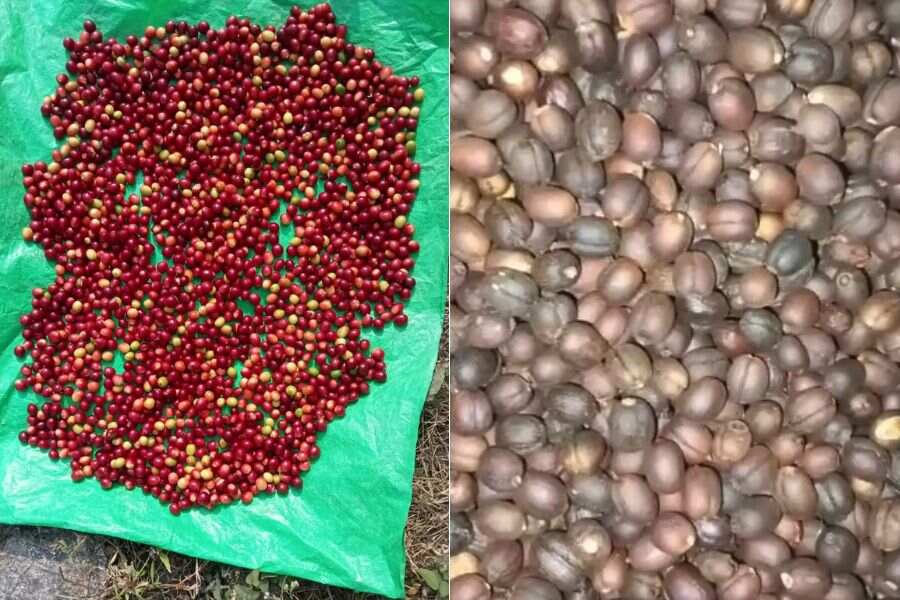
In North Bengal, many farmers used to grow tea and oranges.
But the oranges are dying and the tea gardens are closing.
So they started planting coffee instead.
They like Arabica coffee because it sells for more money.
They have planted a lot of coffee trees, but only a few are producing beans yet.
The state government made a plan to help coffee grow, but farmers say they still need money, training, and machines to roast the coffee.
Experts say the region can become a coffee hub if it gets research and support.

North Bengal farmers are replacing failing orange orchards and tea gardens with Arabica coffee on abandoned lands.
Coffee growers favor Arabica for its higher price and suitability to hill climates, yet lack local processing and government aid.
Cooperatives have distributed about 100,000 coffee saplings, but only around 1,000 plants are currently producing beans.
The West Bengal government drafted a five‑year coffee development roadmap in 2025, but farmers report little progress and no subsidies.
Agricultural experts warn that without research, financial support, and infrastructure, the region cannot become a major coffee producer.
- Who
- Farmers in North Bengal, including Romit Pradhan, Bickram Pradhan, Wangdi Lama, and expert Amit Baran Sharangi
- What
- Transition from orange and tea cultivation to Arabica coffee, facing lack of processing facilities and government support
- When
- Coffee cultivation began in 2023; production expected from 2025; 5‑year roadmap launched in 2025
- Where
- Darjeeling, Kalimpong, and surrounding areas of North Bengal, West Bengal, India
- Why
- Decline of orange orchards and tea gardens due to climate change, disease, and low wages, prompting farmers to seek new income sources
- Region
- North Bengal
- Main crop
- Arabica coffee
- Saplings distributed
- ≈100,000
- Current producing plants
- ≈1,000
- Government roadmap
- 5‑year plan starting 2025