

Archive · 30 Jul 2026
India Gains US Tariff Edge Over Vietnam, but Challenges Remain
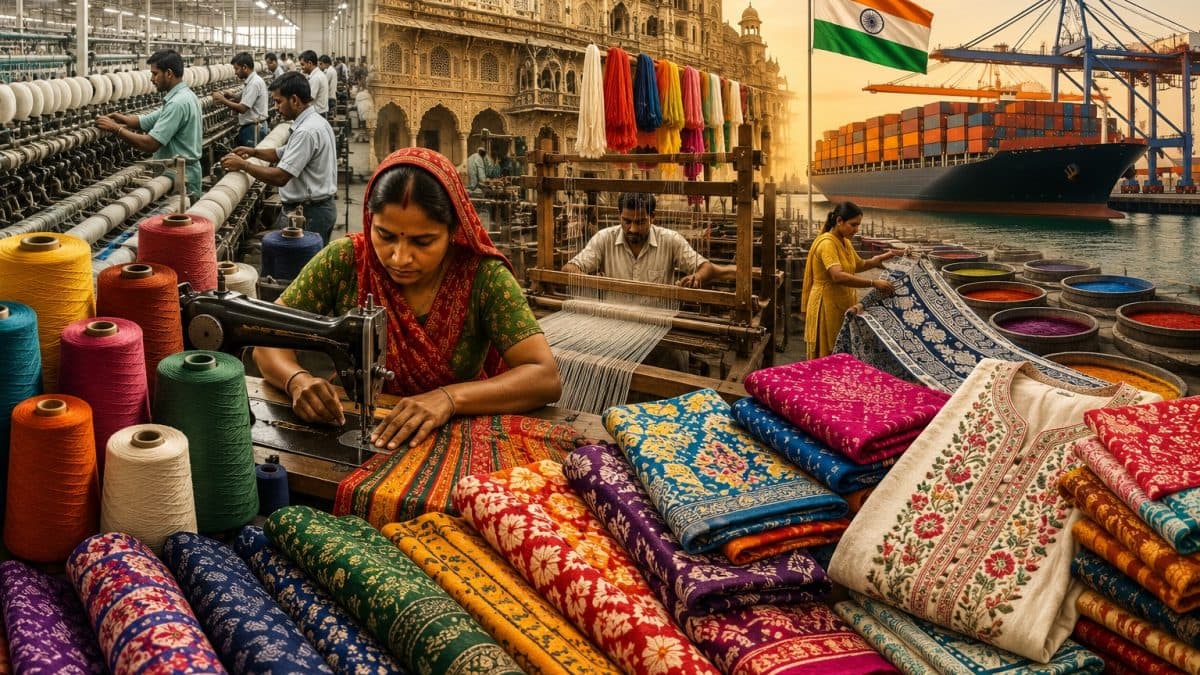
The United States decided to charge a 10% tax on clothes made in India, which is lower than the 12.5% tax on clothes made in Vietnam.
This means Indian clothes could be cheaper for American buyers.
But the difference is small, so companies that already make clothes in Vietnam might not move their factories to India right away.
India’s factories are spread out across the country and mostly use cotton, while Vietnam and Bangladesh use more synthetic fabrics and have big, connected factories.
To really compete, India will need better quality, faster delivery, and greener factories, plus new trade deals with places like Europe.

US imposes 10% tariff on Indian textiles, lower than Vietnam’s 12.5%, giving India a pricing edge in the US market.
The tariff advantage is modest (2.5 percentage points) and unlikely to immediately shift global supply chains, which are entrenched.
India’s textile value chain is fragmented and largely cotton‑based, while Vietnam and Bangladesh have focused on synthetic fibers and integrated clusters.
Tariff‑rate quotas for Bangladesh, Cambodia, Indonesia, and Malaysia could erode India’s advantage if applied.
India’s future competitiveness depends on FTAs (e.g., with the EU), investment in synthetic fibers, integrated textile parks, and meeting high sustainability and quality standards.
- Who
- Indian textile exporters, policymakers, and industry experts
- What
- US imposes a 10% tariff on Indian textiles, lower than Vietnam’s 12.5%
- When
- recently announced
- Where
- United States, India, Vietnam
- Why
- to give India a pricing advantage while global supply chains remain stable
- US tariff on Indian textiles
- 10%
- US tariff on Vietnamese textiles
- 12.5%
- Tariff differential
- 2.5%
- India’s textile value chain
- fragmented
- Main export material
- cotton