

Archive · 27 Jan 2026
Niagara Falls Freezes Amid Polar Vortex
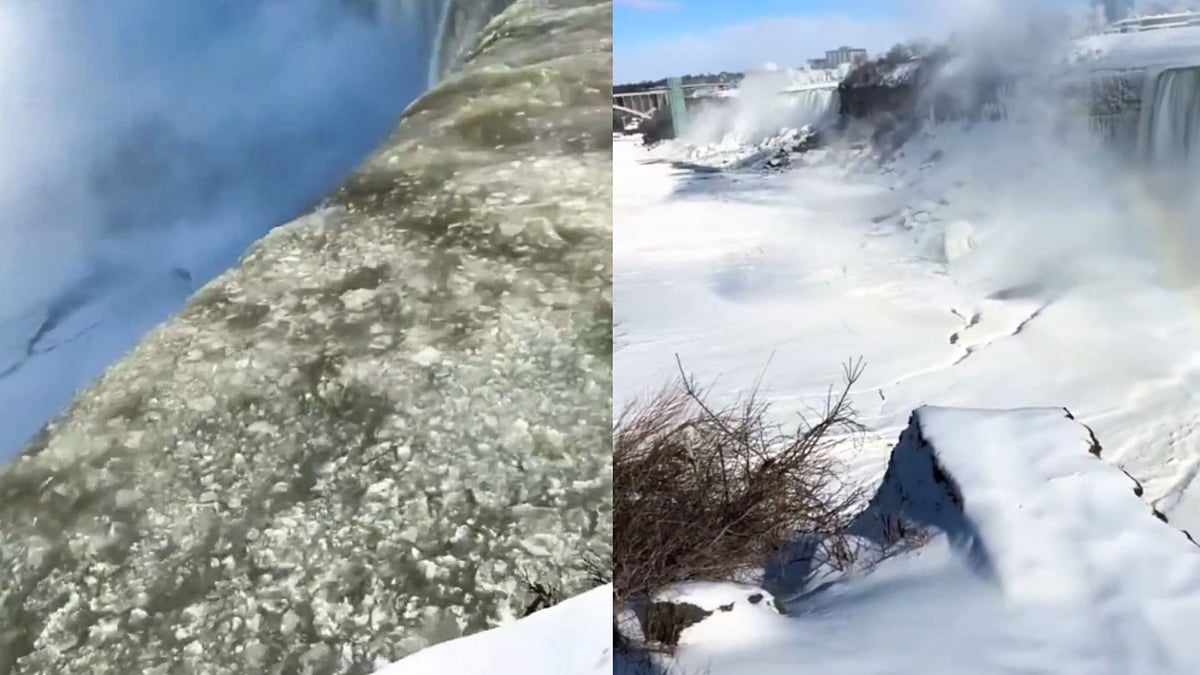
Niagara Falls, which is on the border between Canada and the United States, has turned into a beautiful icy scene because of a very cold weather event called a polar vortex.
The temperature dropped to below -20°C, and the mist from the waterfalls froze into ice on the rocks, trees, and other things around.
Even though the water is still flowing, the ice makes it look like a winter wonderland.
People can see big ice sheets and even a rare rainbow in the icy mist.
Niagara Falls is not just pretty; it also helps make electricity and is important to many people.
Even in the cold, it's still one of the most amazing places in the world.

Niagara Falls partially froze due to a polar vortex, with temperatures dropping below -20°C.
Mist from the waterfalls solidified into ice on surrounding rocks, trees, and railings.
The waterfalls continue to flow, creating dramatic ice formations and a rare rainbow in the icy mist.
Niagara Falls is made up of three waterfalls: Horseshoe Falls, American Falls, and Bridal Veil Falls.
The falls are a significant source of hydroelectric power and hold cultural and historical importance.
- Who
- Niagara Falls, located on the Canada/United States border
- What
- The waterfalls have partially frozen due to a polar vortex, with mist turning into ice
- When
- During a polar vortex that caused temperatures to drop below -20°C
- Where
- Niagara Falls, straddling the border between Canada and the United States
- Why
- The extreme cold caused mist from the waterfalls to solidify into ice
- Location
- Niagara Falls, Canada/United States border
- Temperature
- -20°C
- Waterfalls
- Horseshoe Falls, American Falls, Bridal Veil Falls
- River
- Niagara River (from Lake Erie to Lake Ontario)
- Ice Formation
- Mist solidifies into ice on rocks, trees, railings, and cliff faces
- Hydroelectric Power
- Supplies electricity to parts of Canada and the United States
- Tourism
- Millions of visitors in summer, quieter in winter