

Archive · 22 Sep 2025
Spacecraft Oxygen: How Astronauts Breathe in Zero Gravity
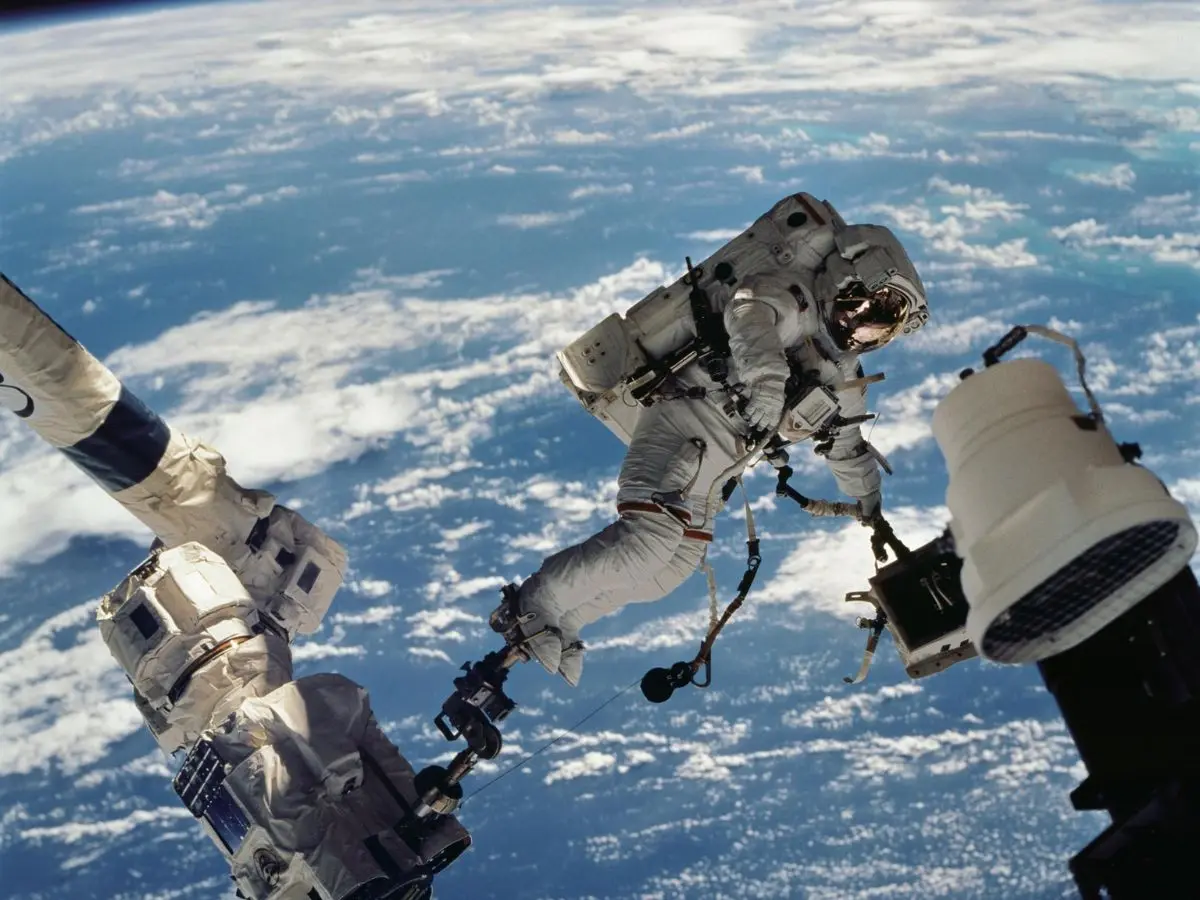
In space, where there's no air, astronauts need oxygen to breathe.
Spacecraft use special systems to make oxygen.
They split water into oxygen and hydrogen.
The ISS has systems to do this.
Astronauts also have backup oxygen tanks.
During spacewalks, they use portable oxygen supplies in their suits.
Scientists are working on new ways to recycle air, which will be important for future trips, like to Mars.

Astronauts require a constant oxygen supply to survive in the vacuum of space.
The ISS uses onboard systems like the OGA and Elektron to generate oxygen.
Oxygen is generated by splitting water into oxygen and hydrogen.
Backup oxygen options include SFOG canisters and pressurized tanks.
During spacewalks, astronauts rely on the Extravehicular Mobility Unit (EMU) for oxygen.
- Who
- Astronauts and space agencies
- What
- Methods of oxygen production and supply in space for astronauts
- When
- Ongoing, with technologies evolving
- Where
- Spacecraft, particularly the International Space Station (ISS) and during spacewalks
- Why
- To ensure astronaut survival and enable long-duration space missions
- Oxygen Consumption
- Approx. 2 pounds per astronaut per day
- Ideal Cabin Atmosphere
- Similar to Earth's: 14.7 psi, 21% oxygen
- Main Oxygen Generation (ISS)
- Oxygen Generation Assembly (OGA) and Elektron system
- Oxygen Generation Method
- Electrolysis of water
- Emergency Oxygen
- SFOG canisters & pressurized tanks
- Spacewalk Oxygen
- Provided by the Extravehicular Mobility Unit (EMU)