

Archive · 24 Jul 2025
Teaching Medieval India: Connecting Past to Present
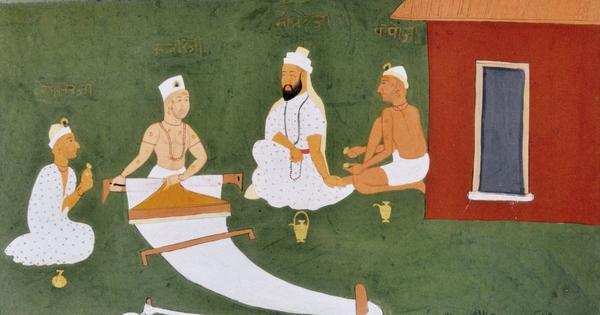
Imagine learning about a long-ago time called Medieval India, between 800 and 1700.
It was a period of big changes in India with many rulers, religions, and cultures.
Students learn about this period, but the teacher tries to show it's more complicated than what they read.
They explore how ideas, like fairness, came about and how they connect to today.
Students even create fun projects, like plays, songs, and exploring markets to show how the past still affects us.
The goal is to understand our world better by understanding the past, including how we see and learn history.

Medieval India is a complex historical period between the 8th and 18th centuries, full of nuances.
Teaching this period requires addressing students' existing perceptions from textbooks and media.
The course uses thematic and chronological approaches to show the multifaceted past.
Students explore ideas of justice, self, and community through Indian language traditions.
Class projects use archival research and interactive methods to connect history to the present.
- Who
- Chanthu S teaches history to undergraduate students.
- What
- Teaching of medieval Indian history to undergraduate students.
- When
- The period roughly between the eighth century CE and the 18th century CE.
- Where
- At Manipal Academy of Higher Education, Bengaluru.
- Why
- To help students understand the complexities of history and its connection to contemporary India.
Traditional Views
Modern Perspectives
Teaching Method
Traditional Views
Focuses on rote memorization of facts.
Modern Perspectives
Encourages critical thinking and analysis.
Relevance to Today
Traditional Views
Views the period as separate from contemporary India.
Modern Perspectives
Highlights the enduring impact on modern Indian society.
- Teacher
- Chanthu S
- Institution
- Manipal Academy of Higher Education, Bengaluru
- Focus
- Medieval Indian History
- Time Period
- 8th to 18th centuries CE
- Teaching Method
- Thematic and Chronological Approaches