

Archive · 3 Sep 2026
India’s Gold Loans Surge Fourfold Despite Low Household Gold Penetration
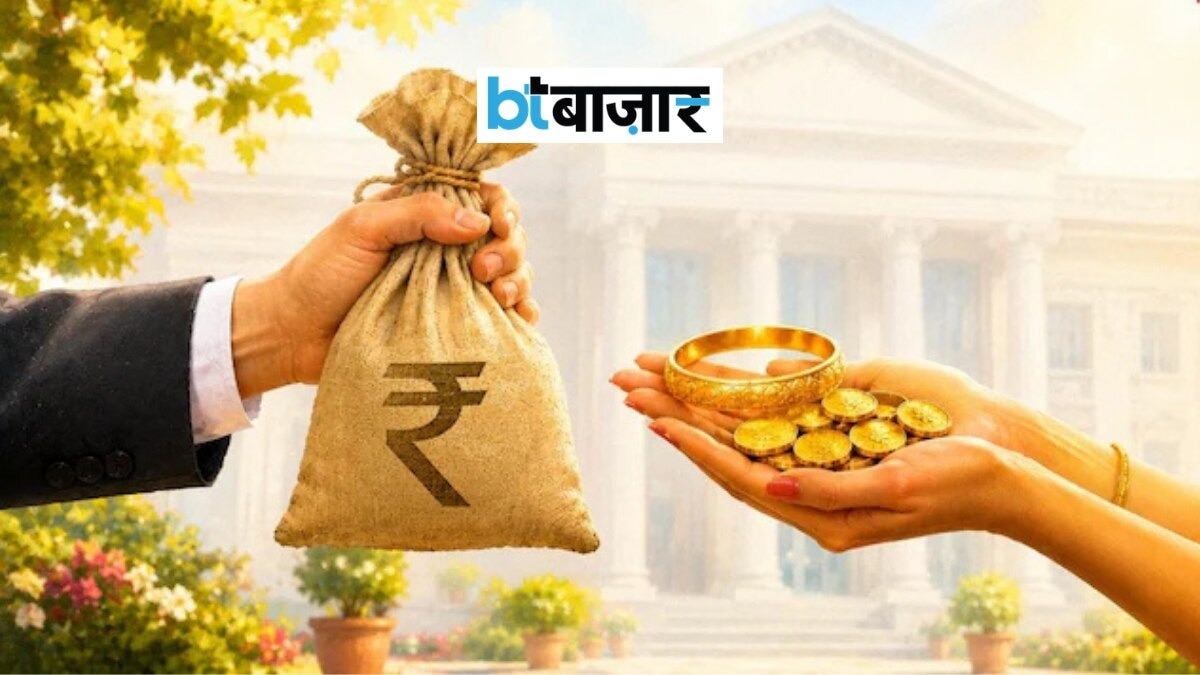
A gold loan lets someone borrow money by giving gold as security.
In India, this market has become almost four times larger in five years.
It reached ₹18.6 trillion by March 2026 and became larger than personal loans.
People and small businesses may choose these loans because they can be approved quickly with less paperwork.
Gold prices also rose by more than 60%, helping the market grow.
Southern states still account for about three-quarters of gold lending, but several other states are growing faster.
Only about 8% of the gold owned by Indian households is being used for organised gold loans.
This means lenders see considerable room to expand.
A report expects the market to exceed ₹30 trillion by March 2028.

India’s gold-loan segment nearly quadrupled in five years to ₹18.6 trillion by March 2026, becoming the retail segment’s second-largest asset class and surpassing personal loans.
The market grew 50% year-on-year in FY26, supported by gold prices rising more than 60% and demand for personal and business funding.
Only about 8% of India’s estimated 28,000 tonnes of household gold, worth ₹380–390 trillion, has been monetised through organised gold loans.
Gold-loan books grew fastest in Rajasthan, Maharashtra and Uttar Pradesh, rising 78%, 61% and 58%, respectively, in FY26.
Public sector banks hold about 60% of the market, while specialised gold-loan NBFCs raised their share from 6% in November 2023 to 8% in November 2025.
- Who
- Indian households, MSMEs, MFI borrowers, personal-loan customers, public sector banks, gold-loan NBFCs and other lenders are involved.
- What
- India’s gold-loan market nearly quadrupled to ₹18.6 trillion, while organised-market penetration of household gold remained about 8%.
- When
- The market size was reported as of March 2026; growth and market-share figures cover FY26 and November 2023–November 2025.
- Where
- The market spans India; southern states dominate, while Rajasthan, Maharashtra and Uttar Pradesh recorded especially rapid growth.
- Why
- Growth is attributed to higher gold prices, demand for personal and business credit, faster disbursal, flexible repayment and limited documentation.
- Market size
- ₹18.6 trillion as of March 2026
- FY26 growth
- 50% year-on-year
- Projected growth
- A 28% CAGR is projected for FY26–FY28, with the market expected to exceed ₹30 trillion by March 2028
- Household gold
- About 28,000 tonnes worth an estimated ₹380–390 trillion
- Organised penetration
- Approximately 8% of estimated household gold has been monetised through organised gold loans
- Regional concentration
- Southern states account for around 75% of the overall market
- Market leadership
- Public sector banks hold approximately 60% of the market
