

1 hr ago
Darjeeling Frog Faces Genetic Diversity and Harvesting Threats
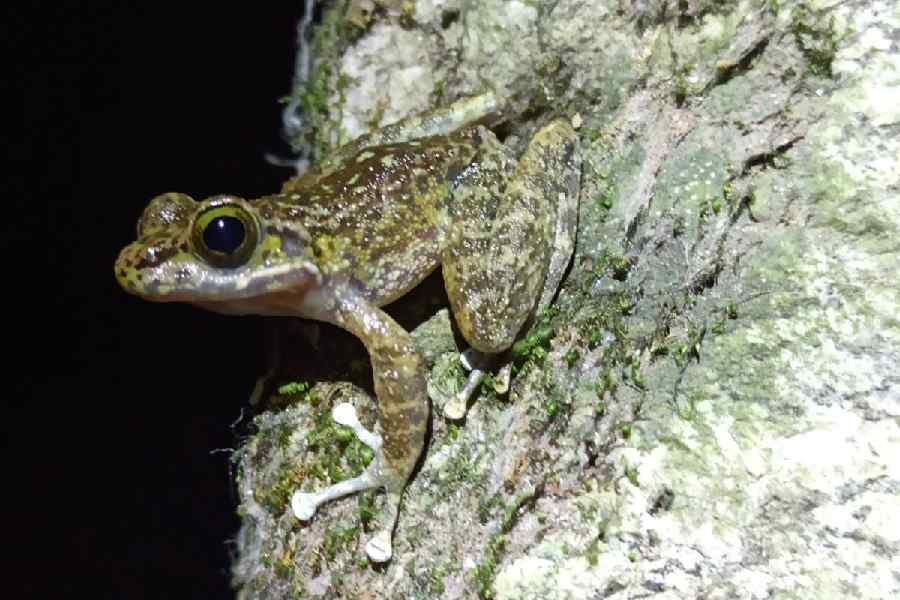
Researchers studied marbled cascade frogs living around Darjeeling and Kalimpong.
They found that these frogs have less genetic variety than related frogs in several other parts of Asia.
The Darjeeling group separated from other groups about 11.2 million years ago.
The researchers think isolation and limited mixing with other frog populations helped cause the low diversity.
Some people catch the frogs from the wild for food, especially during the monsoon.
Taking more frogs from the wild could make the problem worse.
Low genetic diversity can make a population more vulnerable to disease and environmental changes.
Researchers say conservation should include local communities and protecting stream habitats.
They also suggest studying whether frog breeding could provide food while reducing wild harvesting.

A study found the Darjeeling marbled cascade frog has lower genetic diversity than populations from Myanmar, Southeast Asia and China.
Researchers estimate the South Asian lineage diverged from Myanmar and Southeast Asian lineages about 11.2 million years ago.
The frog lives in Nepal, north Bengal, Sikkim and Bhutan, in rocky streams and rivulets.
Researchers say geographic isolation and limited fresh gene flow contributed to the population’s low genetic diversity.
Local wild harvesting for food could worsen the threat; researchers suggest exploring commercial breeding to reduce harvesting.
- Who
- Researchers from the University of Calcutta and collaborating institutions studied the marbled cascade frog; some Darjeeling residents also catch it for food.
- What
- A genetic study found low diversity in the Darjeeling hill population and identified wild harvesting as an additional concern.
- Where
- The study focused on the Darjeeling and Kalimpong hill region in the eastern Himalayas.
- When
- The study was published on Thursday; the article does not specify the date.
- Why
- Geographic isolation and limited fresh gene flow are thought to have contributed to low genetic diversity; wild harvesting may further reduce it.
Key facts
- Species
- Marbled cascade frog
- Study area
- Darjeeling and Kalimpong hill region
- Frogs collected
- 60 frogs from 57 locations
- Genomes analysed
- 35 frogs
- Estimated divergence
- The South Asian lineage diverged from Myanmar and Southeast Asian lineages about 11.2 million years ago.
- Shared ancestor estimate
- The compared Asian populations shared a common ancestor about 17.4 million years ago.
- Reported habitat range
- Rocky rivulets or streams at elevations of 200 to 2,400 metres
- Potential conservation measure
- Researchers suggested exploring commercial breeding to reduce direct wild harvesting.
Quotes
Gyaneswer Chaubey
Genome researcher at Banaras Hindu University who collaborated in the study.
“No work had been done until now on the genetics of this frog in the Himalaya. Populations with low genetic diversity are more vulnerable to disease, climate change and inbreeding. Conservation efforts will need to involve local communities.”
 telegraphindia.com
“This frog is facing a dual threat: a low genetic diversity and the local practice of consuming wild frogs for food.”
telegraphindia.com
Sources
Related news
Bolivia’s Newly Identified Wild Cat Becomes Conservation Attraction
New Legless Amphibian Species Found in Maharashtra’s Western Ghats

Himalayan Grey Langur: Mountain Primate Facing Fragmented Habitats

Unusual Krait in Dudhwa Prompts Calls for Further Study

West Bengal Himalayan Forest Offers Wild Red Panda Encounters
