11 months ago
Repatriation of Cham Statues Raises Complex Cultural and Political Questions
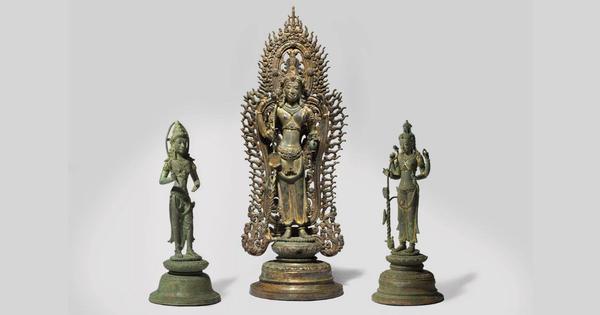
Imagine old statues from a kingdom that existed a long time ago.
These statues were in a museum in Australia, but they were returned to Cambodia.
However, the kingdom's borders don't match today's countries.
Some people question whether returning the statues is truly fair, because the group that now has the statues might have been involved in taking them in the first place.
The history of these statues includes times of conflict, where statues were stolen by bad groups of people.
Now, it's about deciding who gets to say what's important and whether giving back the statues makes up for what happened.

Three Buddhist statues from the ancient Champa Kingdom were repatriated from Australia to Cambodia.
The Champa Kingdom's territory differs from modern Cambodia's borders.
The statues were looted in the 1990s by the military and former Khmer Rouge.
The current Cambodian government may have benefited from the original theft.
The repatriation raises questions about cultural heritage and historical justice.
- Who
- The Champa people and the Kingdom of Cambodia
- What
- Repatriation of Buddhist statues from the National Gallery of Australia
- Where
- Present-day Vietnam, Cambodia, and Laos, the statues were displayed in Australia and then returned to Cambodia.
- When
- Statues created between 9th-11th centuries, looted in the 1990s, repatriated in 2023
- Why
- To return cultural heritage, but the historical context complicates the meaning of repatriation
Those who see repatriation as cultural justice
Those who question repatriation's meaning
Purpose of Repatriation
Those who see repatriation as cultural justice
Restores cultural heritage to its origin and provides a sense of pride for communities.
Those who question repatriation's meaning
Can serve as a political move, obscuring past wrongdoings and who actually profited from the looting.
Key facts
- Artifacts
- Three Buddhist bodhisattva statues
- Origin
- Champa Kingdom (2nd-19th centuries)
- Former Location
- National Gallery of Australia
- Repatriated To
- Kingdom of Cambodia (2023)
- Looting
- 1990s, involving Cambodian military and former Khmer Rouge soldiers
- Original Article
- The Conversation
Quotes
Cheunboran Chanborey
Cambodian Ambassador to Australia
“Indeed, putting looted artefacts to their countries of origin can have significant and positive impacts on local communities and their involvement in preserving their cultural heritage.”
 scroll.in
“It can foster a sense of pride, national identity and cultural continuity as artefacts hold immense value for the communities to which they belong.”
scroll.in
NGA
National Gallery of Australia
“While the works were almost certainly created in Vietnam […] the archaeological site where they were found is in Cambodia.”
scroll.in